Osaka Part 2: Best Restaurants and Desserts
- The Anonymous Hungry Hippopotamus
- Mar 19
- 4 min read
I'm back to share more about the must-try dishes in Osaka, the city known as Japan's Kitchen. For suggestions on where to go for the best tempura kaiseki, or where to try local specialities like battera, black ramen, or takoyaki, see my last post. In this post, I'll share five more dishes, including a dancing cheesecake, that brought me closer to achieving a state of kuidaore in Osaka.
Matsusakagyu Yakiniku M

Matsusaka Wagyu
The first dish is called yakiniku and it actually originated in Korea. Yakiniku is a Japanese interpretation of Korean barbecue. Some distinctions between the two include that yakiniku uses higher cuts of meat that are not marinated.
To experience a yakiniku tasting menu that is outstanding, I recommend Beef Kitchen in Tokyo. In Osaka, I had a very abbreviated, one course yakiniku experience at Matsusakagyu Yakiniku M. Though the meal was short, it was excellent.

Like the name implies, this restaurant uses Matsusaka beef, one of Japan's most prized varieties of wagyu. The meat is grilled over binchotan coals, also known as Japanese white charcoal.
The coal itself is relatively smokeless and is one of the reasons it is used.
Absent incidental smoke or flame resulting from fat dripping onto the coals, the meat is cooked over pure heat that does not emit a smoky flavor, allowing the natural taste of the premium meat to stand out.
Musubi Ya

Musubiya is a great place to go for another Japanese speciality, onigiri. Onigiri originated in Japan over 2,000 years ago.
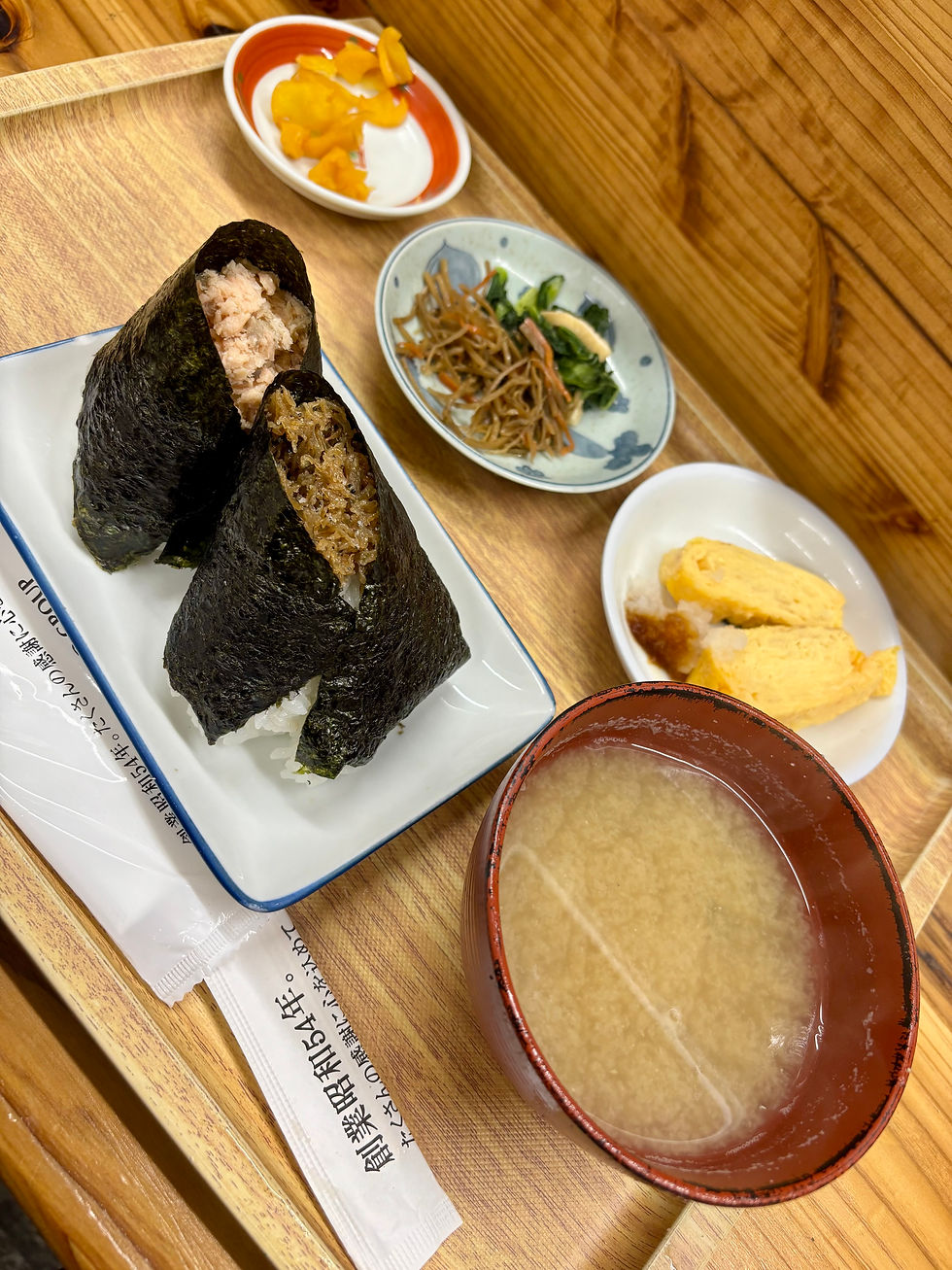
Sardine and Mackerel Onigiri
This humble dish is made of rice, often shaped in triangles or balls, wrapped in seaweed. Stuffed inside the rice are savory ingredients like umeboshi (pickled plum) or tuna. I chose Musubiya's speciality, a salmon onigiri and another with sardines and sancho pepper. Both were very good.
At Matsubiya, you can order an onigiri meal which comes with soup, vegetables, and tamago, or you can grab the onigiri to go on its own. Onigiri is the perfect, portable meal or snack, especially fun to enjoy on the Shinkansen, or long distance train.
Note that eating while walking is considered poor etiquette in Japan. It is viewed as both messy and disrespectful to the food and the surroundings. Therefore, find a seated area to enjoy portable foods such as a vendor stall, a park bench or long distance train.
.
Rikuro's
Now, let's turn to the foods that will have anyone with a sweet tooth salivating. I am reviewing three desserts that are Japanese specialities. I am not generally a dessert connoisseur, but I must say that all three of these sweets were fantastic.
First up, is the famous, Japanese, wiggly cheesecake. It is one of the most famous desserts in Osaka and the best place to go for a taste of this speciality is Rikuro's.
Unlike dense Western cheesecakes, Japanese cheesecake is extremely light and airy, closer in texture to a soufflé. The consistency is achieved by folding whipped egg whites into a mixture of cream cheese, eggs, sugar, butter, and flour. This meringue technique allows the cake to rise and develop its signature soft, jiggling texture.
The cakes are baked gently in a water bath, which helps keep them moist and delicate. After they are cooked, they are branded with the Rikuro’s stamp, ensuring the highest quality.
Wiggly Cheesecake
Rikuro’s is known for baking these cakes continuously throughout the day due to demand. Plan to wait in line for one, and know that when you finally get your cheesecake, it will be fresh and still warm from the oven. Rikuro's jiggly cheesecake is indeed one of Osaka’s most iconic sweets. I mean, just look at that cake wiggle in this video, and tell me you don't want a bite.
Club Harie
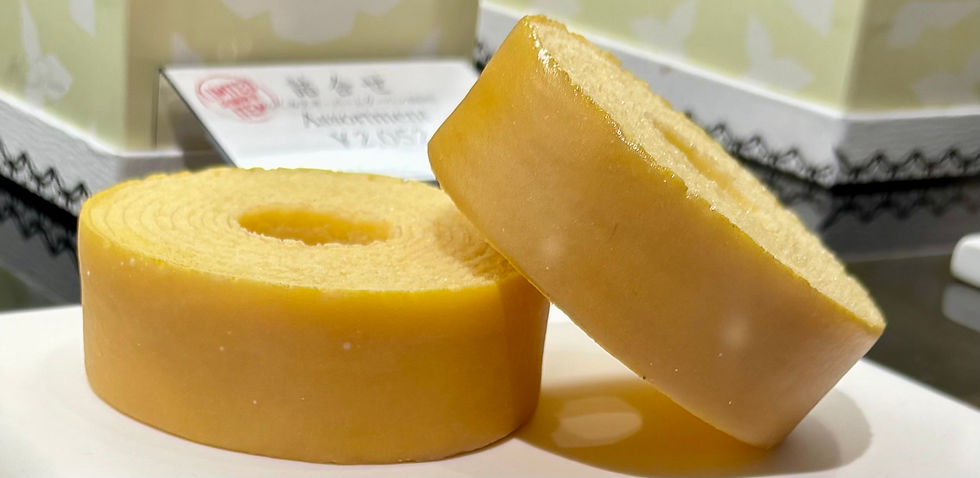
Baumkuchen
My next recommendation is baumkuchen from Club Harie. Upon first glance, this may look like a flat bundt cake, but it is so much more. This layered cake is originally from Germany, but Japan has perfected a version that you can find at Club Harie.

Baumkuchen means "tree cake" referring to the rings you see when the cake is sliced. This may be the most labor intensive cake I've heard of. It is made by repeatedly brushing thin layers of batter onto a rotating spit and baking each layer individually. As the layers build, they create a moist, yet slightly caramelized texture.
Club Harie is famous for using traditional baking methods and high-quality ingredients. That is why its baumkuchen is one of the most sought-after desserts in Osaka.
Mon Cher

Finally, we head to Mon Cher, a destination for all kinds of pastry lovers.

I came for their speciality, the dojima roll, which features an extremely soft sponge cake wrapped around a thick layer of lightly sweetened fresh cream and fruit.

Dojima Roll
This cake is intentionally simple, focusing on the best cream and a baking technique that makes the cake flexible enough to roll, fluffy, moist and rich, despite having such low sugar content and so few ingredients. I could have eaten 5 slices. I didn't, but I'm just saying that I could have.

Between this and the last post, that's it for my food recommendations in Osaka. This is a city that has so many specialities, it begs you to come on an empty stomach and then "kuiadore" or "eat til you drop." Good luck and meshiagare (enjoy)!


Comments