Best Restaurants in Osaka: Exploring Japan's Kitchen
- The Anonymous Hungry Hippopotamus
- Mar 17
- 6 min read
If the capital city of Tokyo is the modern mind of Japan, and Kyoto is the cultural heart, then Osaka is definitely the country's stomach. Together, Tokyo, Kyoto and Osaka are referred to as the Golden Route, the country's most visited cities.
Yodo River View on Train Ride from Kyoto to Osaka
If you're short on time, the great news is that Osaka is less than 30 minutes from Kyoto by train, meaning that if you're planning to visit one of these two cities, you can easily access the other, even if only for a day trip.

Okawa River
Osaka is a city known for its food scene, nightlife and historic sites. Among these reasons to visit Osaka, the food scene is the highlight.

Osaka Skyline
For centuries, Osaka served as a hub, where rice, seafood and other goods were traded throughout Japan. This central role in the food economy gave Osaka a reputation as the place where Japan's ingredients and culinary traditions came together and earned the city the nickname, "Japan's Kitchen."
Food is so central here that the term "kuidaore" is particularly associated with Osaka. Kuidaore means, "eat until you drop." I got pretty close.
Hanagatami (Tempura)

Ritz-Carlton
It seems only appropriate therefore, that I begin this series on Osaka with food and that I start with my favorite meal in the city, which I enjoyed at one of my favorite hotels, ...

... the luxurious Ritz-Carlton Osaka.

Having arrived early for my reservation, I decided to have a drink at the bar. I enjoyed my cognac with a new friend, and ...

... resisted all the complimentary snacks, knowing that we were in for a multi-course meal ...

... at Hanagatami.

Hanagatami specializes in tempura and elevates it to an art form.

The restaurant has perfected an extremely light batter and found the precise temperature at which to fry each ingredient, so that it shines.

Meal Components
The meal is a perfect blend of this flawless, frying technique and batter, coupled with the season's best ingredients.

Uni
For that reason, some would call this a kaiseki, tempura feast. (For more on the origins and philosophy behind kaiseki, see my post on Kikunoi Roan in Kyoto, where kaiseki was birthed.)

Japanese Yuba and White Fish
Prior to the tempura courses, Hanagatami offered two appetizers.
The first was a layered, Japanese yuba, or tofu skin, served with white fish and ikura, or salmon roe.

Bluefin Tuna Sashimi
The second was a sashimi course.
The bluefin tuna sashimi was served with a dipping sauce, slivers of white onion and wasabi.

Kuruma Prawns
Then it was time for a pageant of tempura that began with two kuruma prawns, or Japanese tiger prawns. These prawns are highly prized in Japan for their sweet and delicate flavor.
The prawns were served with three dipping sauces. The first was a slightly thick sauce with a strong flavor of spicy ginger balanced by sweetness.
Tentsuyu with Grated Radish
The next was tentsuyu, a traditional tempura sauce made with dashi, mirin and soy sauce. To this you add finely grated daikon radish and enjoy.
Yuzu
The final sauce was made by taking this slice of yuzu, ...
... squeezing its juice onto a plate and then combining a dab with a touch of salt. Bright and simple, this was my favorite of the three accompaniments because it enhanced the natural flavor of the shrimp best, in my opinion.

Kisu Fish
The shrimp was followed by a course of kisu fish, a small, lean, silver-skinned fish found in Japanese coastal waters. It is affectionately called the "queen of the beach" for its clean flavor and because it is typically served as top tier tempura.

Unagi
The unagi course was a surprise because though I have had grilled eel too many times to count, this was the first and only time I had eaten unagi tempura style and I loved it.
Gingko Nuts and Baby Potatoes
From seafood, we moved on to the vegetable portion of the meal. The first was a course of two gingko nuts and two tiny potatoes.
Mushroom
Next, was a lions mane mushroom, covered generously with grated parmesan cheese.

Lotus Root
Like the unagi, the lotus root was also new to me in tempura format. As opposed to blanched lotus root, the customary preparation, which I find a bit lacking in flavor, the tempura amplified the lotus root's subtle, earthy and sweet characteristics.

Japanese Eggplant
The final tempura course was Japanese eggplant. It was crispy, a bit spongy and meaty, not at all soggy as eggplant can sometimes be.

Hijiki with Uni
Though the tempura portion of the evening had come to a close, there were still three, savory courses to be had. First, was uni served with a unique type of seaweed called hijiki. When rehydrated, it has the texture and appearance of long, thin noodles.

Pickled Cauliflower
Second was pickled, purple cauliflower served with tomatoes, red onions and miso dressing.

Shrimp Tempura
The third and final savory course was a tempura encore featuring shrimp ...
... over rice. As I've mentioned before, it is customary to serve rice at the end of a meal in Japan, rather than during, or at the beginning.

Persimmon
Dessert consisted of two courses. First was fresh persimmon and vanilla bean gelato.
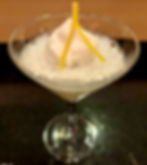
Lemon and Lime Jelly
The second dessert and the finale of the meal was a martini glass filled with lemon and lime jelly cubes. They were topped with yuzu froth and a dollop of cream.
As I mentioned in the beginning of this post, this was my favorite meal in Osaka and easily the best tempura I have had anywhere. Each piece was served moments after leaving the fryer, ensuring the perfect balance of crunch and tenderness. Without intending to, I came frighteningly close to achieving kuidaore. My Osaka trip was off to a strong start.
Sushitsune

The second restaurant I would recommend is Sushitsune, a tiny establishment that has counter seating for about eight.
The small quarters mean that every guest gets a front row seat to watch the chefs create the restaurant's speciality, battera. Battera is pressed mackerel sushi, conceived by Sushitsune’s first-generation owner.

I was fortunate to watch the fourth-generation chef continue this tradition, while sipping on soup ...

... and snacking on sweet potato tofu.

The pickled mackerel dish that started as a family recipe is now popular throughout Osaka. To start, the pickled mackerel is pressed onto sushi rice and placed in a boat-shaped wooden frame. This style of pressed sushi is called oshizushi and it originated in Osaka.
Once molded into shape, the mackerel is covered with a thin, white sheet of kombu, a specific species of kelp with tons of umami flavor.
Then, it is presented elegantly in a bento box for consumption.

Not only is battera a delicious and beloved, regional speciality, it is a reminder of Osaka's historical connection to coastal trade.
No Name

No Name Ramen
In addition to speciality foods like battera that were birthed in the city, Osaka also does a wonderful job reinterpreting classic dishes like ramen, which I enjoyed at No Name.

Takaida-kei Ramen
In Osaka, black ramen is a speciality. In addition to regular tonkotsu, ramen broth, in Osaka, a black broth is added. The color is imparted by dark soy sauce and/or mayu, which is black, garlic oil.
Aside from this, the ramen contains all other traditional elements like chasu pork, green onions, bamboo etc. The addition of the black broth, which swirls into the tonkotsu (pork bone broth), imparts a savory, deep, roasted taste that complements the creaminess of the tonkotsu broth.
Kukuru

Another Osaka speciality and the final recommendation in this post is takoyaki, the city's most famous street food, which I tried at Kukuru.
To make takoyaki, batter is poured into a pan with small, rounded indentations and diced octopus and green onion are added. Chefs expertly rotate the batter with metal picks until small, dumpling-like orbs are formed.
Once finished, the takoyaki are topped with savory sauces, mayonnaise and dried bonito flakes that dance with the heat the dumplings emit.

You can find takoyaki in many Japanese cities, but it was especially fun to experience this dish in Osaka, where it originated in the 1930s.
The speciality foods I've shared in this post, including tempura, battera, black ramen, and takoyaki are just some of the reasons that Osaka is celebrated as Japan's Kitchen. Up next are two more savory dishes and three desserts you can't miss on your visit to Osaka.