Kyoto Part 3: Places to Visit (continued)
- The Anonymous Hungry Hippopotamus
- Mar 12
- 5 min read
In addition to the places I suggested in my last post, below are five additional recommendations for how to spend your time in the beautiful city of Kyoto.
Kinkaku-ji Temple

Kinkaku-ji
Kinkaku-ji, also known as the Golden Temple is a must see in Kyoto. It was originally constructed as the retirement villa of Ashikaga Yoshimitsu, the third shogun of the Ashikaga shogunate. After his death, and per his wishes, it was converted to a Zen Buddhist temple.

The three story pavilion is a combination of three architectural styles. The first floor is done in Shinden style and modeled after Heian-period, palace architecture used by aristocrats. The second floor is built in Samurai style to reflect medieval, warrior culture, and the top floor, covered completely in gold leaf, reflects Zen temple architecture.

Follow the path around the grounds and you'll get various views of the pavilion framed by pine trees, stones and tiny islands.
The temple's location beside a pond called Kyōko-chi creates a gorgeous reflection, not to be outdone by the grove of trees, with brightly colored leaves, on the opposite side of the walking path.
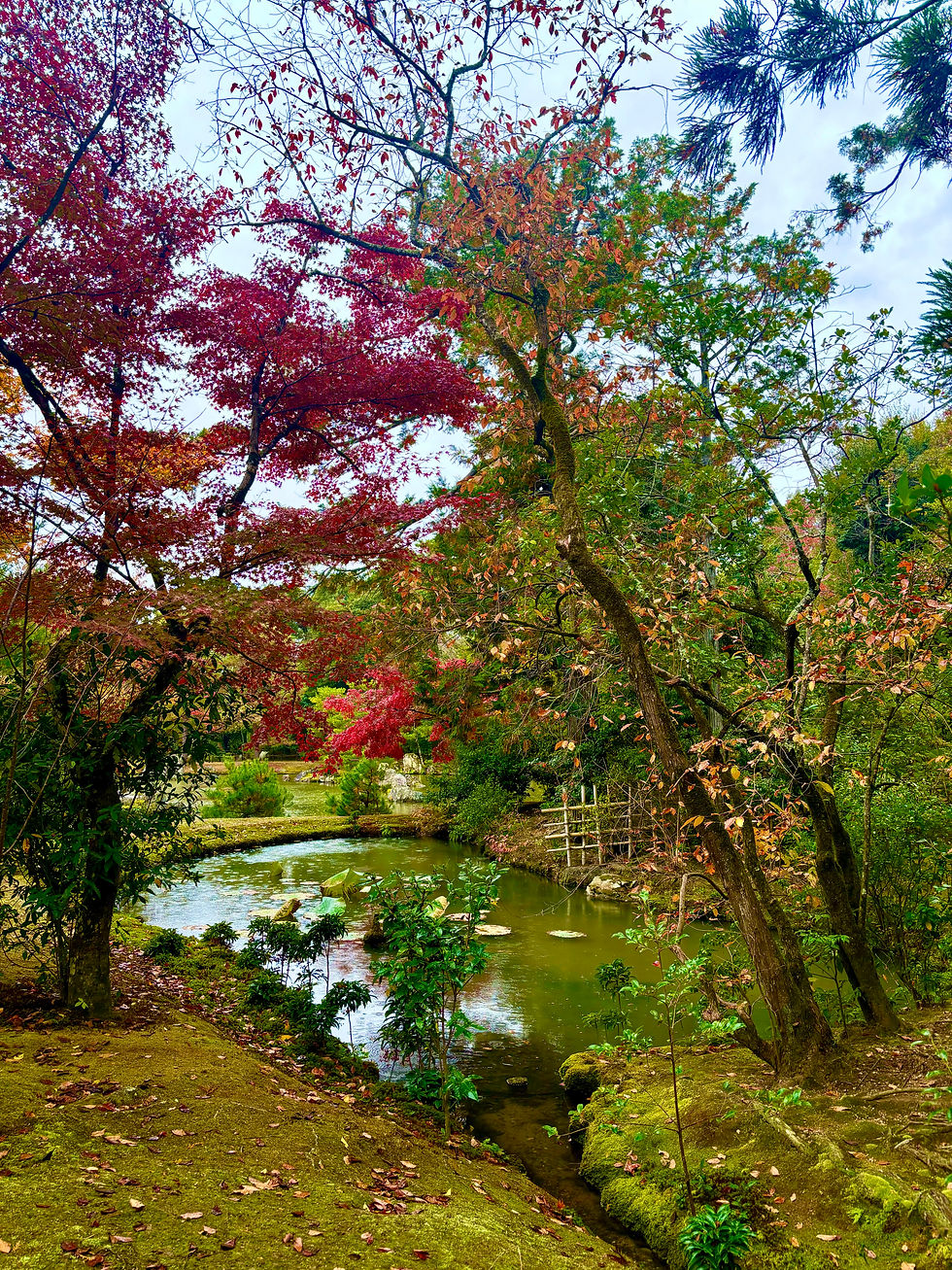
The combination of tranquil water, shimmering gold, and breathtaking nature, make this UNESCO World Heritage Site worth a visit.
Sagano Bamboo Forest

Sagano Bamboo Forest Just After Sunrise
Next up is the Sagano Bamboo Forest, also known as the Arashiyama Bamboo Grove. Whatever you choose to call it, I call it my favorite place in Kyoto, which is reflected by the volume of pictures I took. Still, I couldn't fully capture its beauty.

Sagano Bamboo Forest is one of the most enchanting natural landscapes in Japan.
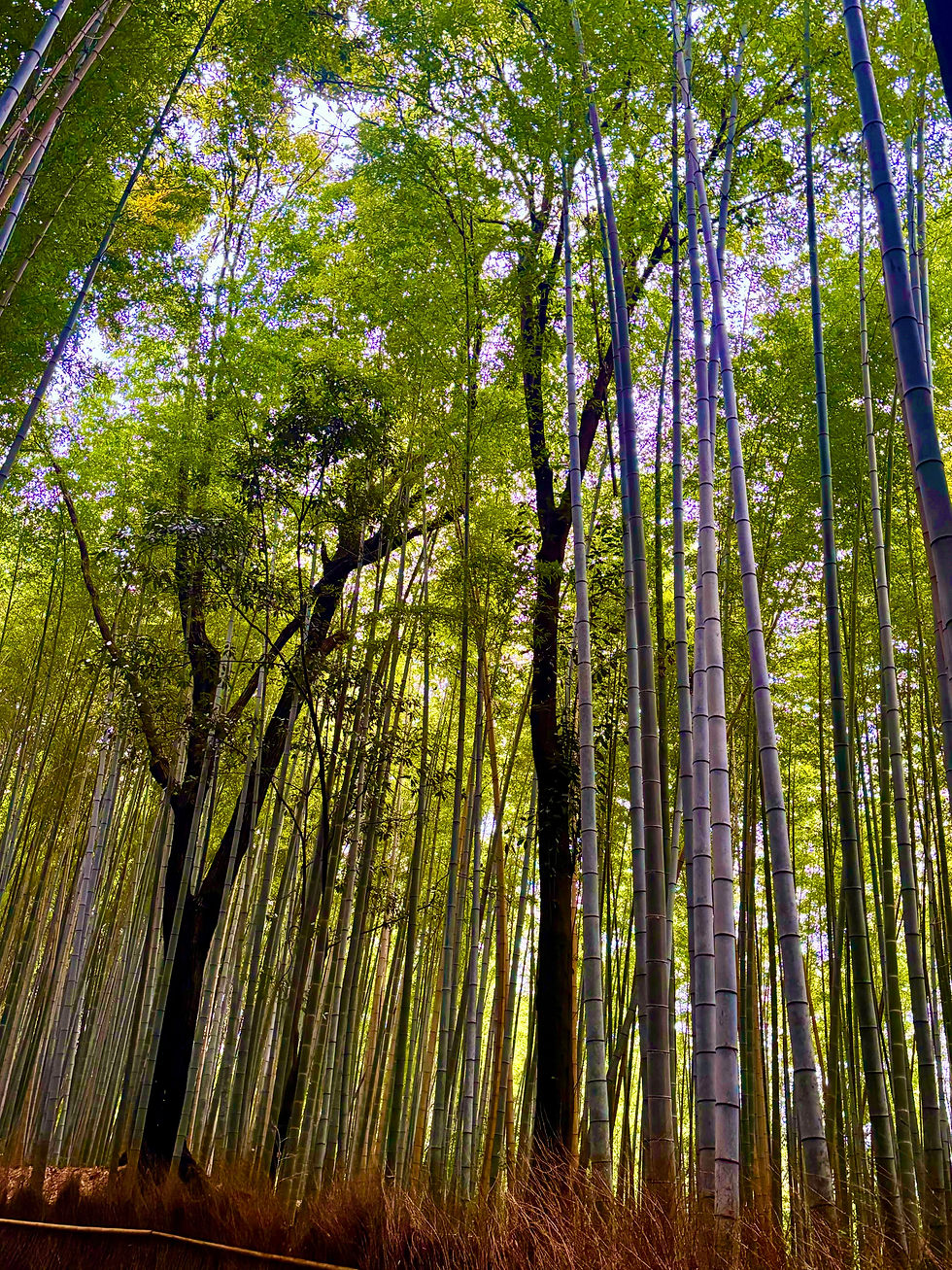
In early morning, mist and stillness hover in the air, while later in the day, winds pick up and create music through the leaves.

The sound of the rustling bamboo is so precious that it has been recognized by the Ministry of Environment Soundscape as one of Japan's most beautiful natural soundscapes.

Visually, it is equally stunning. The towering bamboo stalks rise toward the sky creating a natural, green corridor through which sunlight softly filters.
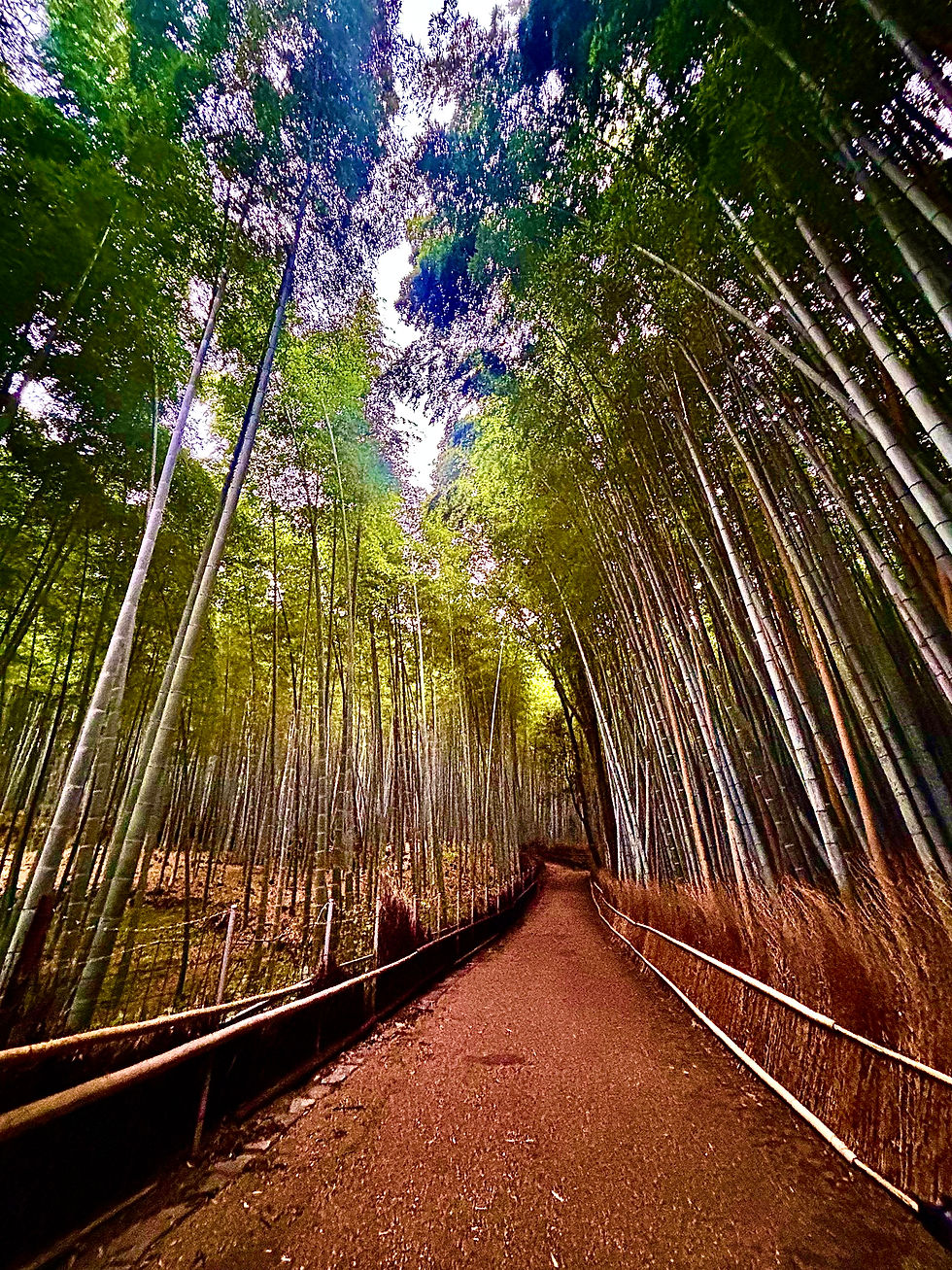
Bamboo has long been a symbol of strength, purity and resilience in Japan because of the combination of its solid composition and flexibility, which allows it to bend without breaking. In fact, there are some striking sections of the forest, like the one pictured above, where the stalks lean gently in one direction, creating sweeping, curved patterns and the illusion that the forest is moving with you in waves.

Deeper within the forest, and in the quieter corners of the grove, you'll find a pond filled with hundreds of lily pads lazily drifting along.

Walk farther and you'll see a cemetery with rows of traditional stone markers, some covered lightly with moss, marking the passage of time. Like so many other places I visited in Kyoto, here you'll find that the boundary between sacred space and natural environment is blurred, if not invisible.
Kimono Forest

From a natural forest, we head to the man-made Kimono Forest, an art installation created by Yasumichi Morita, consisting of tall, cylindrical pillars wrapped in vibrant, traditional, kimono fabrics.
Arashiyama Station
The installation is located at the Arashiyama Station on the Keifuku Electric Railroad. As you approach and leave, you will see some of the 600 pillars that reflect the elegance and artistic heritage of Japanese textiles.

At night, the pillars are illuminated from within, giving the area a warm glow and highlighting the floral, geometric, and seasonal designs and patterns in the kimonos.
"Kimono" means "thing to wear," yet it is so much more than that. Historically, kimonos represented a person's life and status. Sleeve lengths, fabrics and patterns would indicate a person's marital status, age or an occasion.
Gion Tea Ceremony
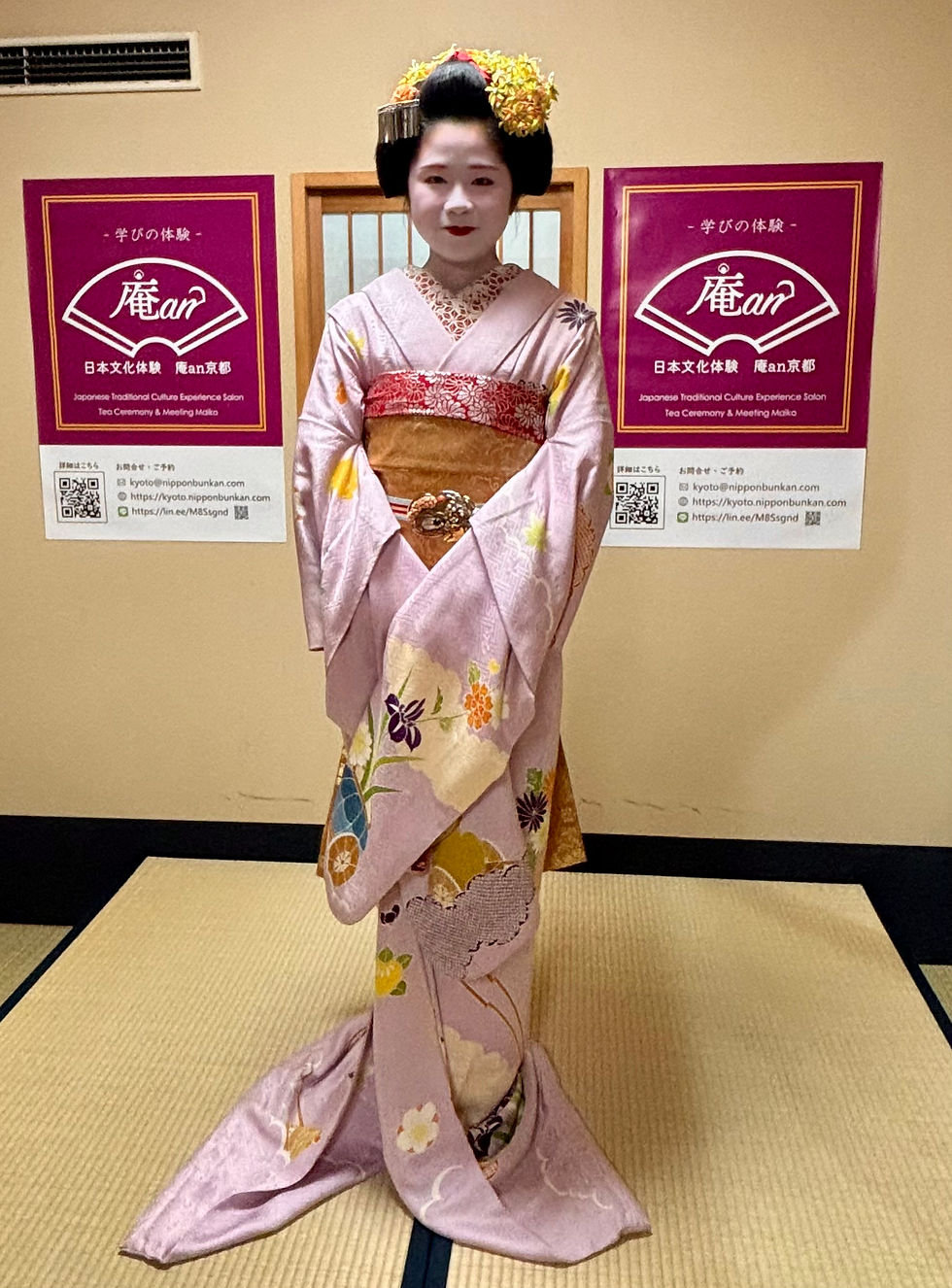
Maiko
In Kyoto, one of the most recognizable images of traditional culture is the elegant appearance of a geisha dressed in a beautifully crafted kimono.

This sighting, if it occurs, will take place in Gion, Kyoto's geisha district. This famous, historic district located between the Yasaka Shrine and Kamo River is the center of geisha culture. If you do see a geiko (full-fledged artist) or maiko (geiko in training), Japanese etiquette forbids interacting with or photographing them.

In order to interact with geisha, you can book a cultural show, attend a banquet or partake in a tea ceremony where they perform or interact formally. That segues us nicely into the next activity I recommend in Kyoto, which is attending a tea ceremony or booking a class.
I chose to book a tea ceremony class where I could learn the rich, cultural tradition, as well as the ritualized practice, around preparation and serving powdered green tea, or matcha.

Tea Ceremony Class
The tea ceremony is anchored in Zen Buddhism. The more than 1,200 year old tradition emphasizes harmony, respect, purity, and tranquility, which are expressed through every minute action during the ceremony. Take that, coffee!
The maiko guided us through the process. Her every movement was deliberate and graceful. Mine, not so much, as you can see from the spilled matcha on my tray. To begin, we were to precisely measure the matcha and place it in our bowl.
Next, we added a pre-measured amount of water to the matcha. The boiled water was not to be added unless and until it cooled to a temperate between 70-80 degrees Fahrenheit, depending on the grade of the matcha. Too hot and the water would scorch the delicate tea leaves releasing a bitter flavor, whereas a proper temperature enhances umami and ensures a smoother, sweeter flavor.
Next, using a bamboo whisk (chasen), we were to whisk in a rapid zigzag pattern, as opposed to a circular or back and forth motion, as I started off doing. Oh, and the chasen should hover just over the bottom of the bowl. So basically, I was doing just about everything incorrectly in the video. I learned that using this technique of quick, wrist flicks in a "W" or "M" pattern creates a creamy froth that is ideal.
Kameyama Park

My final suggestion for places to visit in Kyoto is Kameyama Park. If you visit the Arashiyama Bamboo Grove, exit toward the north end of the forest and there you will find Kameyama, my favorite park in Kyoto.
From Kameyama Park you can see the Hozu River as well as the forested mountains that surround the Arashiyama area.

The calm, blue-green river is made even more striking by reflections of the surrounding foliage, especially in autumn when the leaves are both warm and vibrant.

Strolling along the bank, you can enjoy the colors at a slower pace.
You may even catch a glimpse of traditional wooden boats gliding along the water with the ducks.
From ancient temples and shrines to modern city views, I hope this post and the last provide you with a guide to exploring Kyoto and seeing how tradition and everyday life exist side by side in this remarkable city. Next, I'll share some dining recommendations in Kyoto.


Comments