Best Restaurants in Kyoto: Kaiseki, Nishiki Market and Local Specialties
- The Anonymous Hungry Hippopotamus
- Mar 14
- 7 min read
Updated: 2 days ago
Kyoto is famous for its temples and shrines, but it is equally celebrated for its food. From refined kaiseki meals and premium wagyu beef to bustling market stalls and traditional sweets, the city offers some of Japan's most memorable dining experiences.
Food was one of the reasons I fell in love with Kyoto. The city approaches cooking with the same philosophy that shapes its temples, gardens, and traditional arts: nothing is rushed, nothing is excessive, and every detail matters. Whether I was sitting down to an elegant kaiseki meal or eating a rice cake from a family-run street stall, I found the same commitment to craftsmanship, seasonality, and precision.
Tanghulu Vendor
For example, in Kyoto and Tokyo, I had the opportunity to try what is known as luxury fruit, or fruit cultivated with extreme care. It is often the only piece of fruit allowed to remain on a vine to maximize flavor and appearance. In the video above, a street vendor is dipping such fruit into a bath of boiling, sugar syrup.

Tanghulu
Once coated, the fruit is placed immediately in an ice bath to prevent it from cooking. The finished product is referred to as tanghulu or glass candy. Here, Kotoka strawberries from the Nara prefecture, and Shine Muscat grapes, both known for being intensely sweet, are presented on skewers as a snack. Bite through the crunchy shell and you're rewarded with the juicy fruit.

I came to conclude that fruit is an art form in Japan, and that there is reverence shown toward ingredients in their natural state. In many Western desserts, fruit becomes a supporting player beneath layers of sugar, butter, pastry, or cream.
In Japan, fruit is often treated as the star of the show. The goal is not transformation but enhancement. A perfect strawberry, grape, or apple is already considered an achievement. The chef's role is simply to reveal its best qualities rather than disguise them.
Take this apple for example. All by itself, the flavor was remarkable due to meticulous, labor-intensive cultivation and strict quality grading. It was served sliced with a drizzle of honey, some cream and a few crumbles to enhance it, but the predominant flavor and substance was that of a raw apple.
The same care and attention to detail is paid to all manner of foods. For example, in the video above, I passed a yako mochi stand that I later circled back to. When I did, I learned that five generations in this family have been perfecting these charcoal-grilled rice cakes that are chewy, crispy, smoky, gooey and stretchy all at the same time.
Nishiki Market

Nishiki Market
If you are interested in sampling multiple foods that are executed with this type of conscientiousness, I suggest a trip to Nishiki Market, located in the heart of the city and often referred to as "Kyoto's Kitchen."

The market extends for about five blocks, through narrow streets lined with dozens of stalls selling regional and traditional foods.

Octopus, Shrimp and Scallop Skewer Vendor
Nishiki Market dates back to the 14th century when fish merchants would sell their seafood street side because of the natural, underground wells that made it possible to keep food fresh before refrigeration.

Sushi Vendor
Today the market contains more than 100 shops selling far more than seafood. That said, one of the most lively sections still remains the seafood area where vendors display fresh fish, mollusks and shellfish.
Vendors prepare many items right in front of you, slicing, grilling, and searing for your immediate consumption.
My favorite were the grilled scallops with a lightly caramelized exterior and a soft, juicy center.

Tempura Restaurant
Adjacent to the market are many sit down restaurants, if that is more your speed.
I chose a place that specializes in one of Japan's most beloved foods: tempura.
This is not the heavily battered and oily tempura you are probably accustomed to.
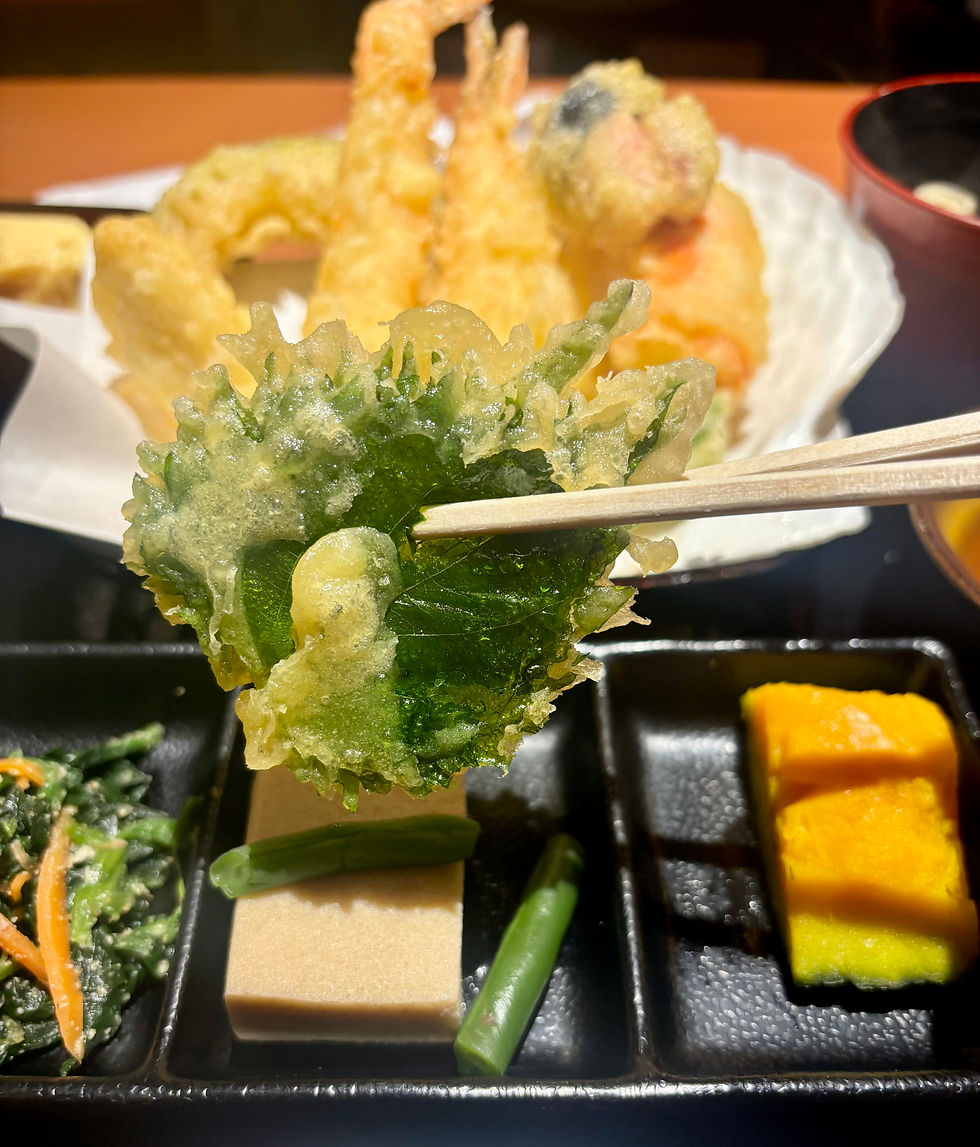
Shiso Leaf Tempura
In Japan, tempura batter is extremely light, forming a thin, crisp coating, instead of a heavy crust.
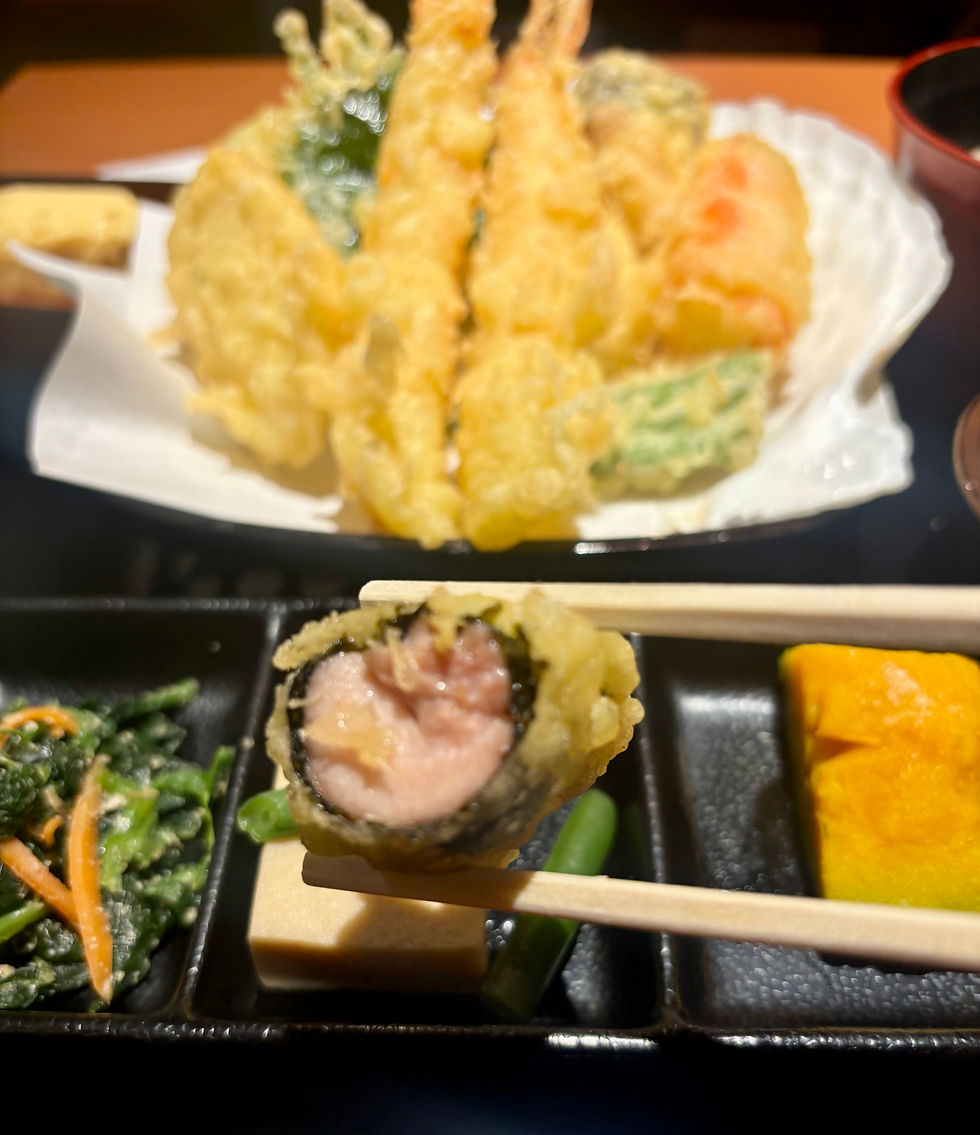
Salmon Tempura
Each piece I ate was airy and delicate and provided a satisfying crunch.
Equally light were the dipping sauces, grated daikon radish and seasoning salt that accompanied the tempura, allowing me to enjoy the purity of each ingredient.
Torisho Sai: Yakitori
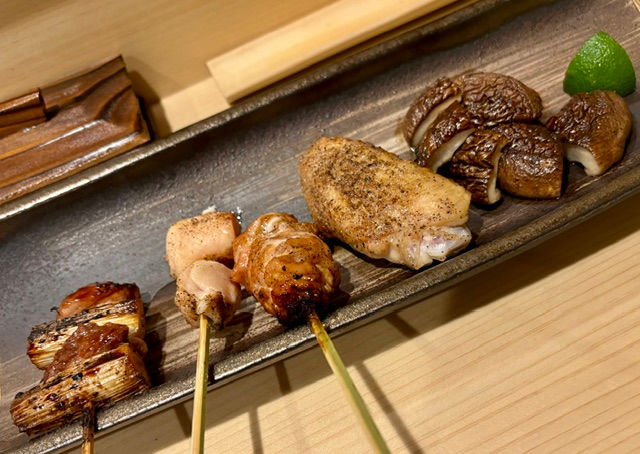
Yakitori
Another Japanese speciality I tried in Kyoto was yakitori. Yakitori has traditionally consisted of bite sized pieces of chicken, grilled over skewers. In fact, "yakitori" means chicken. Today, many yakitori restaurants include other meats, as well as vegetables, on the menu.
I enjoyed yakitori at Torisho Sai, shortly after it opened. The restaurant uses Hinai Jidori, one of the top three premium chicken breeds in Japan. The meat and vegetables are grilled over tosa bintochan charcoal, which enhances the deep, natural flavor of this premium chicken.
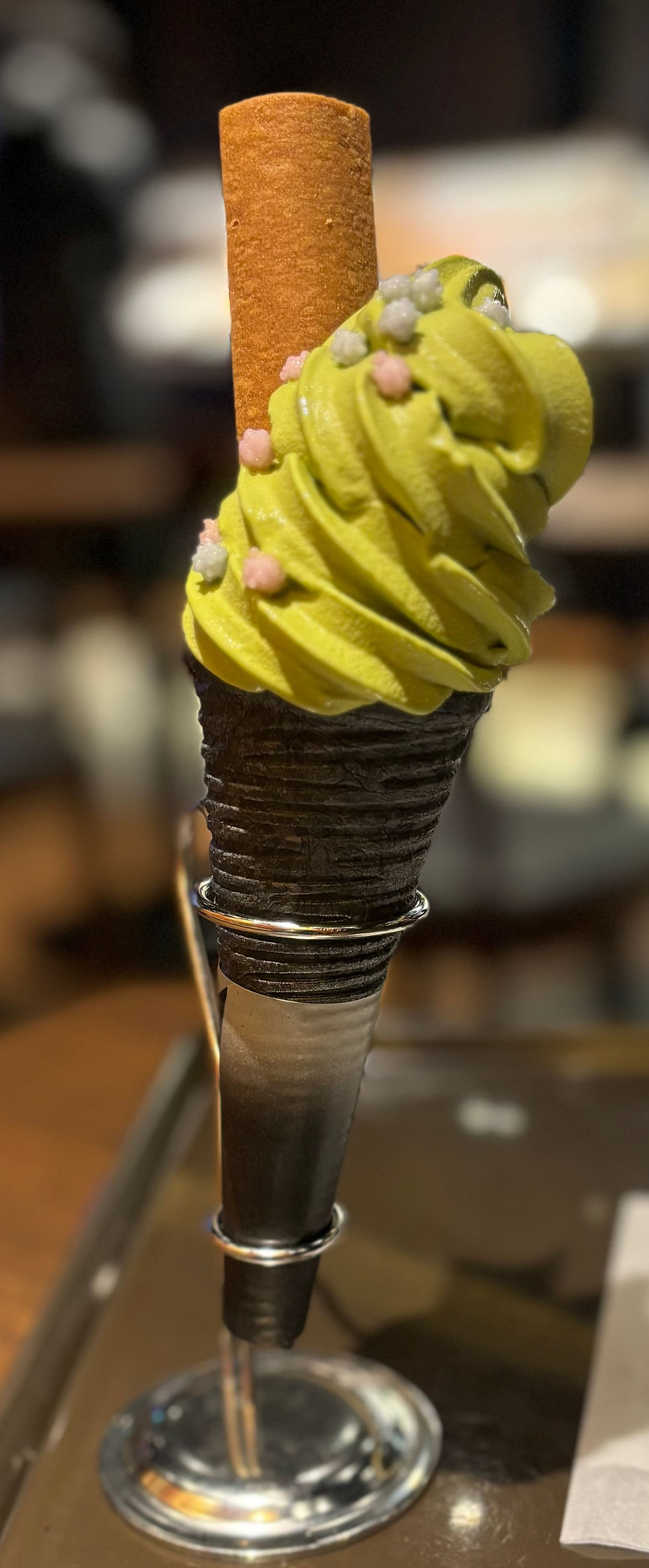
The food was phenomenal, so I wasn't surprised when less than three months after my visit, it was recognized by Michelin.
Teppanyaki Kobe Loin Bettei Kyosaien
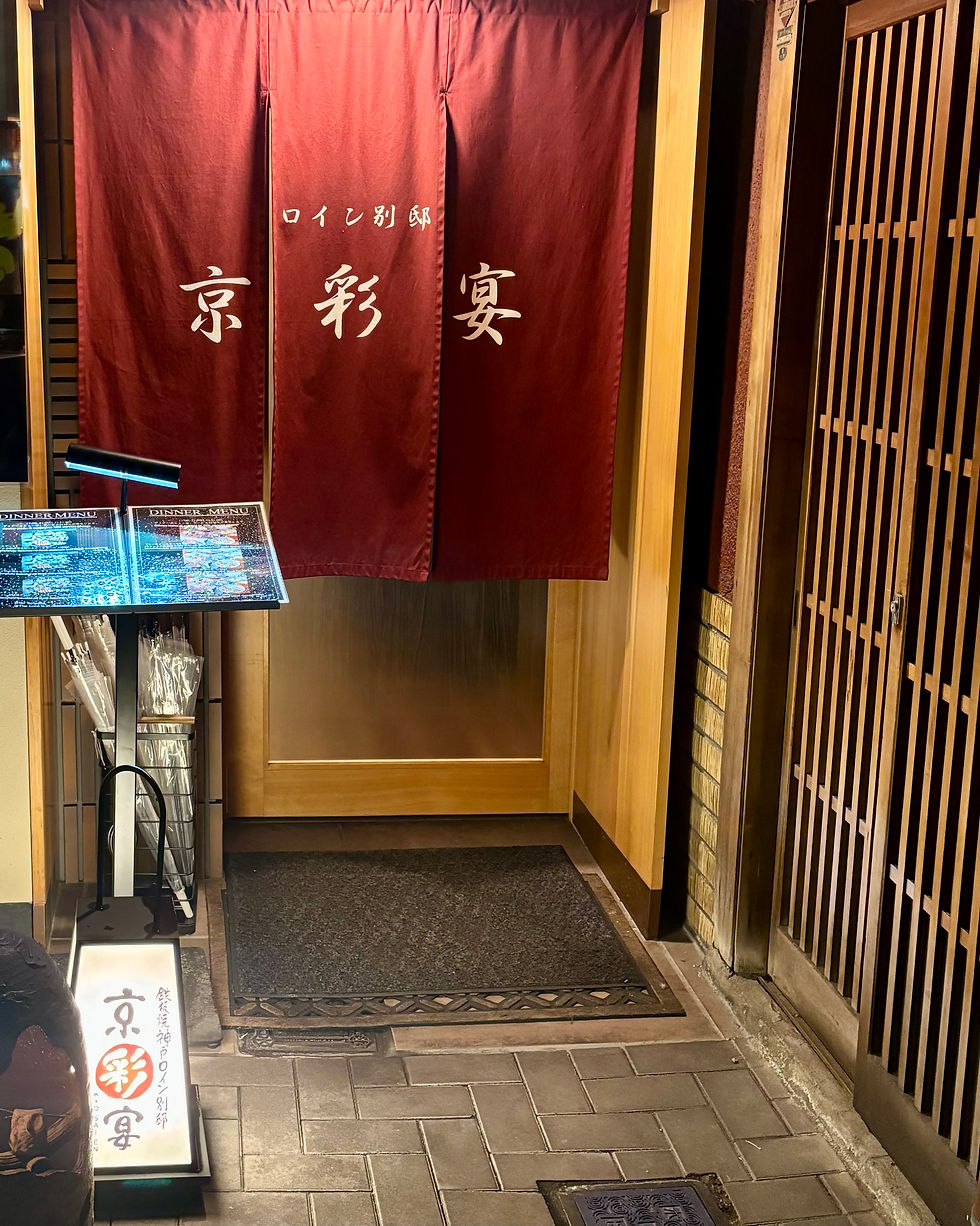
Teppanyaki Kobe Loin Bettei Kyosaien
My favorite meal in Kyoto came down to a close contest between Kikunoi Roan and Teppanyaki Kobe Loin Bettei Kyosaien. The styles could not have been more different. One celebrated the quiet elegance of kaiseki. The other revolved around a gleaming iron griddle and the careful choreography of a chef preparing each ingredient before my eyes. Yet both embodied the same philosophy: exceptional ingredients treated with extraordinary care.
Teppanyaki Kyosaien, specializes in teppanyaki, like the name suggests. Teppanyaki is a style of cooking in which ingredients are prepared on a large, flat, iron griddle called a teppan. If you've ever been to Benihana in the U.S., you've experienced this style of cooking.
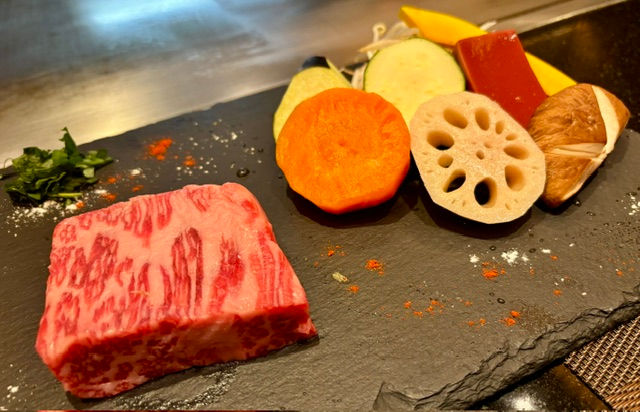
Wagyu A5 Beef and Vegetables
Subtract all the theatrics of Benihana, envision a serene, minimalist dining room, increase the quality of the ingredients and presentation many fold, expand the number of courses, and you will be headed in the right direction toward the experience I had at Teppanyaki Kyosaien.
Hospitality here, as throughout Japan, was extraordinary. After choosing my entree, and before the chef began cooking, the ingredients were presented to me for my approval. Perfectly marbled beef and impeccably fresh vegetables? Check, check!

Pumpkin Soup
With that, it was time to settle in and enjoy watching the chef prepare my meal. While I watched and chatted away with him, I was fed a warm, pumpkin soup, ...

Salad
... a tasty salad with garlic crumbles, ...

Sea Bream Sashimi and Shabu Shabu
... and some of the best sashimi I had in Kyoto. The sea bream sashimi was also served with
shabu shabu, or paper-thin slices of flavorful beef. The plate was garnished with fresh wasabi, pink peppercorns, and gorgeous, delicate, edible flowers.
Beef Fat
As I snacked happily on those appetizers, the chef was preparing the grill's surface for cooking by melting small cubes of beef tallow in which the ingredients would cook.
My vegetables were prepared first, each one attended to with care, cut precisely and then presented on my plate.

Assortment of Vegetables
Directly across each vegetable was a condiment that I was getting ready to apply to the slightly caramelized veggies.
The chef suggested however, that I reserve some, or all, of the condiments for my steak.
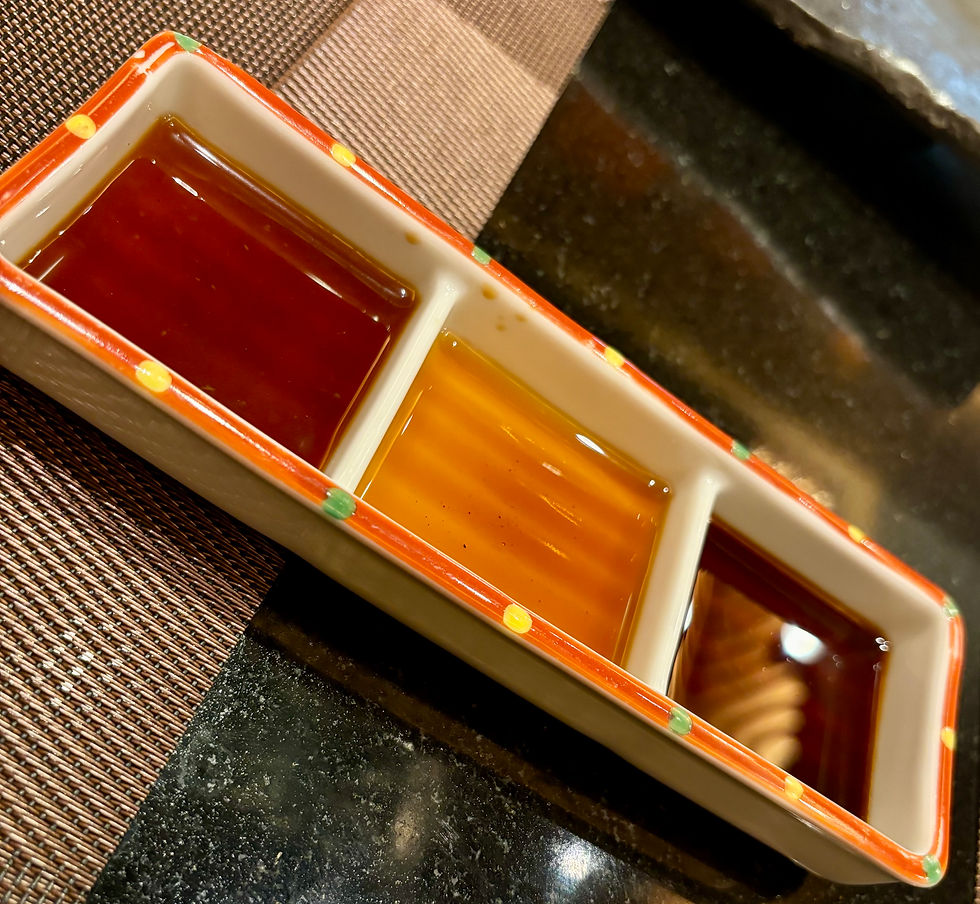
Instead I was given light, elegant sauces in which to dip my vegetables.
I nibbled on the flavorful vegetables while the chef cooked my steak.
I appreciate how in teppanyaki, each component is cooked separately and in stages so that every item is served to you at the peak of flavor and at ideal temperature.
The chef made suggestions of different combinations of condiments that would enhance the flavor of each piece of steak. This particular bite was composed of my medium rare wagyu, two garlic chips and a tiny bit of sea salt.
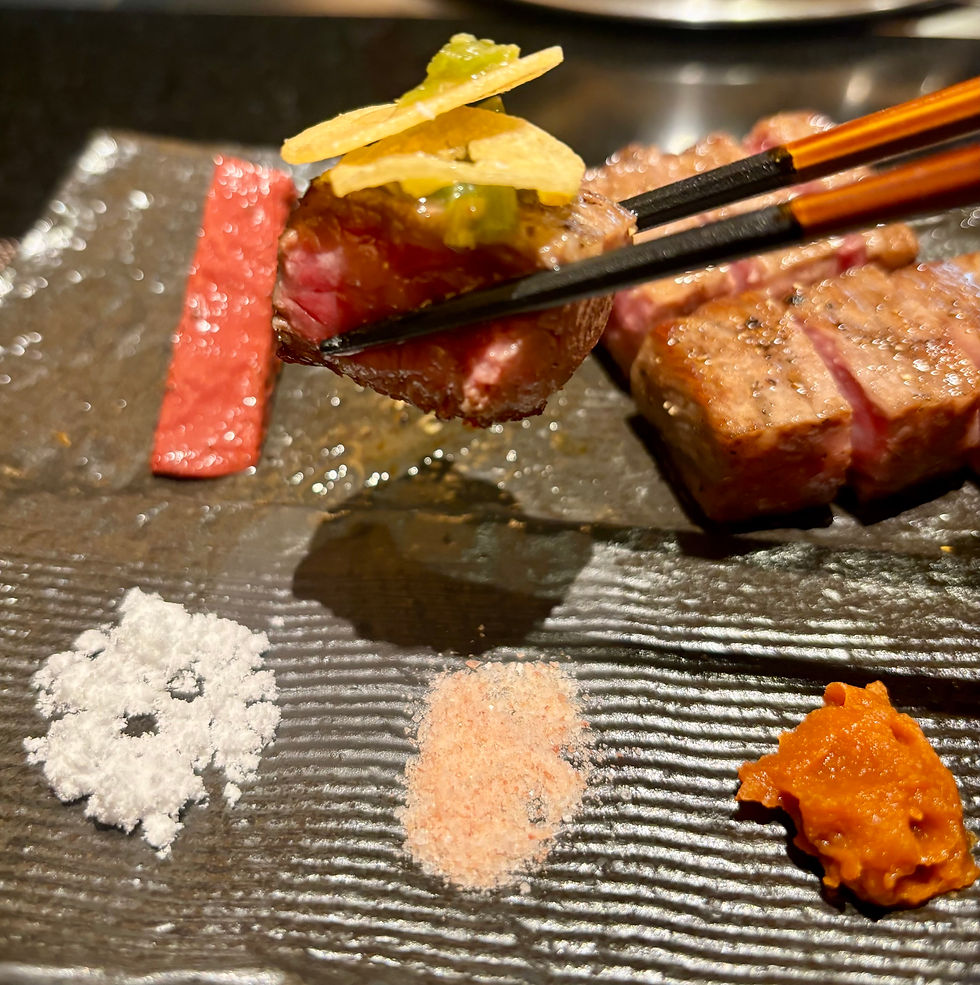
Steak, Garlic Chips, Fresh Wasabi
In this same fashion, the chef guided me through my meal with different flavor combinations. There wasn't a single bite that was less than delectable.
Fried Rice
As is customary in Japanese meals, rice was served as the last savory item. In this meal, it was fried with vegetables and beef ...
... and topped with nori.

Berry and Yuzu Sorbet
The meal concluded with berry and yuzu sorbets and one small, but intensely flavorful, luxury strawberry. This is a restaurant that I would definitely return to and would recommend you give a try.
Pancake Room: Japanese Soufle Pancakes

Japanese Soufflé Pancakes
My final, Kyoto food recommendation is one of the most visually distinctive desserts in Japan: the Japanese soufflé pancake. This dessert began in Tokyo and Osaka in 2010, growing wildly in popularity and spreading to other parts of the country. It was definitely on my list of Japanese specialities to try during my visit, and I got the opportunity while in Kyoto.
Notice that I have referred to the Japanese soufflé pancake as a "dessert" and not a breakfast item. Unlike in the U.S., where sugary, carbohydrate heavy items are regularly consumed in the morning, Japan treats this dish as one that is appropriate for an afternoon snack, dessert or maybe a special occasion brunch every once in a great while. It is overwhelmingly only tourists that you find consuming this speciality dessert to set their day in motion.
As opposed to American pancakes, Japanese soufflé pancakes are tall and cloud-like. The secret to their light and airy texture lies in the batter, which is composed of a stiff meringue that is gently folded in. This technique traps air bubbles that give the dish its light texture.
The pancakes are also cooked over very low heat, and sometimes covered with a lid to steam, so that they rise as much as possible and remain moist.

They are soft and delicate with a texture reminiscent of angel food cake.
I found them delightful, dusted with powdered sugar and just a touch of chantilly cream. If you crave more sugar and desire a richer experience however, syrup and butter are provided.
Kyoto may be famous for its temples, shrines, and centuries of history, but some of my strongest memories are of meals. A perfectly grilled skewer. A bowl of matcha. A slice of impossibly sweet fruit. A chef explaining which combination of salt, garlic, and wasabi would bring a piece of wagyu to life. In Kyoto, food is not merely something you consume between sightseeing stops. It is one of the city's most profound expressions of culture, craftsmanship, and place.


Comments