Best Japanese Restaurants in Tokyo: Kaiseki, Yakiniku and Local Specialties
- The Anonymous Hungry Hippopotamus
- Feb 19
- 7 min read
Updated: 2 days ago
Tokyo's dining scene is famously international, but no city introduced me to Japanese cuisine more completely than Tokyo itself. During my time in the capital, I explored everything from seasonal omakase menus and handmade soba to charcoal-grilled wagyu and even a restaurant where I caught my own dinner. Together, these meals offered a glimpse into the remarkable diversity, craftsmanship, and regional traditions that define Japanese food culture.
Hibiki (Meguro)
The first restaurant on this Tokyo food adventure is a hidden gem nestled in Meguro that was recommended by my family, who are locals. Every ingredient seemed chosen to capture a specific moment in the season. Some were familiar, others entirely new to me, but each reflected the Japanese devotion to showcasing ingredients at their peak.

Radish
To cleanse and prepare our palate for the courses to come, we were given a small piece of chiseled Kyoto radish topped with thinly shaved yuzu zest.

Next, the chef prepared five, small plates of seasonal delicacies.
From left to right, we enjoyed some namafu, a fresh, wheat, gluten delicacy from Kyoto, followed by white clam, mantis shrimp, octopus, and a specialty chicken dish from Fukuoka.

Bonito
Our main dishes began shortly thereafter. We started with bonito from Kochi. Rather than using large net fishing, Kochi fisherman use traditional pole and line fishing methods to catch this ruby red fish, with a smoky flavor and tender texture, in the warm, Kuroshio current. Our bonito was seared and then seasoned with smoked rice powder.

Black Cod
Next, we had a grilled black cod with daikon oroshi, or shaved radish, and a squeeze of lime.

Sekogani
One of my favorite courses was the female snow crab, widely known as sekogani or koubako-gani, which is available only during the Fall season. The sweet, steamed crab was served with a generous amount of uchiko (inner roe) and sotoko (outer roe).

Pork and Shrimp Dumpling Soup
Our soup had an incredibly light seafood broth that balanced the heavier pork and shrimp dumpling. The soup was finished with a few fresh spinach leaves, carrot and lemon zest.

Meatball
The meatball was especially unique. It was sandwiched with mashed potatoes between two tempura fried onion slices. It contained so many textures and flavors.
Uni and Shirako Noodles
The next dish contained uni, or sea urchin, which I am very familiar with. The other ingredient was Hokkaido shirako, a reproductive gland of the male fish. This is a delicacy I got to taste for the first time at Hibiki. Both the uni and shirako were served in dashi broth with noodles.
Truffle Crab Rice
The savory part of our meal ended with a restaurant speciality, the crab rice. The chef shaved fresh truffles over the delicately flavored rice, laden with crab.

This added an earthy element to the floral rice and sweet crustacean.

Then we were given a raw egg yolk marinating in soy sauce, mirin and other goodies.
We mixed the egg yolk and sauce into the rice, which added creaminess to create an elevated version of a dish called tamago kake gohan, which customarily consists of just the raw, marinated egg yolks served over rice.
While we enjoyed our truffle crab rice, we watched the chef preparing strawberry mochi from scratch.

Dessert
Moments later, our final course arrived featuring that freshly made strawberry mochi along with a scoop of vanilla ice cream in a crispy wafer shell. This meal was true artistry, combining the season's best to showcase Japan's culinary excellence and heritage.
Tamawarai (Shibuya)
Chrysanthemum Greens and Mushroom Salad
The next restaurant is Michelin recommended Tamawari, which specializes in soba, or thin, buckwheat flour noodles. The chef grinds the husked buckwheat that he gets from both his garden and from farmers in a local prefecture.
While we waited for our soba, we shared a chrysanthemum and mushroom appetizer. The dish was made with blanched chrysanthemum greens and several types of mushrooms that were marinated and served in a light dashi broth and topped with bonito flakes.

Weekly Soba and Rice Special
I ordered the weekly soba special, which came with soba noodles, broth and a mushroom fried rice. Soba can either be eaten cold or hot. The dish I ordered was the cold variety.
To eat, you simply grab some soba noodles and dip them in the tsuyu, an umami rich sauce or broth. The broth was made with dashi (bonito broth), soy sauce and mirin and topped with green onions.

Kamo Nanban
My cousin ordered a hot soba called kamo nanban. In this dish, the warm soba noodles are served in a savory, soy-based broth topped with leeks. The variety he chose was served with minced duck and it was very tasty.
I wouldn't say that I disliked soba prior to this experience, but it was certainly not a dish I sought out. Before this meal, soba was never something I actively sought out. Afterward, I found myself wondering how quickly I could locate a comparable bowl back home.
Beef Kitchen (Nakameguro)
This third restaurant is called Beef Kitchen and as you might imagine, it serves beef. To be specific, this is a yakiniku restaurant that specializes in beef. Yakuniku is a Japanese dining style where bite sized pieces of meat are grilled over a gas or charcoal grill.

If you are searching for context, it is similar to Korean barbecue. At this particular yakiniku restaurant, we were even served banchan, or the small side dishes that accompany Korean barbecue.

Before I go any further, let me advise you to avoid this restaurant if you are vegetarian or vegan. But for this salad, I don't think there was an item on the tasting menu you could eat.
Pork Dumpling Soup
We started with a dumpling soup made with pork. From that point until dessert, I deeply comprehended why the name of the restaurant was chosen.

Wagyu Nigiri
The magnificent parade of beef began with this piece of wagyu nigiri.

Wagyu Tartare
Next we had a lightly marinated, wagyu beef tartare, served over an egg yolk and topped with toasted sesame seeds. The meat melted in my mouth.

Gyūtan
Next we had gyūtan, or beef tongue, a staple at yakiniku restaurants.
After one bite, I understood why gyūtan is a beloved delicacy. The well marbled, grilled meat was tender and so flavorful, it needed nothing more than a small squeeze of lemon, which enhanced the flavors.

Sāroin
Eating at this restaurant really helped me delve into the nuances of different cuts of beef. While over time, I have tasted numerous cuts of beef, I had never had them side-by-side, in one sitting like I did at Beef Kitchen. Moreover, I hadn't eaten consistently, high quality, extremely well marbled beef like this, perhaps ever.
Sirloin is generally considered less luxurious than highly marbled cuts such as ribeye or exceptionally tender cuts like filet mignon. Not the sirloin at this restaurant. It was fantastic.

Sasabara
The same anomaly applies to this flank steak, a cut that while very flavorful, can be much less tender than more premium cuts. The flank steak at Beef Kitchen was incredibly tender and also much more flavorful than other flank steak I have enjoyed.
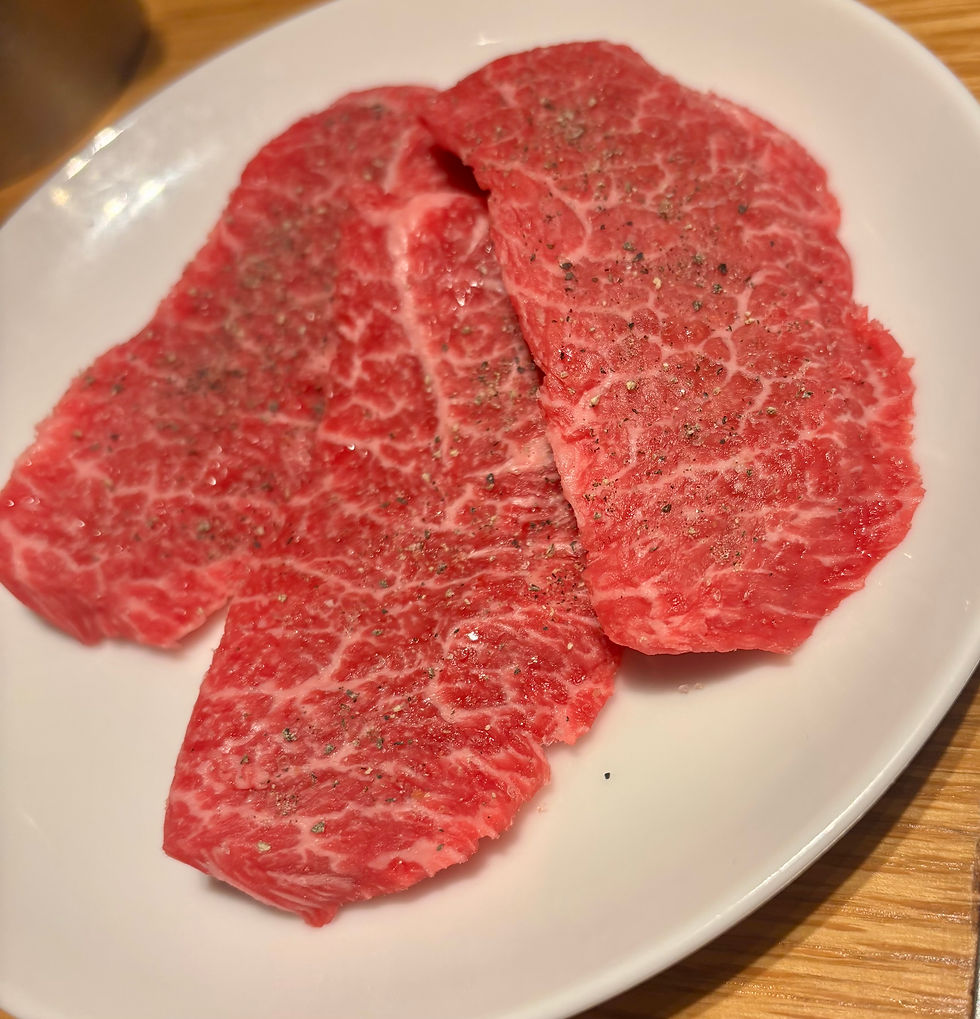
Hire
On the other end of the spectrum is filet mignon, a cut that is known for its tenderness but, in my opinion, lacks flavor. Once again, Beef Kitchen astonished me. This filet mignon was well marbled and so yummy.

Kenchi
Finally, we had shank meat, probably the most piquant cut of the evening, which says a lot because I set the bar at Beef Kitchen exceptionally high.
As with almost all Japanese cooking, a minimalist approach was utilized. The meat itself was pristine, but for the lightly smoky flavor imparted by the charcoal and some salt. If the flavor of the highest caliber beef wasn't enough, very light sauces were available for dipping.
For me, this was the standout difference between yakiniku and other forms of barbecue. Yakiniku uses unmarinated, superlative quality meat and light (optional) sauces , instead of bold marinades, sauces and large pieces of meat you have to cut into bite sized chunks on your own. I think yakiniku offers a more refined dining experience wherein you can enjoy the actual taste of the unadulterated meat with little effort.
Tsukimi-Style
That is overwhelmingly how I enjoyed the evening's barbecue with the exception of one piece of meat that was served tsukimi-style. This style entails taking more thinly sliced cuts of beef, grilling them and then dipping them in egg yolk and a light sauce before wrapping them around a small rice ball to eat.

Shimemei
The finishing dish on the savory portion of the tasting menu we all shared, was a wagyu tendon curry. Savory and simmered until tender, the dish was surprisingly light.
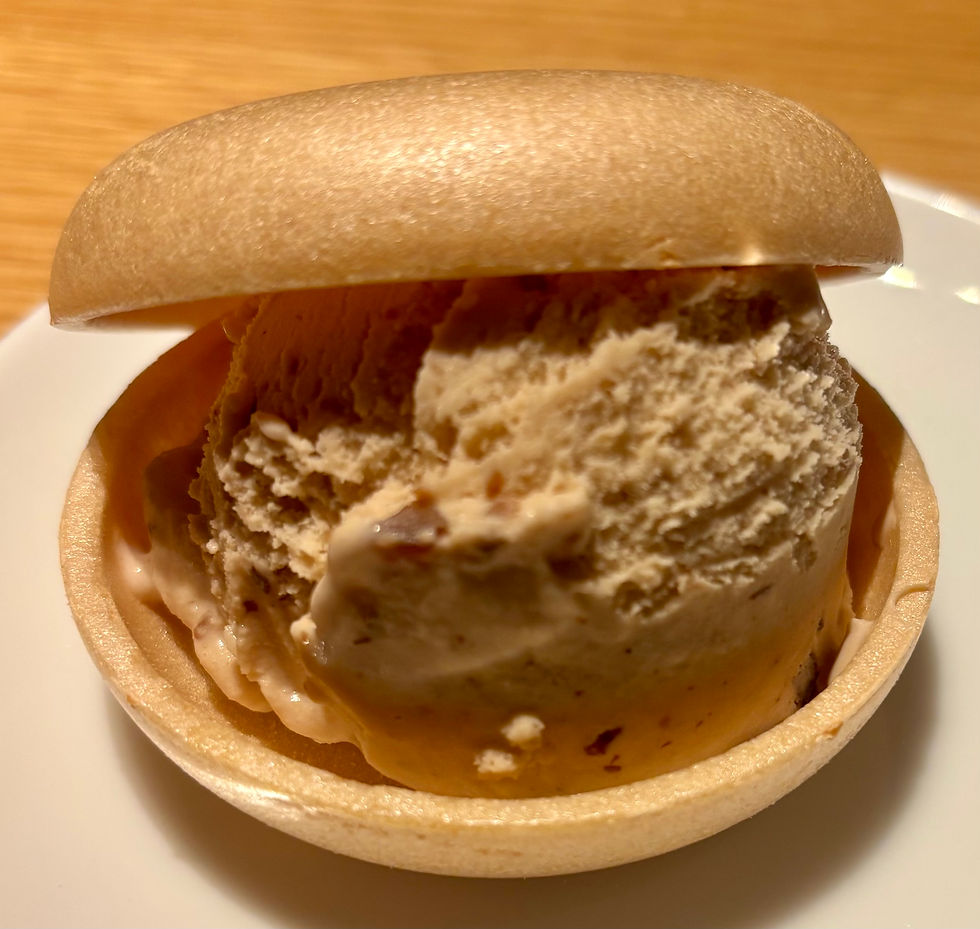
Monaka Caramel Ice Cream
We completed our meal with caramel ice cream, served in a crunchy, wafer shell.
Zauo (Shinjuku)
I started this Tokyo restaurant review with one of my niece's favorite restaurants and I'll end with one of my nephew's. This restaurant is called Zauo and it is the only one I have ever been to where you can fish for your meal before eating it. Like the couple pictured above, I did just that.

I chose my fishing pole and then chose the type of fish I wanted to eat.
There was sea bream and red snapper available, as well as several others that I can't recall. Sportsman wouldn't be entertained, but I certainly was. I acknowledge that it's gimmicky and lacks any challenge, but it was kind of fun to catch a fish that I was about to eat, even if it was out of a man made, indoor pool.

I relaxed at the table in the dining room on the floor cushions while the chef cooked my catch.

The fish was served with a salad, pickled vegetables, rice and a soup.
The soup also contained fish, but I don't think it was the same one I caught. Overall, the food was good and the experience was unique. It's one I would definitely recommend if you have children of fishing age (no license required).
A Note on Sake
I'll wrap up this post with a sake toast. In Japan, sake is commonly served in a masu, or wooden box. The Japanese tradition of sosogi-koboshi, or pouring sake until it is overflowing, is endearing and meaningful.

The overflow, which spills into the masu, symbolizes abundance, prosperity, generosity and joy beyond measure, a feeling that I experienced during these, and all of my meals in Tokyo and throughout Japan. Until next time, kanpai (cheers) and meshiagare (enjoy your meal)!

Comments