Tokyo Travel Guide: First Impressions of Japan's Dynamic Capital
- The Anonymous Hungry Hippopotamus
- Feb 6
- 6 min read
Updated: 3 hours ago

Japanese Violet Blossom, First Snow
Sapporo, Hokkaido
I started writing this blog in late 2022, a year filled with more change and loss than perhaps any other in my adult life. What started as a single idea has blossomed into a journey of growth through the fleeting, yet beautiful, moments that writing has helped me capture. Writing this 200th post feels less like crossing a finish line and more like pausing on a long, exquisite journey, to reflect with gratitude on every step that brought me here.
The Land of the Rising Sun

Shiwaku Islands, Kagawa Prefecture
Launching my series on Japan in this 200th post, feels especially fitting, as I have received more requests to write about this country than any other. Along with so many who have been waiting for this post, perhaps the city of Tokyo itself has been waiting to mark this milestone with me. A girl can dream, can't she?
Tokyo: The Big Mikan

Mode Gakuen Cocoon Tower, Nishi-Shinjuku District, Tokyo
Tokyo is one of my favorite cities, in one of my favorite countries on earth. Among so many other beautiful characteristics, the city embodies the same blend of continuity and reinvention that has defined this writing journey, and my life journey as well. I'm so excited to share my love for Japan with you in this upcoming series of posts. I just hope I do this amazing place justice.

Sunrise in Meguro, Tokyo
Japan has long been known as The Land of the Rising Sun.

Mount Fuji
The phrase not only reflects Japan's position to the east, where the sun rises, but also mirrors Japan itself, a country that honors the past and yet is constantly evolving and emerging, quietly and powerfully, like Mount Fuji herself (Onna Fuji).

Kiyomizu-dera Temple, Higashiyama, Kyoto
It's a place where ancient temples and glowing skyscrapers sit side by side and reveal the beauty of seamlessly merging the old with the new.
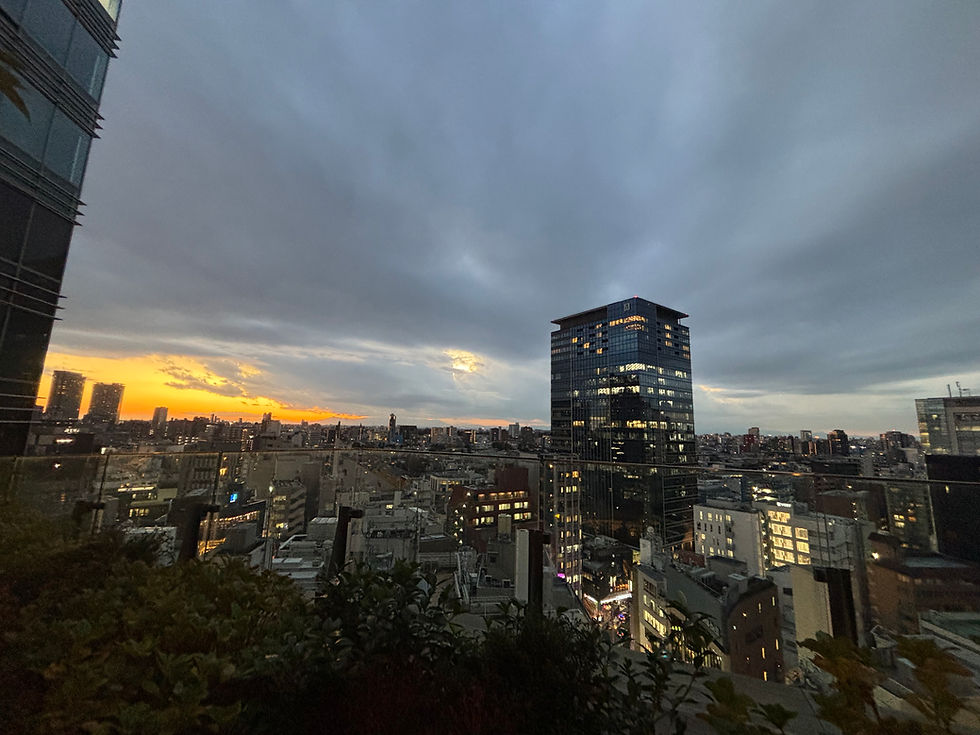
Tokyo at Sunset
Japan is divided into 47 prefectures, called todo fuken. The largest is the metropolis of Tokyo, with a population of 14 million residents.

Arashiyama, Kyoto
The other prefectures consist of one circuit or territory (Hokkaido), two urban prefectures (Kyoto and Osaka) and 43 rural prefectures.

"Saw, Sawing" Sculpture, Tokyo Big Sight Convention Center
The 47 prefectures are categorized as To (Tokyo), Do (Hokkaido), Fu (Osaka and Kyoto) and Ken (the remaining 43 prefectures).

Tokyo Tower, Minato, Tokyo
I had the pleasure, privilege and blessing of spending close to 6 weeks in Japan and the good fortune to visit To, Do, Fu and portions of Ken. I'll share about all eventually, but for now, let's start this series with To, or Tokyo.

Tallest Skyscraper in Japan, Azabudai Hills Mori JP Tower
Tokyo, the capital of Japan, is affectionately referred to as the Big Mikan, a nickname equivalent to New York's "Big Apple."

View from Tokyo Skytree Observation Deck
Big Mikan refers to Tokyo's maze-like streets, that resemble orange segments, the citrus fruit once cultivated in the region.

Shibuya River
I found Tokyo fascinatingly tranquil.

Urban Garden, Roppongi, Tokyo
Anyone would find it so in the myriad green spaces carved out as oases in the midst of the fast-paced, urban environment.
Shibuya Center
It was deeper than that though. Somehow, even in the center of town, ...
Shibuya Stream Complex
... or the busiest complexes, there was a sense of calm.
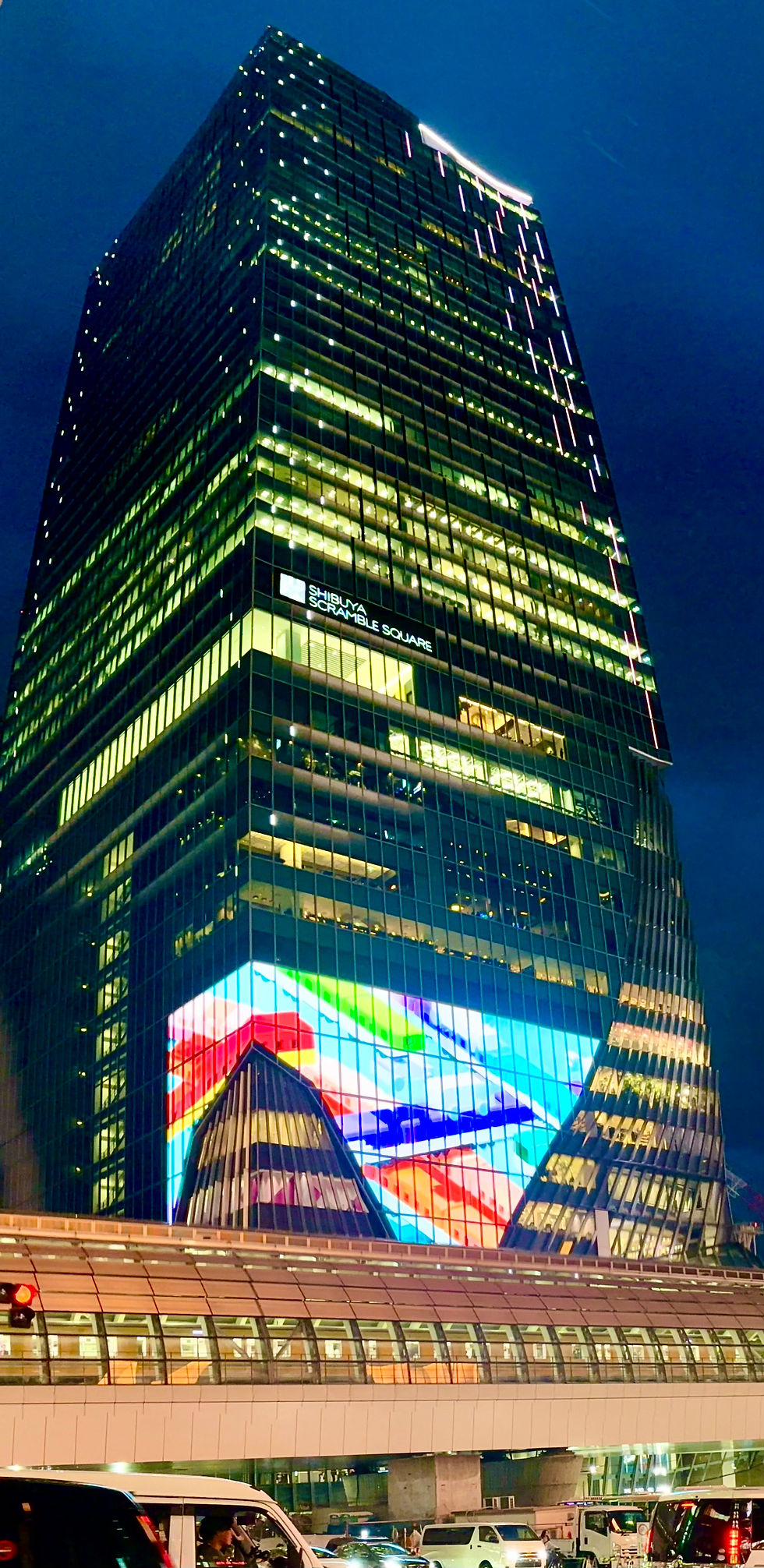
Shibuya Scramble Square
Maybe you'll disagree on that characterization, but on this we must align. Tokyo is a place of order. For me, that brings peace.
Shibuya Crossing
Shibuya Crossing
Take the Shibuya Crossing, an intersection that services nine train lines, a vast network of bus lines and countless business and shopping centers. During the busiest times of the day, between 1,000 and 2,500 people make their way through this intersection every two minutes, zigzagging a bit since traffic stops completely to allow pedestrians to cross in any direction.
The crossing has been nicknamed the Shibuya Scramble. after standing in it several times, I came to think the name misses the point. A scramble suggests confusion. What unfolds here is something closer to choreography - a dance of understanding by thousands of strangers, held together by a culture that values gaman (self-discipline) and omotenashi (anticipatory hospitality), not to mention general etiquette and decorum. Watching it felt less like observing traffic and more like witnessing trust made visible.

Hachiko Statue
Sitting outside Shibuya Station is Hachiko, a symbol of chūgi (loyalty), another value embedded in Japanese culture. Immortalized as a bronze statue, Hachiko was an Akita dog who belonged to a professor at Tokyo University, named Eizaburo Ueno. Hachiko would accompany Ueno to the Shibuya train station every morning and then return on his own in the afternoon to meet his master.
One day, Ueno didn't return from work, having died from an unexpected hemorrhage. Even though Hachiko was eventually adopted by another family, the loyal pet continued to walk to and from the station daily, awaiting Ueno's return. I mean, are we still arguing that cats are better than dogs?
Getting Around: Japan's Trains
Local Train in Tokyo
And speaking of trains and train stations, let's look at Japan's. Japanese trains are world renowned for their timeliness, with delays measured in seconds, not minutes. (Pause for five seconds and let that sink in.)

Saphir Odoriko Train
With that split-second precision, and the fact that eating is allowed on many trains, you wouldn't expect trains to be clean, and they are not. They are immaculate. This includes not only bullet trains, but local trains as well.

In addition to being timely and clean, they are quiet. These signs are visible to passengers, and even when they are not, there is an understanding that cell phones are to be silenced while on the train and calls are prohibited out of respect to fellow riders.
Watching videos or listening to music is allowed, but only with headphones. Funnily, I almost never used mine. I realized it was because there was no need to drown out ambient chaos. I could simply sit in peace and quiet and enjoy the ride.
Four Seasons of Tokyo Bay
This peace extends to the train stations as well. They are clean, well-organized and simply lovely. Just look at these stained glass windows by Japanese painter, Reiji Hiramatsu, displayed at the Shimbashi Station on the Yurikamome line in Tokyo. Entitled "Four Seasons of Tokyo," they depict images of cherry blossoms, autumn leaves and a black-headed gull, the official bird of Tokyo.
Pet Toilet in Tachikawa, Tokyo
Even the bathrooms are pristine in Japan. That applies to those for humans and animals. Yes, you read that right. If you don't believe me, just watch the video above showing a public, pet toilet.
Tokyo After Dark: Nonbei Yokocho
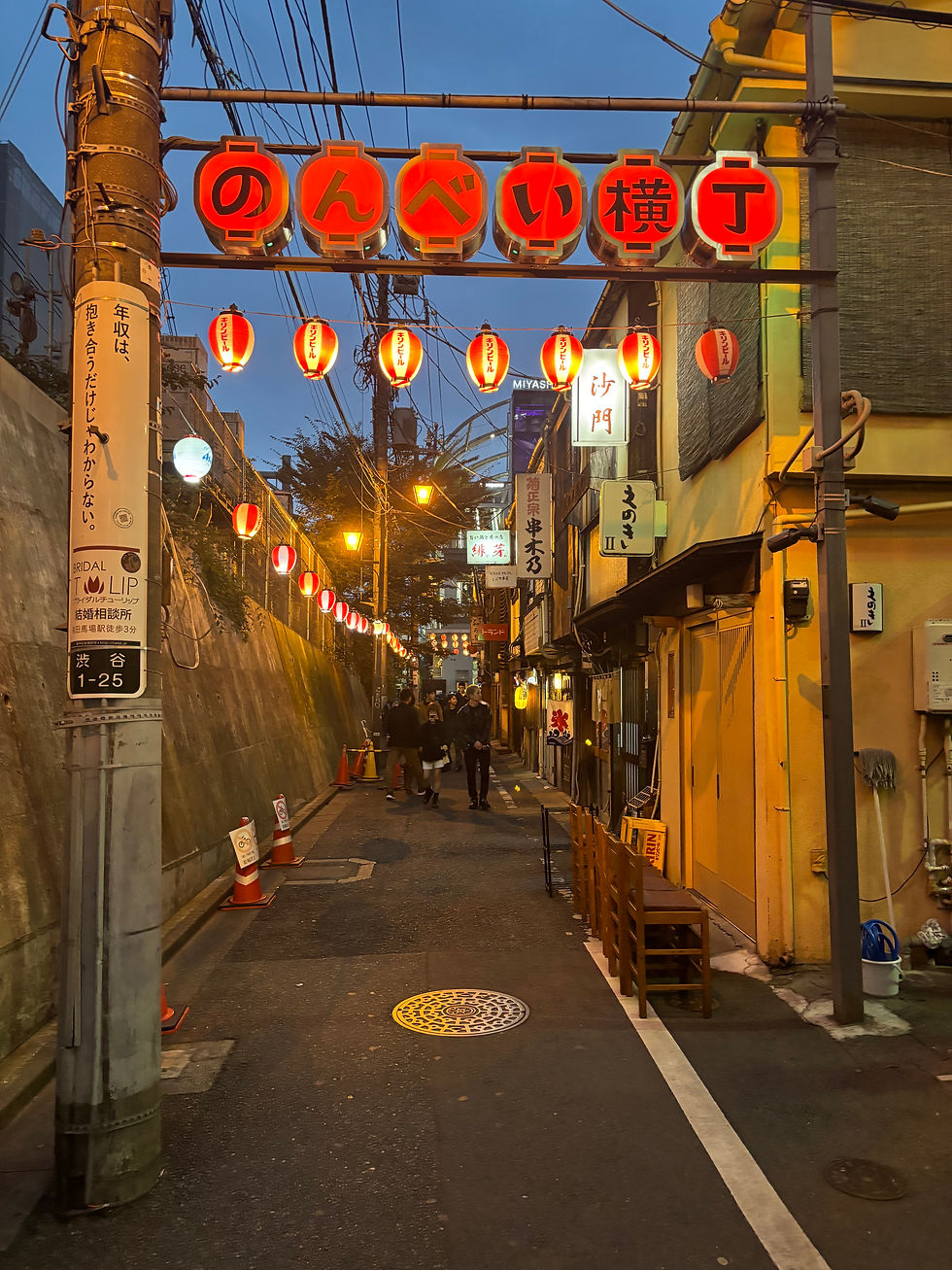
Drunkards Alley
Not impressed by the pet toilet? How do you feel about cleanliness and sensible conduct in bars? Just steps away from the Shibuya Crossing is this tiny alley called Nonbei Yokocho, or Drunkards Alley.

It is narrow, dimly lit and hard to find. If you can find it, it is absolutely worth a visit. This approximately 6 1/2 foot alley with 40 izakayas is peculiarly quiet. The alley has 70 years of history, a retro atmosphere and emits an energy of quiet and calm.

Drinks are not cheap and seats are limited, as most bars can only accommodate a maximum of 4-8 people. If you can find a spot, having a drink here is a unique experience.

Kouri Heart Rocks, Nakijin, Okinawa
What touched my heart was that the cleanliness, order, politeness and calm I witnessed in Japan is value, not rule, driven. I'm not suggesting that rules don't exist in Japan. In fact, there are many.
That said, people seem driven by the cultural value of omoiyari (thoughtfulness and empathy for others), an attitude that makes people treat public spaces like shared homes. In Japan, individuals are not focused solely on their own song, and singing it louder than others.

Mural in Naha, Okinawa
Here, harmony matters and individuality takes its beautiful place within the context of respect for others.

Sunset in Motobu-cho, Japan
That concludes my introduction to this series about Japan and my first post about Tokyo. There are still many more posts to come in this series and beyond.
For now, I'd like to pause to say thank you to those who have joined me on this writing and life adventure from the very first word to this milestone. I'm grateful for your support and I'm extraordinarily thankful to God for blessing me with curiosity to light the way and courage to carry me forward.


Comments