Where to Eat in Tokyo: Hidden Gems, Local Favorites and Exceptional Food
- The Anonymous Hungry Hippopotamus
- Feb 14
- 8 min read
Updated: 2 days ago
One of the greatest gifts of my time in Japan had nothing to do with sightseeing. I spent nearly six weeks in the country because I was fortunate enough to stay with family in Tokyo. Each day I wandered the city as a traveler, marveling at temples, neighborhoods, train stations, and restaurants. Each evening I returned to a dining table filled with conversation, laughter, and home-cooked meals. Those shared meals taught me as much about Japan as any attraction ever could.

Meguro, Tokyo
They, along with my niece and nephew, live in Meguro, a part of Central Tokyo. Meguro seemed to have everything one could want, pedestrian-friendly avenues, boutiques, a nearby train station, an artistic vibe, cute cafes, tree lined streets, great restaurants and best of all, my family.

Train Wheels From Locomotive 117 Used on the Kyusho Line in Meguro, Tokyo
As a result of their hospitality, generosity, fluency in Japanese and local expertise, I had one of the best experiences one can possibly have. I experienced Japan with the wide-eyed wonder of a tourist, absorbing every corner of each city I visited with curiosity, and then got to return home to shared meals, quiet conversations, and the rhythms of every day life that make a place feel like home and made me feel like I never wanted to leave.


Unagi
One of my favorite times at their home was mealtimes, where everyone would gather around the table to share about their day and spend quality time connecting. The food was also always amazing, as both my cousin and his wife are amazing cooks.
Take this unagi that she made, pictured above. It was grilled perfectly and instead of being slathered in that cloying syrup we are so accustomed to in the U.S., it was very lightly brushed with sauce and then sprinkled with sancho pepper, a Japanese spice from the prickly ash tree. The pepper imparts a citrus flavor and a unique, mouth tingling sensation (similar to Sichuan peppercorns).

Scrambled Eggs
Then there were the eggs that she would make in the morning. No matter how many times I have watched her and mimicked her process down to the last detail, I can't get my scrambled eggs to taste like that in the U.S. I finally realized that in addition to her cooking skills, it was the eggs themselves that were superb. They were ordered directly from a farm in a local, rural prefecture.

Ginkgo Nuts
Everything I ate in Japan seemed to come with a story. The eggs came directly from a farm in a rural prefecture. The vegetables were grown by producers known to the restaurant. The fish could often be traced back to a particular region, season, or harbor.
Food felt less anonymous than it often does elsewhere. There was a visible connection between producer, cook, and diner that deepened my appreciation for every meal. This was thanks to Japanese food quality standards, which are among the strictest in the world. Whether it was an afternoon snack of roasted ginkgo nuts, ...

Strawberry Mochi
... or strawberry mochi, it was all delectable.
Not A Pizza


Not A Pizza
There were also numerous, excellent restaurants within walking distance of my cousin's home. One of my niece's favorites was Not A Pizza. I wasn't so keen on the name, but the food was absolutely wonderful.
If you're thinking, "Why would you eat Italian food in Japan?," let me pause here to say that all the food in Japan is extraordinary, not just the Japanese food. No matter which country the cuisine originated from, it was elevated by Japan's cultural devotion to precision and excellence, so I made sure to try as many cuisines as possible.

Bacon Cesar Salad
Our meal at Not A Pizza began with a Cesar salad topped with lardons, a parboiled egg and parmesan cheese. It was very lightly drizzled with dressing. This is an aspect of Japanese cuisine I find invaluable. The inherent flavors of the food shine because the seasonings, marinades and dressings are subtle.

Calamari Fritto
Our appetizer was a panko-breaded and fried calamari that was both tender and crunchy.

Anchovy Tomato Pizza
The pizza at this restaurant is known for being innovative and having a very soft and tender crust, made by using a high-moisture dough. Their best seller is the tomato and anchovy pizza, most similar to a Margherita pizza with the addition of very finely chopped anchovies.

Proscuitto Pizza
Their proscuitto pizza was excellent as well. The San Daniele proscuitto was gracefully draped over the pizza crust and topped with grated Parmegiano Reggiano cheese.
The smallest amount of tomato sauce was used and supplemented with slices of fresh, heirloom tomatoes.

Mentaiko Pasta
As the name of the restaurant suggests, you can also order an entree that is "not a pizza." I suggest any of the pastas because every one I tried was fantastic. The most unique however, was the mentaiko pasta.
Mentaiko is a very popular Japanese ingredient made with salt-cured, Alaskan pollack roe. It is packed with umami. The mentaiko was mixed with a very light cream sauce and mushrooms and served with ribbons of green onions. This is a must order.

Rigatoni
The rigatoni topped with pork sauce and ricotta salata was cooked to a perfect al dente and ...

Spaghetti Bolognese
... the bolognese was made in the traditional style using a variety of ground meats and no tomato. I highly recommend this restaurant.
Bistro Bolero (Meguro)

Bistro Bolero
Just up the road, I visited Bistro Bolero for a Japanese-French fusion dinner several nights later.

Eggplant Soup
I was told that the tasting menu was the way to go, so I settled in for six courses starting with the eggplant soup, which was savory, comforting and silky, not at all the consistency I have come to expect from eggplant.

Octopus and Avocado Salad
The octopus and avocado salad was dressed minimally, allowing the flavors of the braised octopus and creamy avocado to come through. I thought I had tasted excellent avocados before visiting Japan. I was mistaken. With little exception, all of the avocados (as well as other produce) consumed in the U.S. are picked early, ripened during transport or sold while still unripe and then ripened on your countertop.
When produce is given a chance to ripen on the branch or vine, the taste is significantly different and superior. Not only does the vegetable or fruit taste and smell better, since it has been given time to develop maximum sugars and flavors, it is also more nutrient rich. This is just one of the many reasons food tastes better in Japan and other countries dedicated to food quality over mass production.

Mushroom, Potato and Pumpkin Genovese
The more complex flavors and denser nutrients are also likely why I've found predominately vegetarian meals much more satisfying in Japan, or other countries including India, Thailand, Ethiopia, and Côte d'Ivoire. In these, and other countries, food produced for local consumption is usually allowed to ripen naturally.
This dish of mushroom, potato and pumpkin, like the eggplant soup, was vegetarian and packed with flavor. The mushrooms were earthy and meaty, the potato, shaved into ribbons, was crispy and the pumpkin was sweet and creamy.

Grilled Oyster with Mushroom Medley
Another excellent vegetarian course was the grilled mushroom medley, which incorporated oyster, shitake and cremini mushrooms that were grilled and then tossed in a fresh herb and olive oil mixture.
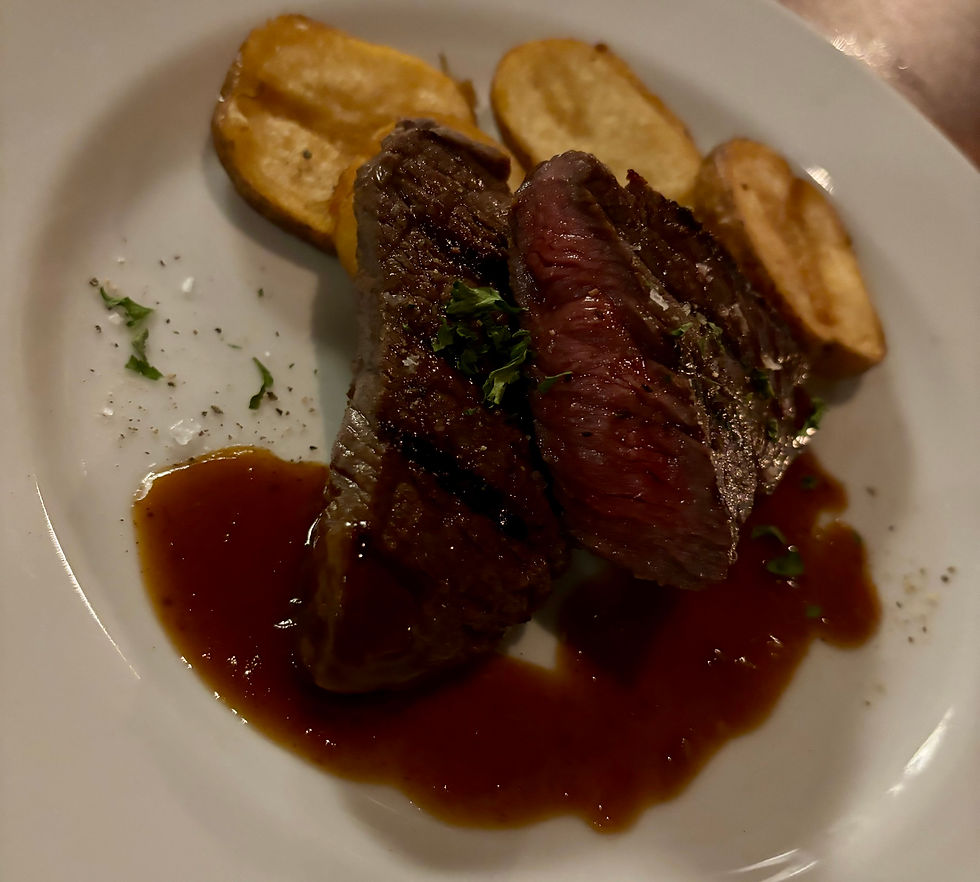
Steak and Potatoes
The main course was all about the meat. The wagyu steak seasoned with salt, was grilled and served with potatoes. The steak was so rich and flavorful that three bites in, I was fully satisfied, even though the portion itself was small.
When I say "small," I mean in comparison to U.S. portions. So, maybe instead of small, I should say the portions at this restaurant, and every other that I visited in Japan, were reasonable, healthy and appropriate. Japan really has the concept of quality over quantity mastered.

Crema Catalana
The final course of the meal was crema catalana, a Spanish custard from Catalonia. At Bistro Bolero, they omitted the customary brûlée, and added a yuzu jelly for a twist on the traditional preparation. I found the citrus added zing and refreshment to the creaminess of the custard.
Bistro Glouton (Tokyo)
From Bistro Bolero, we go to Bistro Glouton, a Michelin recommended French restaurant in Ikejiri, Tokyo. This restaurant, with room for eight, one chef and one server is yet another example of Japanese culture's commitment to minimalism and quality over quantity.

Tomato Salad
Take the tomato salad which, but for a few sprigs of watercress, consisted of only tomatoes dressed in olive oil and sprinkled with salt. That's all that was needed because the tomatoes themselves were ridiculously sweet, tangy, rich and bright.

Amberjack Salad
Our second salad was made with smoked amberjack that was rich, buttery and slightly sweet. It was served with a ponzu vinaigrette and sweet, stone fruit.
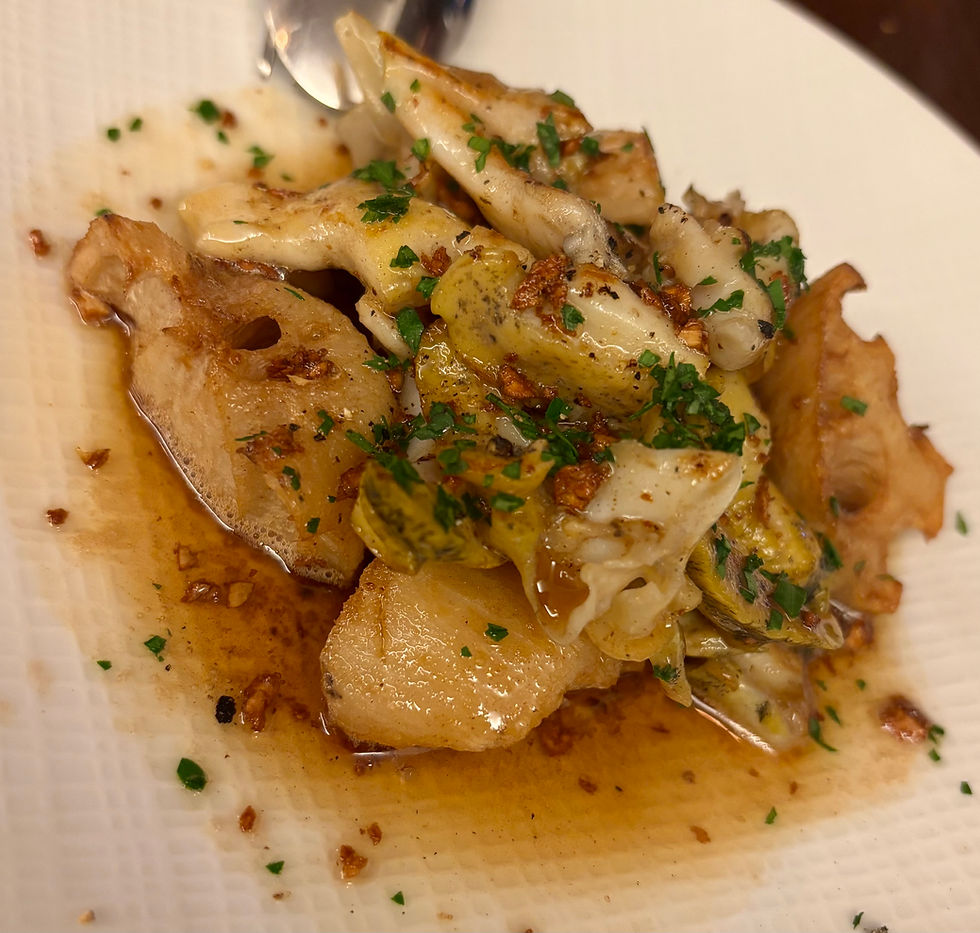
Squid with Sunchokes
Next, we shared some roasted squid and sunchokes dressed with fried garlic, olive oil and herbs ...

Duck Pâté
... as well as a duck pâté. While I love a smooth pâté, I like a country-style pâté even more. Something about the chunky, rustic nature provides a courser bite that I find more satisfying.
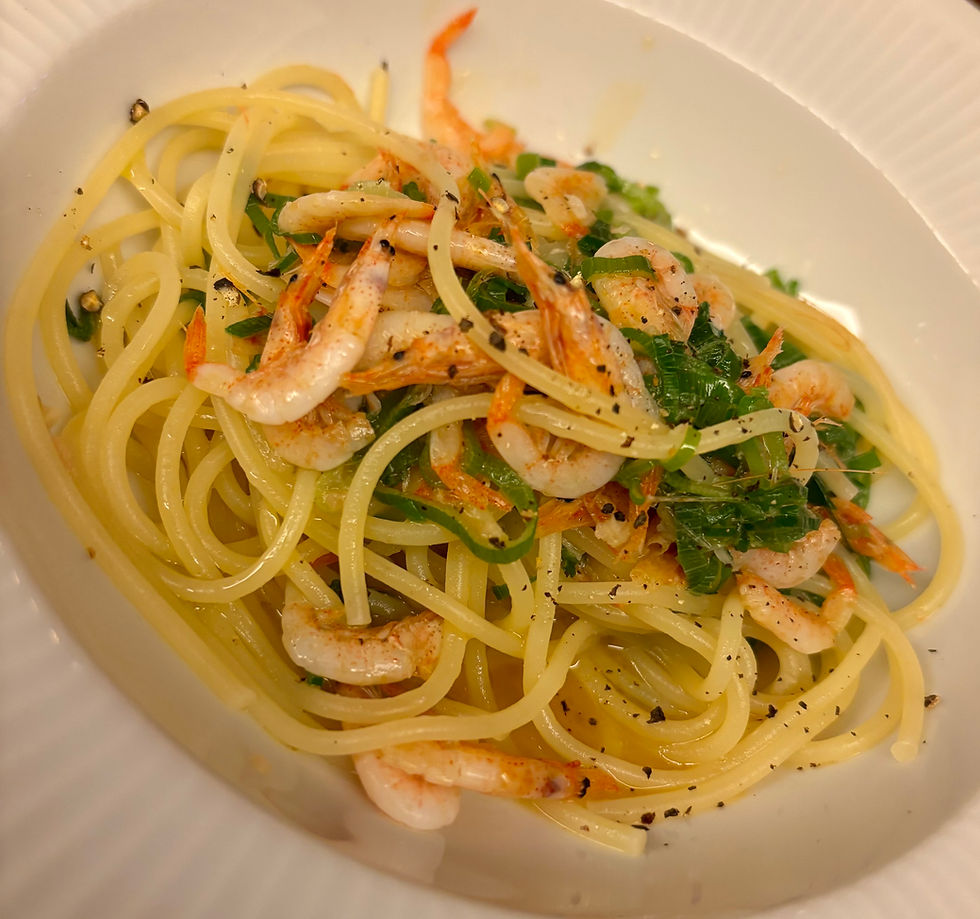
Sakura Ebi Pasta
My favorite dish of the evening was the pasta. The small shrimp you see are called sakura ebi or cherry blossom shrimp. These tiny, sweet shrimp are only caught in Sagura Bay twice a year. To taste them fresh (as opposed to dried, which they commonly are) you must eat them in season.
I happened to be in Japan during their short Fall season and was excited to give them a try. Bistro Glouton prepared them in a pasta where they were cooked in a garlic, white wine, butter sauce with cracked black pepper and then tossed with spaghetti.

Wagyu Steak
Our final course was a perfectly marbled wagyu steak served with mushrooms and green beans. By the way, "glouton" refers to a person who thoroughly enjoys their food. We definitely qualified during this outstanding meal at Bistro Glouton.
Ozawa Wine Bar (Meguro)

Ozawa
Last on this list is Ozawa, a small restaurant with an impressive wine list. In fact, my cousin and I wandered into this neighborhood spot for one glass of wine. We ended up having several and an entire meal as well. Whoops!

French Fries
We started with the french fries seasoned with seaweed, intending to order a small snack to accompany our glass of wine.

Charcuterie Board
Then we decided to order another snack because I learned that this tiny restaurant makes their cured meats in house. Therefore, I reasoned that ordering the charcuterie plate was only appropriate.

Sanma Fish
Then, we saw this fish served to a nearby table and were told that it was a seasonal delicacy. The sanma fish, also known as autumn sword fish, is available throughout the year, but in autumn, it matures, accumulates fat and is at peak flavor. This was the perfect time to taste it and so we did.

Mushroom Risotto
Finally, we ordered the mushroom risotto, which was better than I've tasted in most Italian restaurants. Like I said, this wine outing turned into a complete meal and I wasn't complaining.
Each of the restaurants in this post were intentionally selected to highlight and emphasize how global cuisine is interpreted and elevated in Japan. Rest assured that my goal of eating traditional, local cuisine in this, and every place I visit, was still accomplished, as the overwhelming majority of my meals were Japanese.
In my next post, I will turn my attention to restaurants serving Japanese food and celebrate the way tradition, seasonality and impeccable craftsmanship merged in Tokyo to create some of the best food I have ever tasted.
When people talk about Japanese food, they often focus on sushi, ramen, or wagyu beef. What impressed me most, however, was something less tangible: the care behind every ingredient. Whether I was eating scrambled eggs at my family's table, a bowl of pasta in a neighborhood restaurant, or a Michelin-recommended dinner prepared by a master chef, I encountered the same commitment to quality. In Tokyo, great food is not limited to special occasions. It is woven into everyday life.


Comments