The Complete Mexico City Travel Guide: Food, Culture, History and Nightlife in CDMX
- The Anonymous Hungry Hippopotamus
- Jun 24
- 6 min read
Updated: 3 days ago
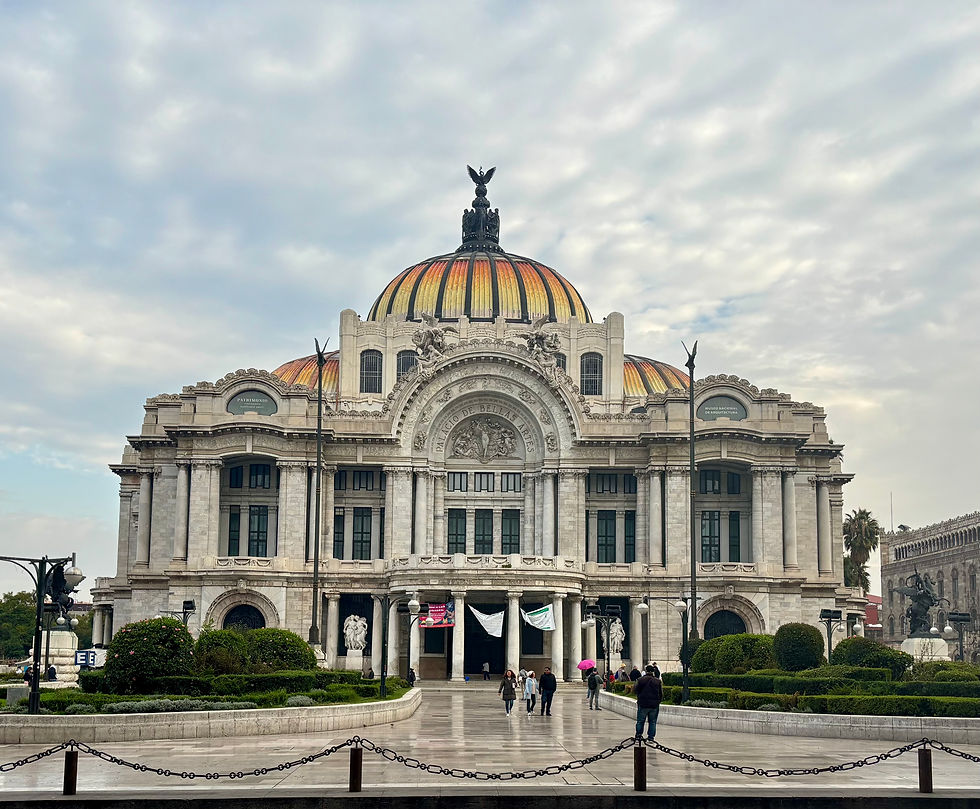
People often ask whether I have a favorite destination. The honest answer is that I don't. But there are a handful of cities that linger in a different way — places where I can imagine building a life rather than simply spending a vacation. Mexico City is one of those places.
CDMX is simultaneously one of the oldest and most modern cities in the Western Hemisphere. It was built atop the ruins of Tenochtitlan, the Aztec capital, on a lake that no longer exists, and it has spent seven centuries in a state of elegant, chaotic reinvention. It has more museums than almost any city in the world. It has a street food scene that the New York Times once called "upsettingly good." It has the world's number one cocktail bar, one of the world's most celebrated restaurants, and neighborhoods so beautiful and walkable that you will forget you are in a city of twenty million people.
I spent eight days here and left with a list of things I still hadn't done. That is not a complaint. That is exactly what a great city should do.
This guide collects everything I wrote about Mexico City, organized so you can plan your own version of the trip — whether you have three days or three weeks.
History, Architecture and First Impressions
Where to begin. CDMX is built atop the former Aztec capital of Tenochtitlan — and atop the lake on which that city once stood, which explains why portions of the city sink a little each year, and why the Independence Monument has had 14 steps added to its base since it was built in 1910. This post covers the Templo Mayor, the Metropolitan Cathedral (three architectural styles in one building), the Palacio de Bellas Artes, the Ottoman clock gifted by Turkey in gratitude for Mexico City's long history of welcoming Arab migrants, and the Metro system that puts most American cities to shame.
Street Food and Casual Dining
Mexico City's food scene is what the New York Times called "upsettingly good" — and that phrase felt accurate after a week eating my way across the city. This post covers al pastor (whose origins trace to Lebanese immigrants, not ancient Mexico), green chorizo at Mercado de Jamaica, pre-Hispanic tlacoyos that have been eaten here for centuries, quesadillas pressed from fresh blue corn masa with squash blossoms and cactus, edible insects that predate European contact, and two outstanding taquerías — the no-frills Los Cocuyos (Bon Appétit's pick) and the creative fusion tacos at Carinito.
The Best Bars in Mexico City
Three very different bars that together explain why Mexico City has become one of the world's most exciting cocktail destinations. Handshake Speakeasy — ranked the world's number one bar — found behind an unmarked door marked "13," where a tableside Campfire cocktail involves a roasted marshmallow, Scotch, and lapsang souchong tea. Ahuehuete, a six-seat mezcal bar where the owners travel rural Mexico sourcing bottles directly from small producers. And Nardo Cocktail Club, hidden inside a contemporary art gallery in Centro Histórico.
Fine Dining: Michelin-Recommended Restaurants
Three restaurants that each represent a completely different approach to elevated dining in CDMX. Máximo Bistrot in Roma Norte for French technique applied to exceptional Mexican ingredients — the white truffle tagliatelle with Osetra caviar stopped conversation mid-sentence. Masala y Maíz for the extraordinary fusion of Mexican, Indian, and East African culinary traditions, plus one of the most improbable travel stories I've experienced (a small earthquake led to a conversation with the chef that revealed we shared mutual friends from the Bay Area and ended with complimentary dessert and wine). And Contramar, open since 1998, for the tuna tostada that has become one of the most iconic dishes in all of Latin American dining.
Five more essential CDMX restaurants. Ticuchi — Enrique Olvera's cave-like Oaxacan-inspired bar and restaurant, where the tamal de esquites is one of the city's essential bites. Malix in Polanco for restrained vegetable-focused cooking that demonstrates great food is often about subtraction, not addition. Meroma in Roma Norte for the squid ink pappardelle that Condé Nast suggested might be the best pasta in Mexico City (they may be right). Café de Tacuba, operating since 1912 in a former convent on the city's oldest street. And Limosneros — Café de Tacuba's "rebellious son," where familiar Mexican ingredients are reinterpreted with genuine creative intelligence.
For many travelers, securing a reservation at Pujol is the primary reason for visiting Mexico City. After stalking the reservation calendar for months and securing a 9:30pm seating, I can confirm: it is worth it. Not because every dish was the best thing I ate in Mexico City — several meals elsewhere were equally surprising. Pujol's value lies in something larger. It tells a story about Mexico through ingredients, history, and technique that no other restaurant in the world could tell. The signature Mole Madre — maintained continuously since the restaurant opened, 3,280 days old on the night of my visit — is one of the most extraordinary things I have ever tasted. This post explains why.
Coyoacán: Frida Kahlo, UNAM and the Best Churros in Mexico City
South of the historic center, Coyoacán feels like a different city — cobblestone streets, leafy plazas, centuries-old churches beside independent bookshops. This post covers Casa Azul, Frida Kahlo's extraordinary home and studio, where the painting equipment, wheelchairs, orthopedic corsets she decorated as works of art, and the mirror above her bed where she painted self-portraits during recovery are preserved exactly as she left them. Then: the UNAM campus — a UNESCO World Heritage Site whose Central Library is covered entirely in naturally colored stone mosaics — and the churros at Churros Jordan, the best I have tasted anywhere in Mexico.
Three Unforgettable Experiences: Teotihuacan, Xochimilco and Lucha Libre
The experiences that left me most changed. A hot air balloon flight at sunrise over Teotihuacan — one of the largest ancient cities in the world — where fear of heights was completely overcome by awe within minutes of liftoff. The canals of Xochimilco, the last major remnant of the Aztec waterway system, where a floating festival of trajinera boats, mariachi musicians, food vendors, and families creates what can only be described as a cultural traffic jam on the water. And an evening at Arena México for lucha libre — part sport, part theater, part mythology — which I arrived knowing nothing about and left thoroughly converted.
Planning Your Trip to Mexico City
Getting there: Direct flights from most major US cities. No passport issues beyond standard international travel. Mexico City's Benito Juárez International Airport (MEX) serves most international routes; the newer Felipe Ángeles Airport (NLU) serves some budget carriers.
Getting around: The Metro is extensive, safe in most stations, and costs about 5 pesos per ride — the best-value transit in any major city I have visited. Uber is widely available and inexpensive. Walking is best in Roma Norte, Condesa, Polanco, Coyoacán, and Centro Histórico.
Where to stay: Roma Norte and Condesa are the best neighborhoods for first-time visitors — walkable, safe, full of restaurants and cafés, with easy Metro access everywhere. Polanco is the luxury option. Centro Histórico is excellent for history but noisier.
A note on safety: Mexico City's reputation among American travelers significantly lags behind its reality. Neighborhoods like Roma Norte, Condesa, Polanco, Coyoacán, and Centro Histórico are as safe and walkable as any major European city. Standard urban precautions apply, as they do anywhere. Consult current US State Department advisories for the most up-to-date guidance.
Best time to go: Mexico City is essentially year-round. The dry season (November through April) brings clear skies and cooler evenings. The rainy season (May through October) brings afternoon showers that clear quickly, lush greenery, and lower hotel rates. I visited during the dry season and found the weather near perfect.
Mexico City belongs on any serious traveler's short list. Eight days was not enough. I am already planning a return.


Comments