Mexico City Travel Guide: History, Architecture and Why I Fell in Love with CDMX
- The Anonymous Hungry Hippopotamus
- Feb 7, 2025
- 5 min read
Updated: Jun 24
People often ask whether I have a favorite destination. The truth is that I don't. Every place I visit offers something unique, whether it is a landscape, a meal, a conversation, or a lesson I could not have learned anywhere else.
That said, there are a handful of cities that affect me differently. They linger in my thoughts long after I leave. They are places where I can imagine building a life rather than simply spending a vacation.
Mexico City is one of those places.
Before visiting, I expected great food, fascinating history, and world-class museums. What I did not expect was a city that felt simultaneously ancient and modern, chaotic and elegant, sprawling and deeply personal. Beneath its busy streets lies the story of empires, conquest, migration, and reinvention. Around every corner I found extraordinary architecture, public art, hidden historical details, and a transportation system that many American cities would envy.
To understand Mexico City—known locally as CDMX—you first have to understand the remarkable place on which it stands.
History of Mexico City
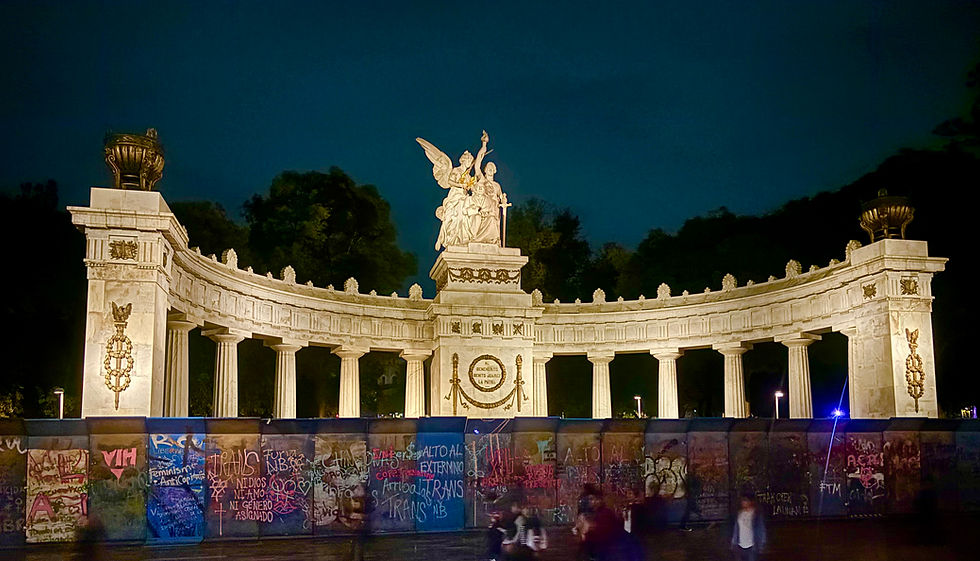
Mexico City's history stretches back nearly seven centuries. Long before Spanish colonists arrived, this was Tenochtitlan, the capital of the Aztec Empire and one of the most sophisticated cities in the world.
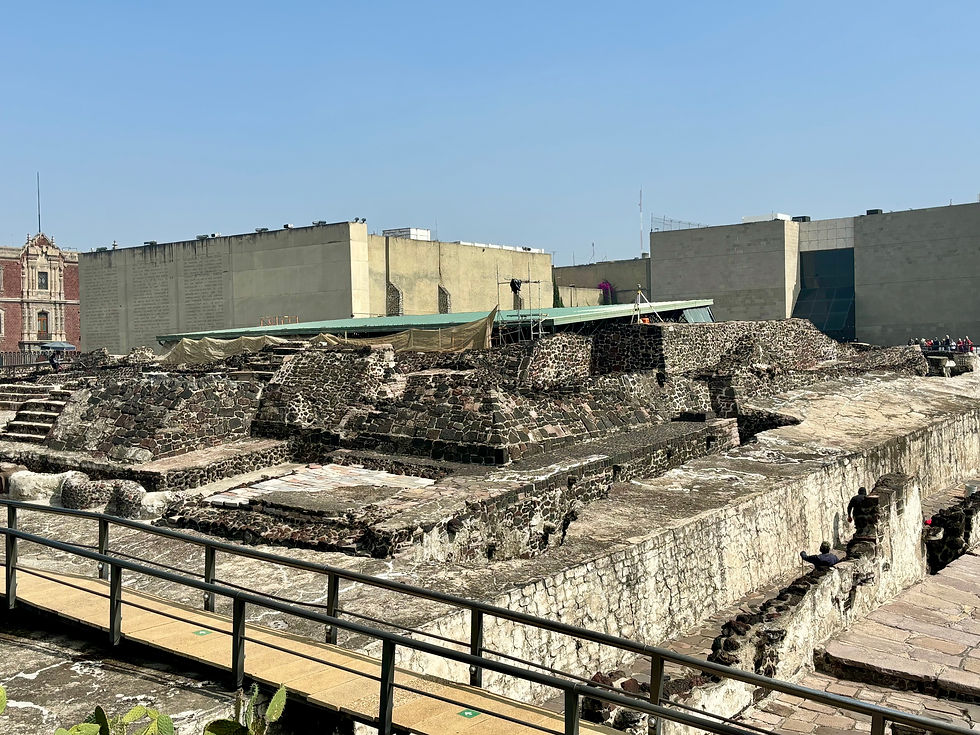
Templo Mayor
Today, traces of that civilization remain visible throughout the city. One of the most important examples is the Templo Mayor, the principal temple of Tenochtitlan, whose excavated ruins now sit amid the modern metropolis.
The city's very name reflects its indigenous roots. "Mexico" derives from the Nahuatl language and is commonly interpreted as meaning "the place at the center of the moon." Even the modern identity of the city remains intertwined with its pre-Hispanic origins.
Remarkably, modern Mexico City is built atop both the former Aztec capital and the lake on which it once stood. As groundwater continues to be extracted, portions of the city sink each year—a phenomenon visible in historic buildings, monuments, and even street levels throughout the capital.

Founded in 1325, Mexico City is among the oldest cities in North America. Today, with more than twenty million people in its metropolitan area, it is also the largest urban center in the Western Hemisphere.
Architecture

What surprised me most was how naturally these different eras coexist. Pre-Hispanic ruins stand beside colonial churches. Art Deco landmarks share streets with contemporary skyscrapers. Few cities wear their history as visibly as Mexico City.

I found the architecture simply gorgeous and was impressed by the range of styles which included Pre-hispanic, Classic, Modern and Contemporary. Not only was the impressive architecture visible in well known sites, it was also evident in quotidian structures. Take for example the door to this residential building on Calle Venustiano Carranza, pictured above.
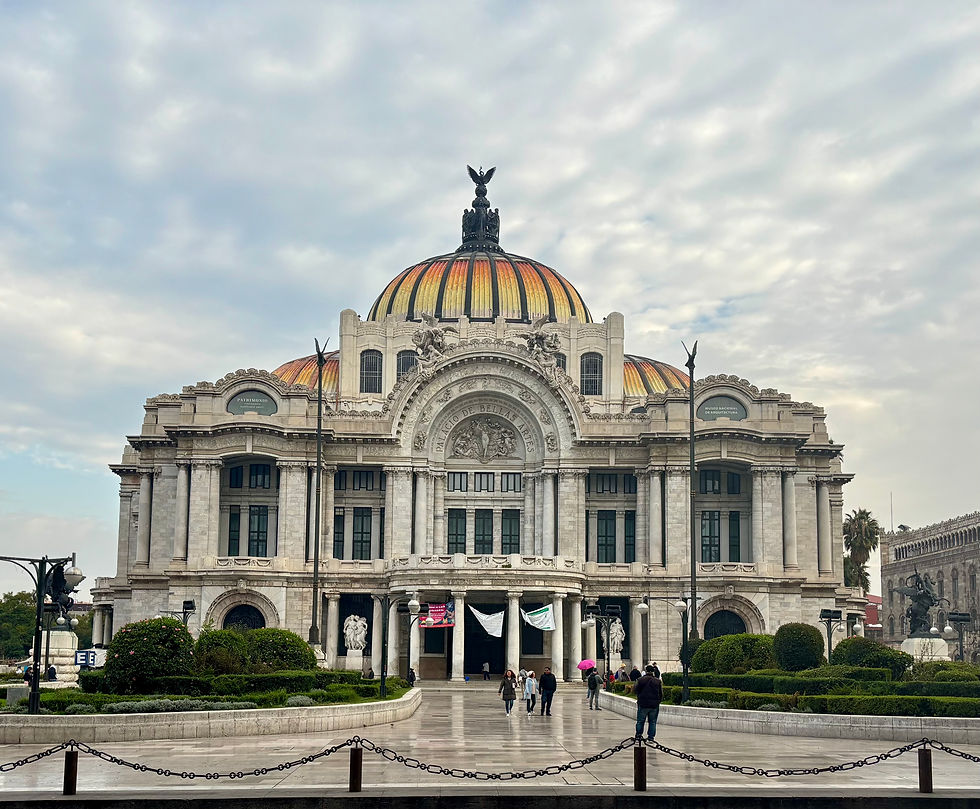
Palacio de Bellas Artes
Or in the famous Palacio de Bellas Artes, a venue in CDMX that hosts exhibitions, performing arts and literature events. While its exterior showcases Art Nouveau and Neoclassical styles, the interior is primarily Art Deco.

Mexico City Metropolitan Cathedral
CDMX also has beautiful cathedrals including this, the Mexico City Metropolitan Cathedral, or El Sagrario Metropolitano.
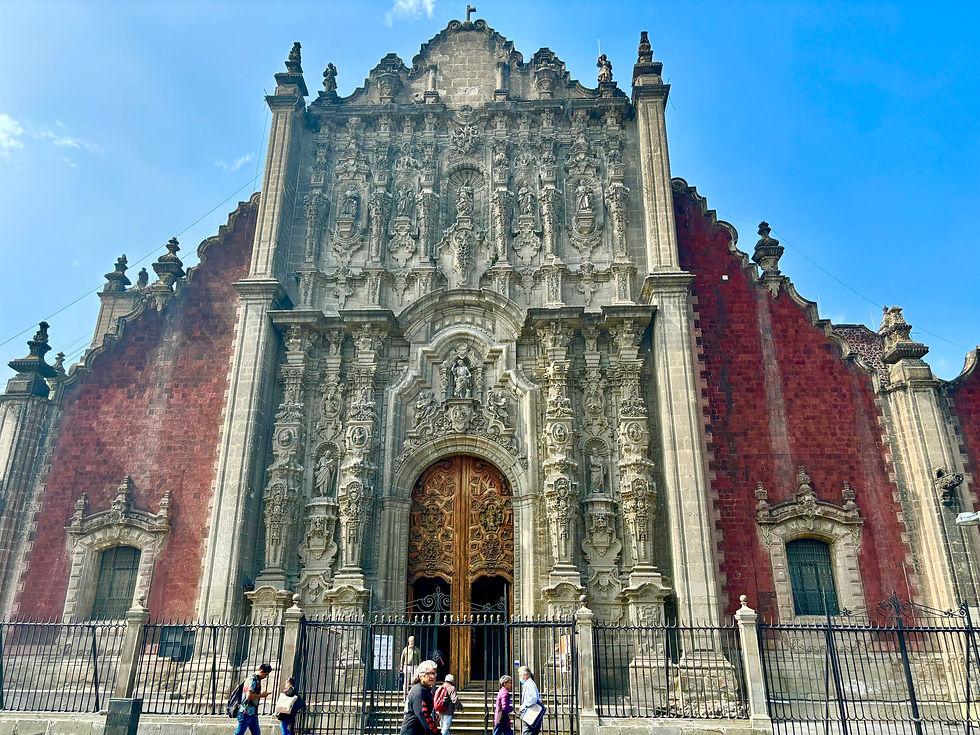
The cathedral incorporates Baroque, Gothic and Neoclassical styles.

An up close look better illustrates the detail in the sculptures and columns of the building's façade, ...

... as well as the door.

El Sagrario Metropolitano
Inside you will find more ornate sculptures and columns, as well as paintings, furniture and two of the largest organs in the Americas.

Ottoman Clock
Throughout the city you will find unexpected treasures like this ornate clock gifted to Mexico by the Ottoman Empire as a show of gratitude for the city's long history of welcoming Arab migrants. It is known to locals as the Arabic, Lebanese, or Turkish Clock.
Mercado de la Merced
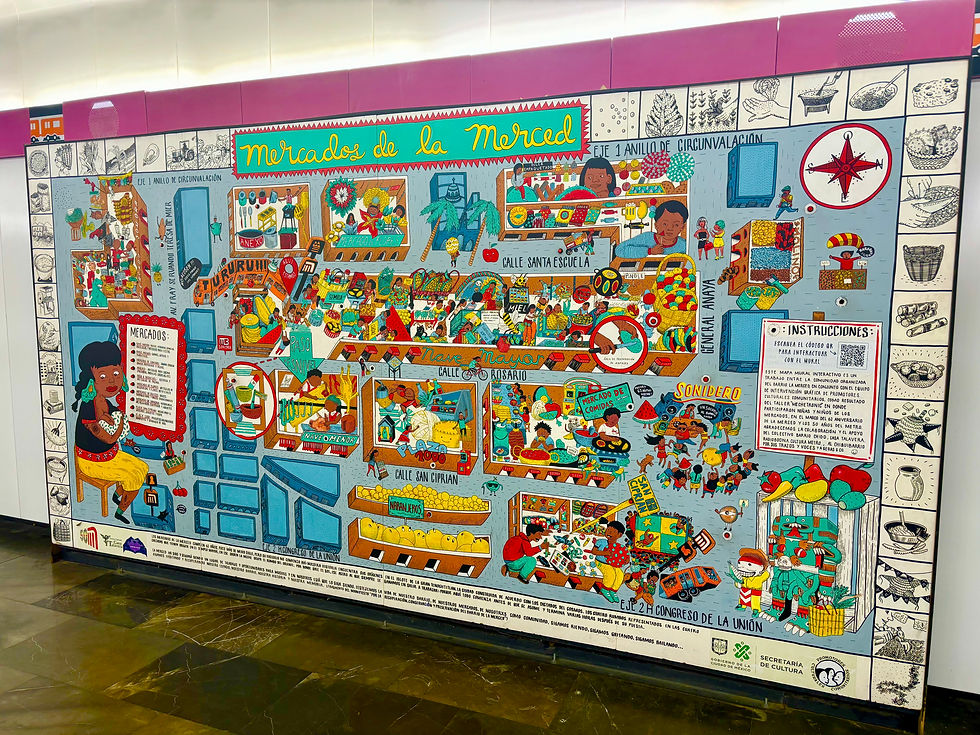
Mercado de la Merced
Mexico City is a city of markets, and the largest of them — Mercado de la Merced, operating since the 18th century — is the kind of place that resists summary. It spans several city blocks and contains what feels like the entire material world of Mexico under one roof: towers of dried chiles in every shade from brick red to near-black, mounds of piloncillo and tamarind candy, stalls selling fresh herbs by the armful, butchers working beside women pressing fresh tortillas beside vendors hawking everything from saints' candles to neon-colored plastic toys. Walking through it is less like shopping and more like being absorbed into something ancient and completely alive.

Beyond its markets, CDMX is a city of unexpected beauty at every scale — in its parks, ...
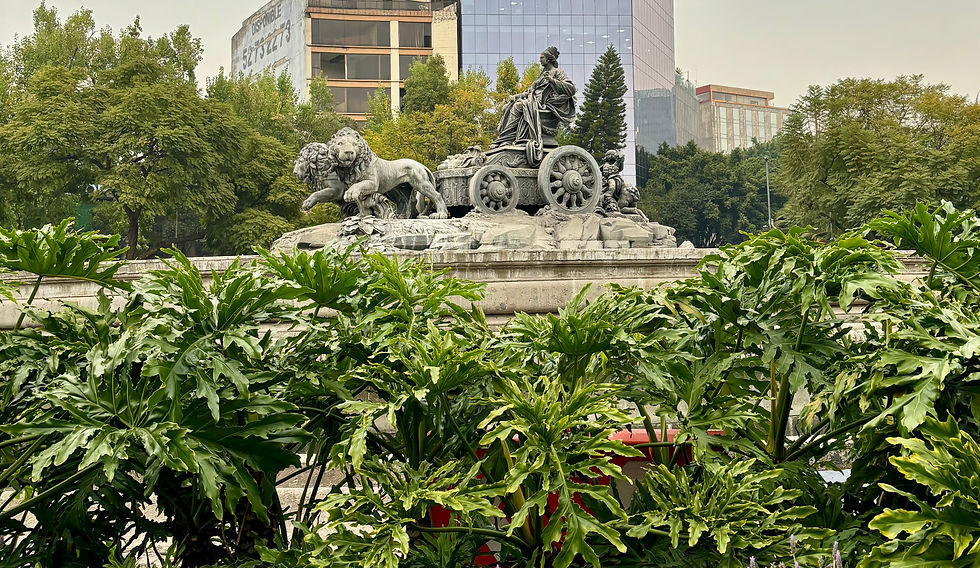
... its fountains, ...
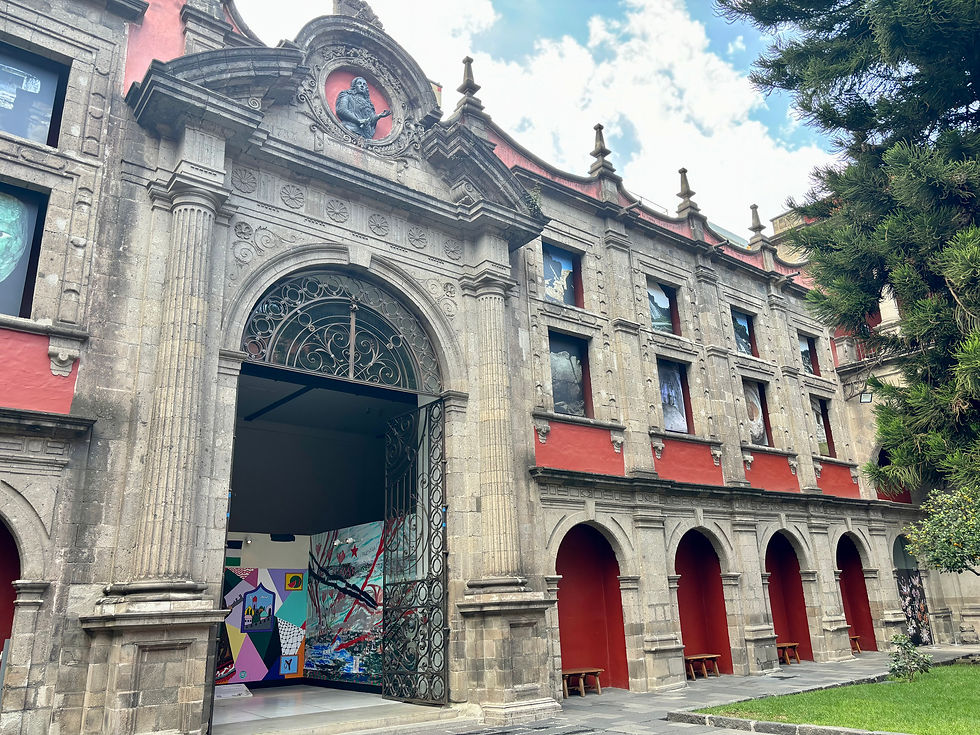
Museo National de las Culturas del Mundo
... its museums, ...

... its public sculptures, ...
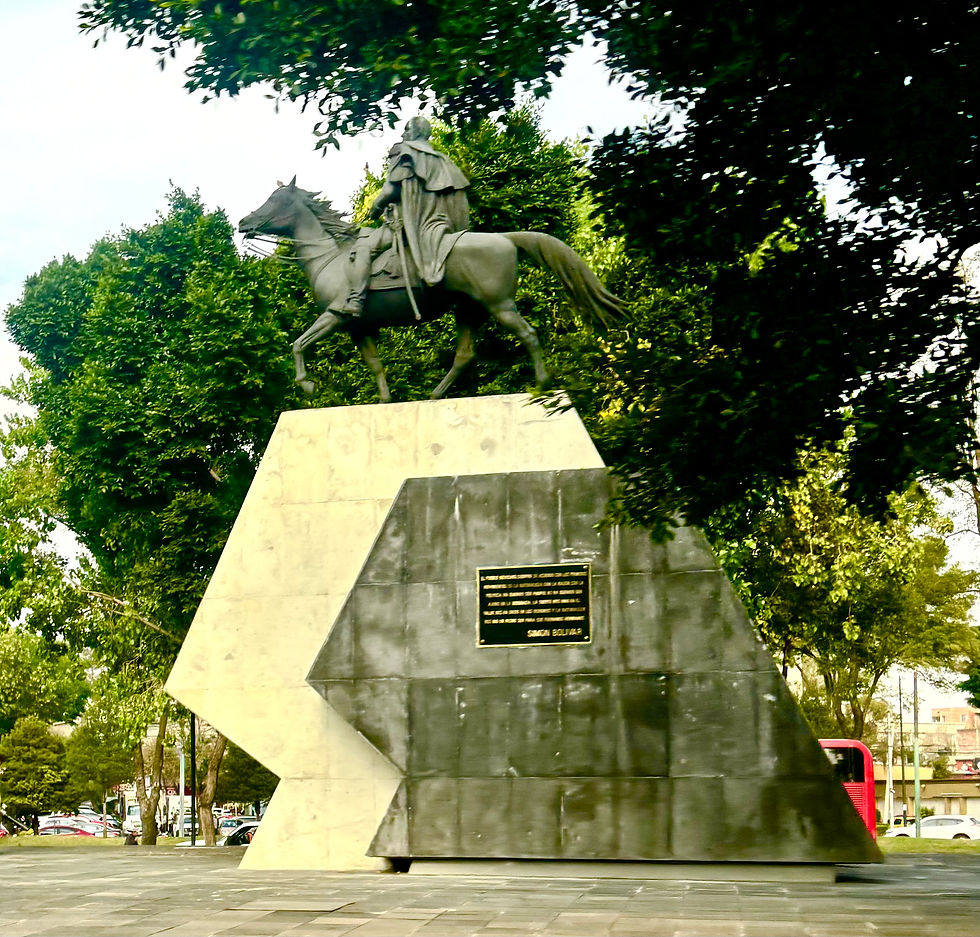
... and in the details of its streets that most visitors walk past without stopping. ......

Ángel de la Independencia
Perhaps the most famous monument, and symbol of CDMX, is El Ángel or the Monumento a la Independencia (Independence Monument). This monument was constructed in 1910 to commemorate the 100 year anniversary of Mexico's independence. Thus, the statue is topped with a golden sculpture of the Greek goddess of victory, Nike.
The sculptures at the bottom of the statue represent justice, peace, law and war. The statue's base originally had nine steps, but since the city is sinking, as I mentioned above, an additional 14 steps were subsequently added.
Transportation

Mexico City Metro
Another aspect of Mexico City that impressed me was its public transportation system. The Metro is extensive, affordable, easy to navigate, and remarkably efficient given the size of the city it serves.

For visitors accustomed to car-dependent cities, the ability to move across such a vast metropolitan area using trains and public transit feels liberating. It also provides a window into daily life in a way that taxis and rideshares never can.
By the end of my visit, I understood why so many travelers fall in love with CDMX. It is a city where ancient history and contemporary life coexist in fascinating ways. One moment you are standing beside Aztec ruins, the next you are admiring Art Deco architecture, exploring a bustling market, or riding one of the largest transit systems in the world.
A Note on Safety
Before visiting, I had absorbed years of alarming headlines about Mexico. I want to be direct: those headlines do not describe the Mexico City I experienced, at least not in the neighborhoods most visitors spend their time. Roma Norte, Condesa, Polanco, Coyoacán, and Centro Histórico are as walkable, safe, and comfortable as any major European city I have visited. I walked alone after dark, took the Metro at all hours, and never once felt unsafe. Standard urban precautions apply — keep your phone discreet, be aware of your surroundings, use Uber rather than hailing taxis on the street — the same things you would do in New York, Paris, or Tokyo. Mexico City's reputation among American travelers significantly lags behind its reality. I went as a skeptic and left as an advocate. Go.
By the end of my visit, I understood why so many travelers fall in love with CDMX. It is a city where ancient history and contemporary life coexist not as a museum piece but as something living — one moment you are standing beside the excavated ruins of an Aztec temple, the next you are stepping into a century-old Art Deco concert hall, and the next you are eating extraordinary food at a sidewalk stall that has been in the same family for three generations.
And I have not even begun to talk about the food.
That, more than anything else, is what ultimately convinced me that Mexico City belongs among the world's great destinations — not as an emerging city worth discovering, but as a fully arrived, fully confident one that has simply been underestimated for too long. Everything that follows in this series covers the meals, the bars, the neighborhoods, and the experiences that made me start quietly calculating whether I could live here. The complete guide is linked here.


Comments