Furuya Ryokan Review: A Luxury Onsen and Kaiseki Experience in Atami, Japan
- The Anonymous Hungry Hippopotamus
- Mar 27
- 5 min read
Updated: 12 hours ago
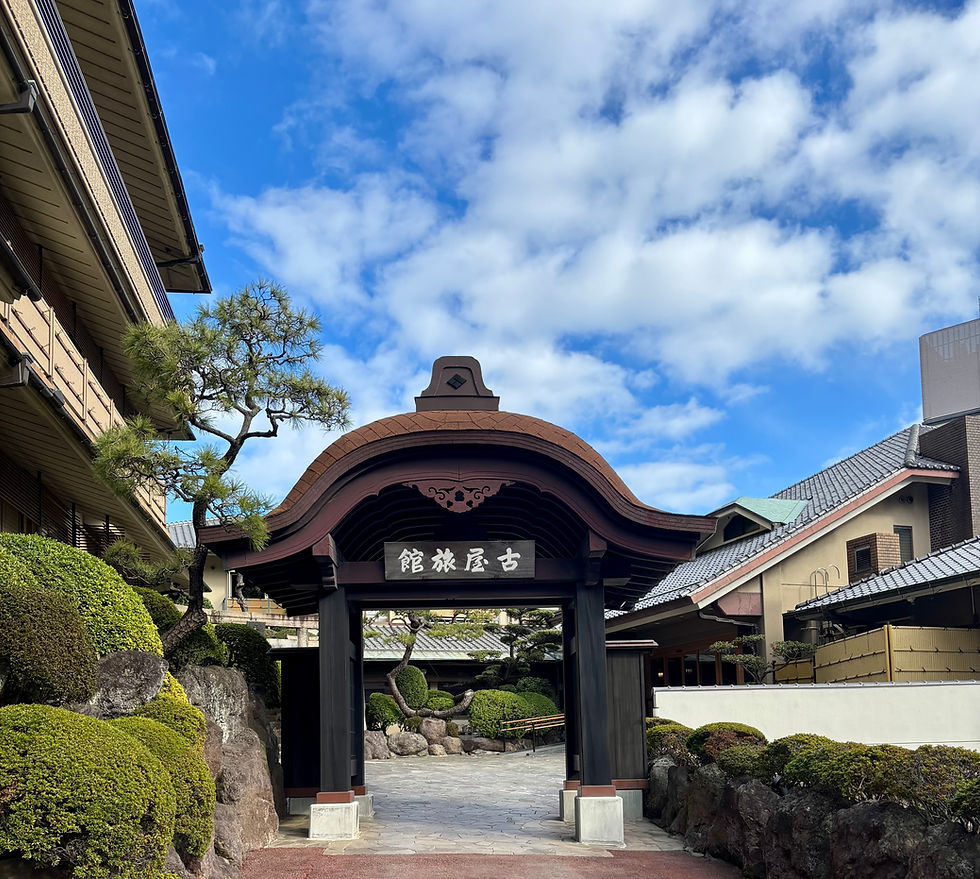
Furuyu Ryokan
Long before I arrived in Atami, I knew there was one experience I wanted more than any other: spending a night in a traditional Japanese ryokan. While luxury hotels can be found all over the world, a ryokan offers something uniquely Japanese—a slower pace, centuries-old traditions, meticulous hospitality, and an invitation to simply be present.
A ryokan is a traditional, Japanese inn that offers a deeply cultural and immersive style of hospitality. Unlike modern hotels, ryokan emphasize simplicity, comfort, and connection to tradition.

I stayed at Furuyu Ryokan, which stands out as the most historic and respected among Atami's accommodations. Established over 200 years ago in the early 19th century, it is one of the oldest, continuously operating inns in the region.

Like in most traditional ryokan, I stayed in a tatami-matted room and slept on a comfortable futon laid out for me every evening. The service I received was more attentive and personalized than I have experience during any hotel stay.
The Onsen

Central to many ryokan experiences is the onsen, or natural hot spring bath. At Furuyu Ryokan, I was treated to a private, outdoor onsen located on the patio attached to my room.
Onsens are fed by geothermal waters, rich in minerals and long believed in Japan to promote relaxation and wellness. Ryokan Furuyu draws these waters from its own, private spring. Soaking in this onsen was both a physical and cultural experience, emphasizing quiet reflection and a connection to the outdoors.
Kaiseki Dining

Welcome Tea Service
Another staple of a tradition ryokan is the meals, which are often served in-room. My dining experience began with this biscuit and green tea, prepared in my room and in the traditional format I learned about during my visit to Kyoto.
A highlight of any stay at Furuyu Ryokan is its kaiseki cuisine, a traditional, multi-course, Japanese dining experience. Kaiseki meals, like the ones I had at Furuyu Ryokan, as well as in Kyoto, the birthplace of kaiseki, are crafted to reflect the seasons, using the freshest available ingredients.
Kaiseki is often described as Japan's highest expression of hospitality through food. More than a meal, it is a carefully orchestrated progression of seasonal ingredients, textures, colors, and cooking techniques designed to create harmony from beginning to end.
Furuyu Ryokan provided both dinner and breakfast kaiseki meals in the privacy of my room. Each course was presented with artistic precision.
Kaiseki Dinner
Sakizuke
My first in-room, kaiseki meal at Furuyu Ryokan was dinner, which began with this appetizer of goma-tofu made with crushed sesame seeds, sesame sauce and boiled milk from Tanna, a rural area west of Atami.

Zensai
The next courses were an assortment of appetizers that included an antipasto of foie gras sandwiched between crisp wafers, house-made dried mullet roe, salmon sushi, dried sweet potato, chrysanthemum jelly in broth, Japanese radish, stem lettuce with prosciutto, gingko nuts, yam, and kabura-zushi or sliced turnip and herring.
Zensai
The presentation was stunning and the dishes were delectable.
The appetizers were followed by a vegetable soup, ...

Otsukuri
... and sashimi featuring various types of white fish.

Sashimi Condiments
To accompany the sashimi, I was offered several condiments. Clockwise from the top left, they included wasabi, sea salt, green pepper, ponzu, olive oil and bonito soy sauce.
Takiawase
A traditional hot pot with chicken-filled burdock, tofu and vegetables was served next.

The hot pot was also served with yuba, momiji-fu (wheat gluten shaped like a maple leaf), carrot and grated yuzu.
Nakazara
My favorite course was the wagyu beef, grilled with miso and lightly steamed on a hoba leaf, along with potato, eggplant, and white konjak, a root vegetable native to Asia.

Oshinogi
Next came a savory, steamed, egg custard.
The custard was made with eel, lily bulb and truffle. It was silky and rich.

Shizakana
The course that followed combined savory, sour and sweet flavors beautifully. It included monkfish liver, strawberry, fried apple, dried orange, caviar, and homemade ponzu with orange vinegar jelly.
Yakimono
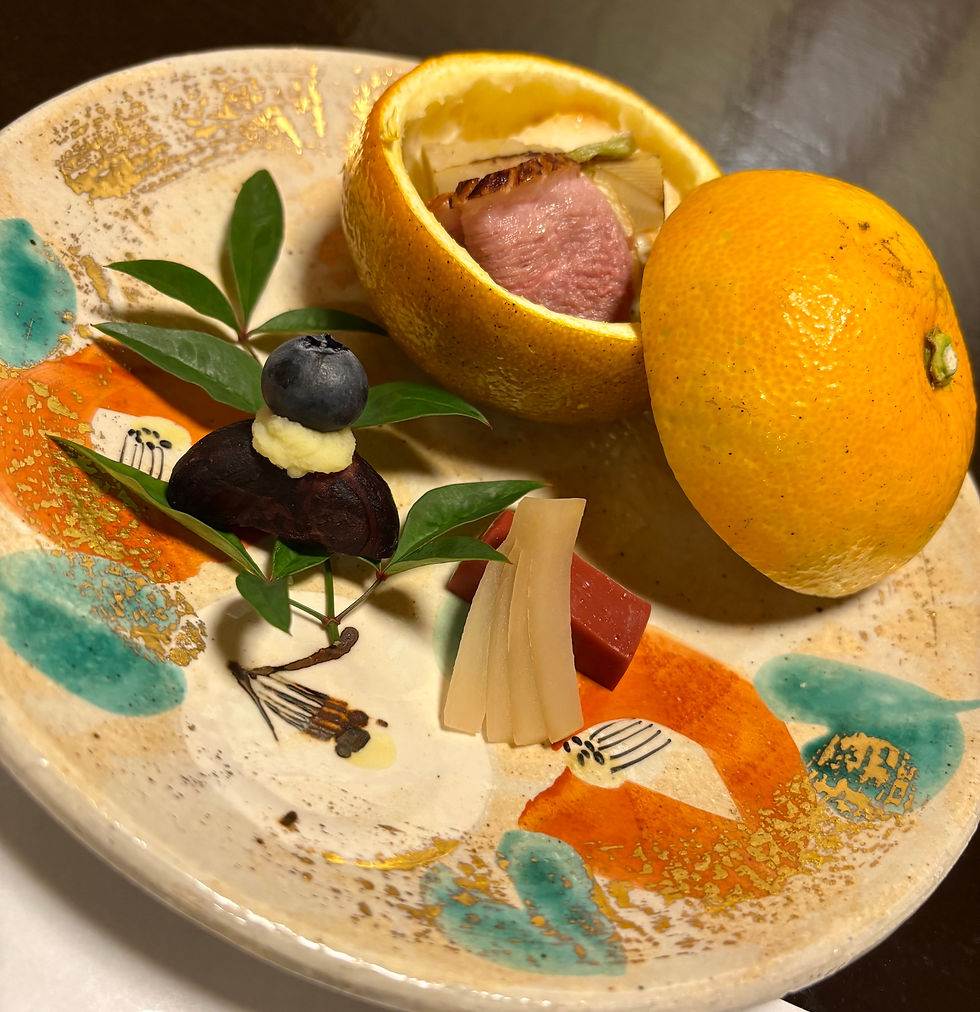
Next, I enjoyed grilled seafood and vegetables served inside a daidai orange, an aromatic, bitter, citrus fruit, common in Asia. The name "daidai" means "several generations" in reference to the fruit staying on the tree for years, while shifting in color from green to orange and back to green again. The plate also included flatfish flavored with saikyo miso, and sliced bamboo shoots.

Turnip and duck tenderloin with sweet and sour ginger, red konjak and sweetened chestnut followed.
Shokuji
The final, savory course was Koshihikary rice grown in Sizuoka prefecture topped with mushrooms and akadashi miso soup, served with pickles.

Mizugashi
Dinner concluded with dessert, a pear compote, black sesame and konjac jelly with brown sugar syrup and green tea pudding.
Kaiseki Breakfast
Breakfast was as impressive and as bountiful as dinner. The egg that was served was poached in the natural hot spring waters and served in a savory broth.


Alongside was homemade, salted squid, Japanese mustard spinach in broth and baked nori seaweed from Nihonbashi Yamamoto Noriten.
Hot Pot
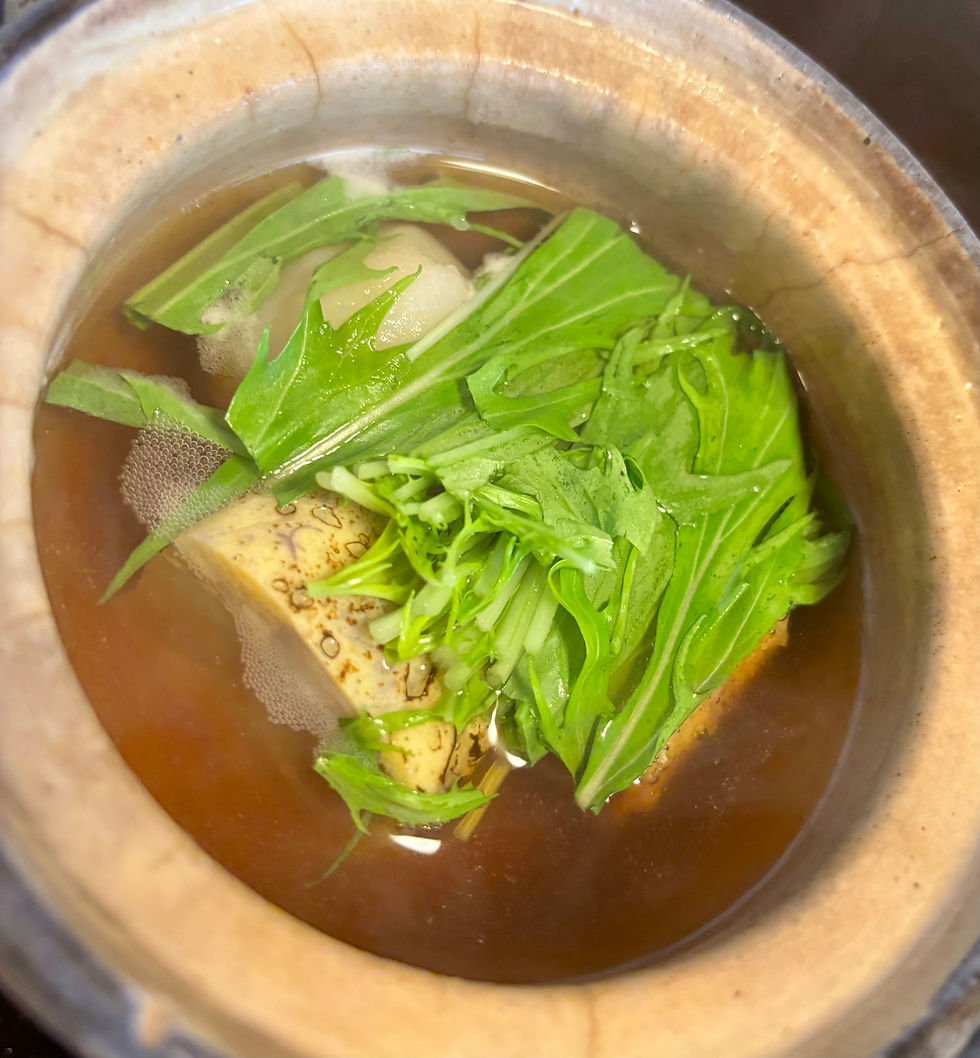
The meal continued with soup made of taro, egg drop, cooked poke mince wrapped in potato, deep fried tofu and mizuna greens.

Dried Horse Mackerel
In this meal, the dried fish was my favorite course. It was hearty and filled with umami flavor.


The fish was served with a salad of lettuce, mini tomato, paprika, local vegetables, cucumber, and red beans with a light, orange marmalade dressing, as well as a dish of pickled chrysanthemum, cucumber and Japanese plum and a bowl of rice porridge.

More delightful seafood, caught fresh from the local waters, was on the way. The next dishes included seaweed, spicy cod roe, fish paste with wasabi and whole shrimp, ...

Sashimi
... as well as amberjack sashimi with wasabi.

As customary, the meal concluded with koshihikari rice from the Gotemba Basin.
If it's not already evident, the goal of visiting a ryokan is to savor the peaceful environment, the natural hot spring, the seasonal dishes and to luxuriate in the sense of harmony and relaxation that they all create. Ryokan Furuyu is highly regarded as the ultimate place to do this and my experience there confirmed why it has such a flawless reputation.
The dining experience at Ryokan Furuyu was exemplary. Each course was thoughtfully arranged to balance flavor, texture, and visual beauty, turning the meal into a carefully paced culinary journey. Every other aspect of Ryokan Furuyu was impeccable as well, from the seasonal decor, to the inviting warmth of the onsen. It was evident that every detail had been carefully considered to create this ryokan experience that is a window into Japan’s enduring traditions of hospitality, wellness, and cuisine.
As I soaked in the steaming waters of my private onsen one final time before departure, I understood why ryokan have endured for centuries. They offer something increasingly rare in modern life: permission to slow down. Between the quiet ritual of bathing, the extraordinary kaiseki meals, and the gentle attentiveness of every interaction, Furuyu Ryokan was more than a place to stay. It was an invitation to experience Japan not as a visitor, but as a participant in traditions that continue to thrive more than two hundred years after this inn first opened its doors.
More on my time in Atami to come.


Comments