What to Eat in Ghana: Fufu, Banku and a Cooking Class in Cape Coast
- The Anonymous Hungry Hippopotamus
- May 29
- 5 min read
Updated: Jun 3
I started off my food adventure in Ghana sampling the many dishes of Africa's West Coast at various restaurants in Accra.

Edikang Soup
I began with edikang soup, native to Southern Nigeria but eaten throughout Ghana. The soup is made using ‘ugwu’ (the native name for fluted pumpkin leaves) and Malabar spinach, which is locally referred to as water leaf.

Chicken Pepper Soup
Another Nigerian soup that is popular in Ghana is chicken pepper soup, which includes chicken of course, a lot of aromatic spices, and mature amaranth greens, which are called tete in the Yoruba language.

Angwa Mo with Sardines
Other dishes I enjoyed were angwa mo or coconut rice with sardines, ...
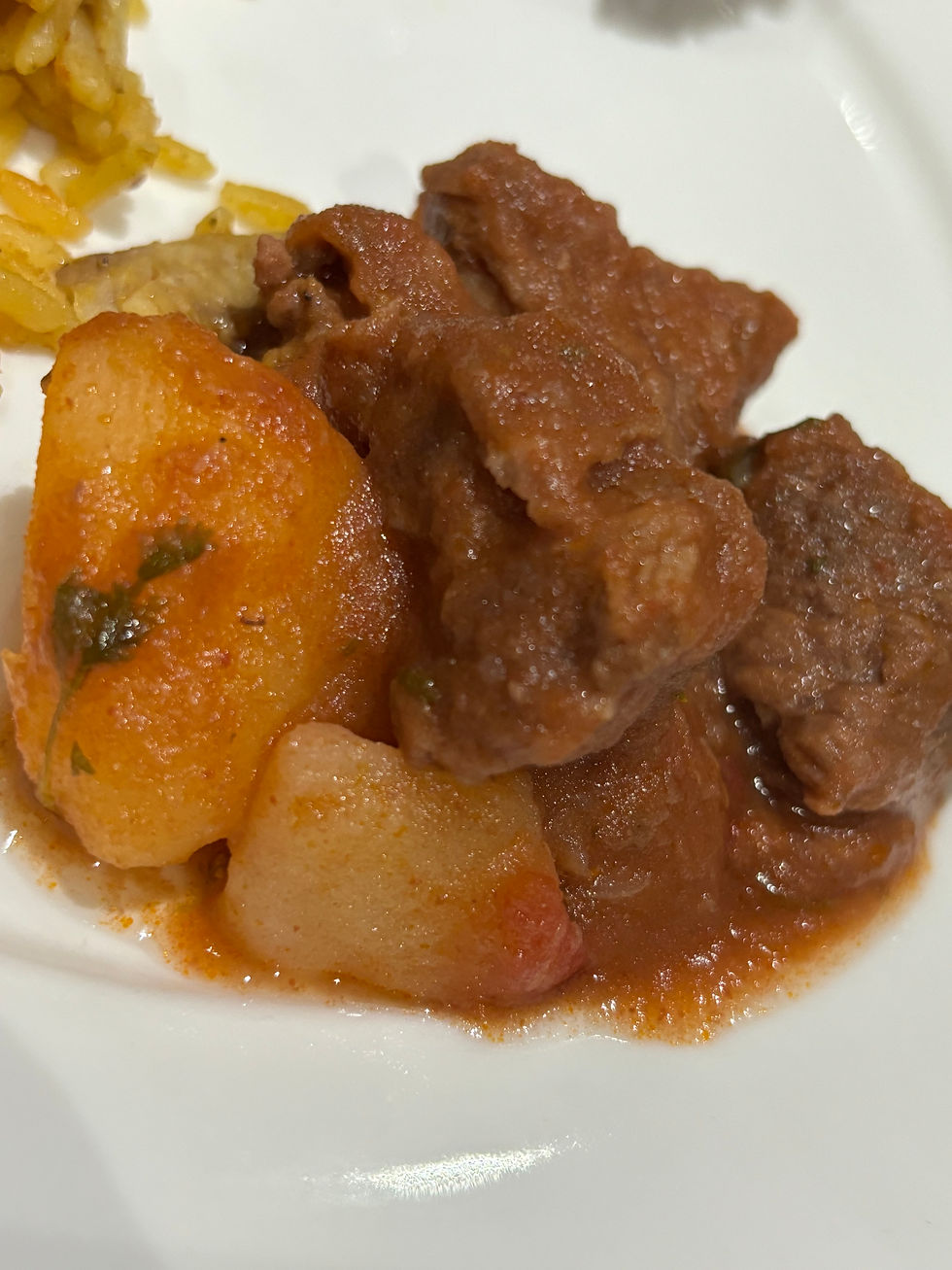
Ndizi na Nyama
... ndizi na nyama or beef stew with yams, tomatoes, and spices, ...

Gizzard Soup
... gizzard soup with vegetables, ...

Pepper Chicken
.. and a dry, peppery fried chicken.

Agidi
Most dishes were served with a starch. One example is agidi or eko, a traditional Nigerian dish made from maize or cornstarch. This smooth, gelatinous pudding is a versatile accompaniment to various soups and stews.
Buka Restaurant

Of the restaurants in Accra specializing in West African food, Buka was my favorite.

Peach Iced Tea
The restaurant specifically focuses on foods from Ghana, Nigeria, Cote d'Ivoire and Togo.

Banana Chips
Upon arriving, we were served banana chips, a common snack in Ghana. Usually sweet and salty, these had a hint of spice which made them my favorite of all the banana chips I sampled while in the country.

Nana's Special Lite Soup
I shared my meal at Buka with two new friends who are locals and traveled with me throughout Ghana. The first entree we shared was a restaurant speciality called Nana's special lite soup. The soup combines smoked fresh water fish, okra, snail, goat, habanero peppers, salted beef and ...

... my favorite, crab. In the center of the soup is a large mound of fufu. Fufu is a starchy dough that takes on different forms (and names) across many West African countries. The name ‘fufu’ is most commonly associated with Ghana.
Ghanaian Fufu is made by pounding cassava and unripe plantains together into a paste, which is then molded by hand into a ball and served with soups and stews. It is the sauce or soup that really gives each fufu dish its unique identity.

Banku
If fufu isn't to your liking, another accompaniment you can opt for is banku, a fermented corn dough. It is served in the same form as fufu and also commonly accompanies soups.

Palm Nut Soup with Goat
Soup has many iterations in Ghana and they are all delicious. This one was made with goat, a generous helping of fufu, and okra.

Nkruma Froye
Speaking of okra, our next dish was nkruma froye, a spicy okra stew made with scotch bonnet peppers, dried crayfish, palm oil, ginger and other spices. In this stew, the okra acts as the thickener. This is the soup from which gumbo originated.

Fante Fante
Another soup or stew I very much enjoyed was fante fante, a traditional, rich, Ghanaian fresh fish stew originating from the coastal Fante people. The stew is characterized by its tomato and palm oil base, to which is added fresh fish (often tilapia or mackerel) that is simmered, rather than fried.

Grilled Seafood
Though I primarily ate soups and stews in Ghana because they are most common and traditional, there were other options such as grilled seafood, which is plentiful along the coast of Ghana where I spent all my time in the country. This particular grilled seafood dish was made with tilapia, calamari and shrimp, tossed with peppers and onions and finished with squeezes of citrus.
Cooking Class

After eating so much amazing West African food, I decided to take a cooking class with the hope that I would be able to recreate some of the dishes I so enjoyed while in Ghana, back at home. This is Esi, my cooking instructor. I met her when I reached Cape Coast. (More on my time there in my next posts.)

Yam
The first dish she taught me to prepare was boiled yams. It was by far the most straightforward dish I made and did not require much in the way of cooking or preparation.
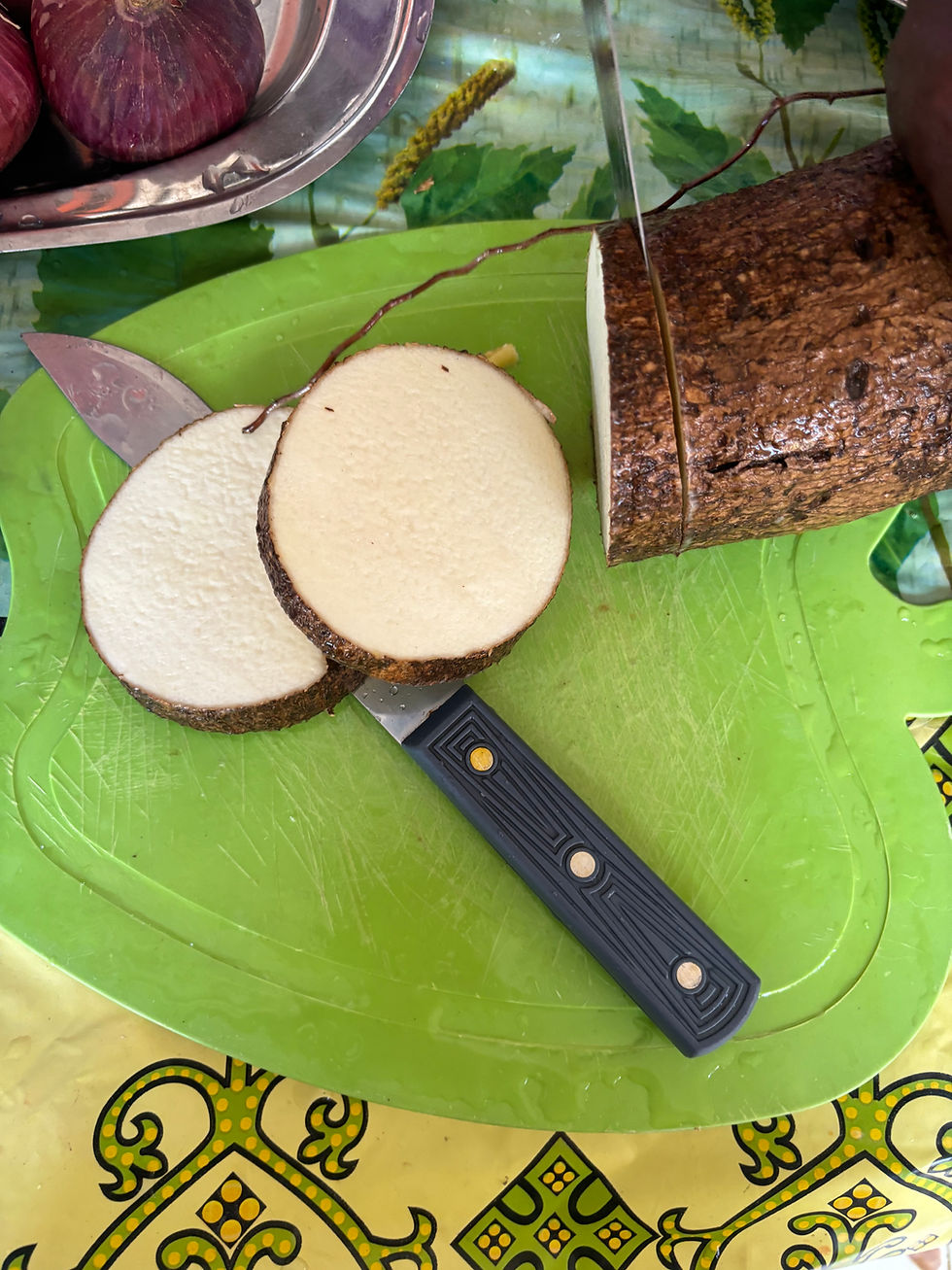
I sliced the yam ...

... cut off the peel ...

... waited for the fire to get hot and the salted water to boil and finally, I dropped the cut yams in.

They were cooked and ready to eat in about 30 minutes.

Next, I prepared the plantains which were similarly quite easy to make.

I cut them at an angle, while ...

... my instructor heated the palm oil ...

... in which we fried them ...

... until they were golden brown and a little bit crispy.

Next, I made black eyes peas, which Esi had pre-soaked.

The peas were sautéed with chopped garlic, ginger, tomatoes and onions, and seasoned simply with salt and a little bit of curry powder.
Incidentally, this is my instructor showing me, in her words, "how Africans chop onions." After this demonstration, she handed me a knife and cutting board and said, "now you go cut the onion the European way, or you'll hurt yourself." I had to giggle because she was right.

I sautéed everything together in palm oil until all of the flavors bloomed, the ingredients were well incorporated and the dish was heated through.

This was the result.

The final dish I learned to prepare was the most laborious. It consisted of taro leaves...

... which I cut into ribbons, and ...

... pumpkin seed powder ...

... that I reconstituted with water. It first changed from a powdery form to that of a porridge. When the water fully absorbed, the pumpkin seed powder had the consistency somewhere between scrambled eggs and tofu, which you will see in the photo of the finished dish.

After reconstituting the pumpkin seed powder, the real labor began. With this mortar and pestle, I ...

.. hand ground a combination of tomatoes, garlic, ginger and onions.

Once I created a paste, I pan fried it with the pumpkin seeds and then added the taro leaves.

Everything was first sautéed and then steamed until the taro leaves were soft and the pumpkin seeds were fluffy. As a final touch, I added fresh, diced tomatoes.

With the final dish prepared, it was time to eat. We set the table and then sat down to enjoy the fruit of our labor.

I learned that the boiled yams were meant to be eaten with the taro leaves and toasted pumpkin seeds, ...

... and the black eyes peas were best enjoyed with the plantains.
Most importantly, I learned the beauty of West African cooking and cuisine, which taught me about Ghanaian culture in a way that went far beyond recipes. The experience reinforced how deeply food is tied to history and identity, and how cooking can be a way of preserving and passing down cultural values.
By the end, I didn’t just understand the flavors, I had a deeper appreciation for the people and traditions behind them, an experience I have no matter where I travel. There is an inextricable link between place and plate that is truly beautiful.


I thoroughly enjoyed reading this. What a fun, educational and delicious experience!