Tresind Review: Why This is One of the Best Indian Restaurants in the World (Mumbai, India)
- The Anonymous Hungry Hippopotamus
- 10 hours ago
- 6 min read
Few cuisines in the world possess the depth, diversity, and history of Indian food.
Its recipes have been refined over centuries, shaped by countless regions, cultures, religions, climates, and traditions. With a culinary heritage this rich, innovation can be a risky proposition. Push too far toward modernity and you risk losing the very qualities that made the cuisine beloved in the first place. Remain too rooted in tradition and there is little opportunity to surprise diners.
Tresind somehow manages to do both.

Originally founded in Dubai, the restaurant has built an international reputation by reimagining classic Indian dishes through modern techniques, inventive presentations, and a touch of theatricality. Its Dubai sibling, Tresind Studio, has made culinary history as the first Indian restaurant in the world to earn three Michelin stars. The Tresind brand has also been recognized by Michelin, MENA's 50 Best Restaurants, and numerous international dining guides.
Yet despite all of the awards and the creativity on display, the restaurant never loses sight of what matters most: exceptional food.That is what makes Tresind worthy of inclusion in my Greatest Hits series.

While visiting Dubai, I wasn't able to secure a reservation. Fortunately for me, there is another Tresind location in Mumbai. That is where I found myself one evening, preparing for a meal that would exceed my already high expectations.

The dining room strikes a balance between elegance and comfort. Sophisticated without being intimidating, it provides the perfect setting for a tasting menu that celebrates both India's culinary traditions and its future. The service was polished and attentive throughout the evening, but never intrusive.
Before long, the first amuse-bouche arrived, signaling the beginning of a remarkable journey.
The opening bite of the tasting menu (both vegetarian and non-vegetarian tasting menus are offered) was Tresind's signature interpretation of pani puri. For those unfamiliar with the dish, pani puri is one of India's most beloved street foods. Traditionally, a crisp hollow shell is filled with flavored water, chutneys, potatoes, and spices before being eaten in a single bite.
Tresind transforms the experience into theater. Instead of serving the flavored water directly, the essence—whether green plum, chili, mint, or another seasonal variation—is poured over dry ice tableside, sending aromatic clouds across the table before the liquid is transferred into the delicate puri shell. It was playful, interactive, and immediately established the restaurant's philosophy: respect tradition while reimagining its presentation.

The second amuse followed shortly thereafter.
A papadam, resembling a perfectly crisp potato chip, arrived topped with yogurt chutney, mango, and fresh garden herbs. The contrast between sweet, tangy, creamy, and crunchy flavors made for a wonderful bite.

The final amuse was a modern interpretation of pav bhaji.
Traditionally, pav bhaji consists of a rich vegetable curry served alongside buttered bread rolls and is one of Mumbai's most iconic street foods. At Tresind, the dish arrives as a miniature slider. The vegetarian version features the classic vegetable preparation tucked inside a tiny brioche bun, while the non-vegetarian version incorporates a succulent lamb kebab. It was a clever tribute to one of the city's most beloved snacks.

The first official course featured butternut ravioli shaped like miniature samosas.
The pasta carried the familiar triangular shape of a samosa while delivering delicate sweetness from the butternut squash.

Served with an erissery and kaffir lime oil sauce poured tableside, the dish beautifully bridged culinary traditions. The kaffir lime added brightness that lingered pleasantly after each bite.

Next came a playful Indian interpretation of the classic chicken and waffles combination.
Here, duck took center stage. The waffle itself was crafted from dosa batter, creating a texture and flavor profile unlike any waffle I had previously encountered.
Initially served plain alongside the duck, the dish evolved when the server returned to drizzle it with roasted ghee and a curry leaf honey sauce.
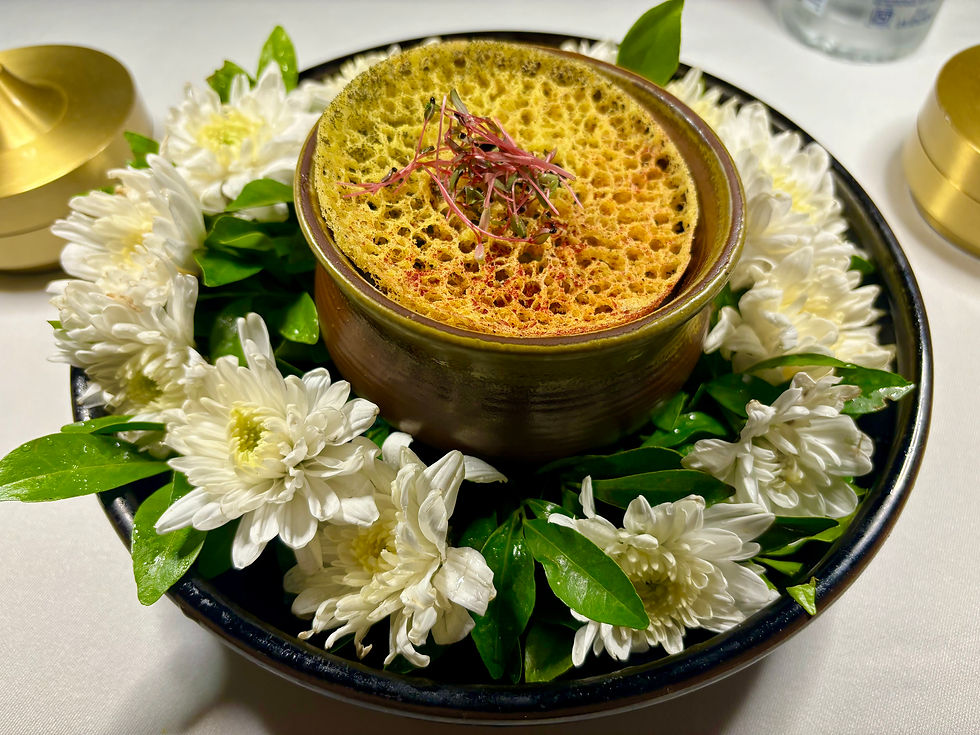
The following course featured gewar with avocado kachaloo and chaat seasoning.
Gewar is a traditional North Indian dessert known for its intricate honeycomb structure, but here it served as a savory foundation. The crisp texture contrasted beautifully with the creamy avocado while the chaat seasoning contributed the familiar sweet, tangy, and spicy flavors that define so much of Indian street food.
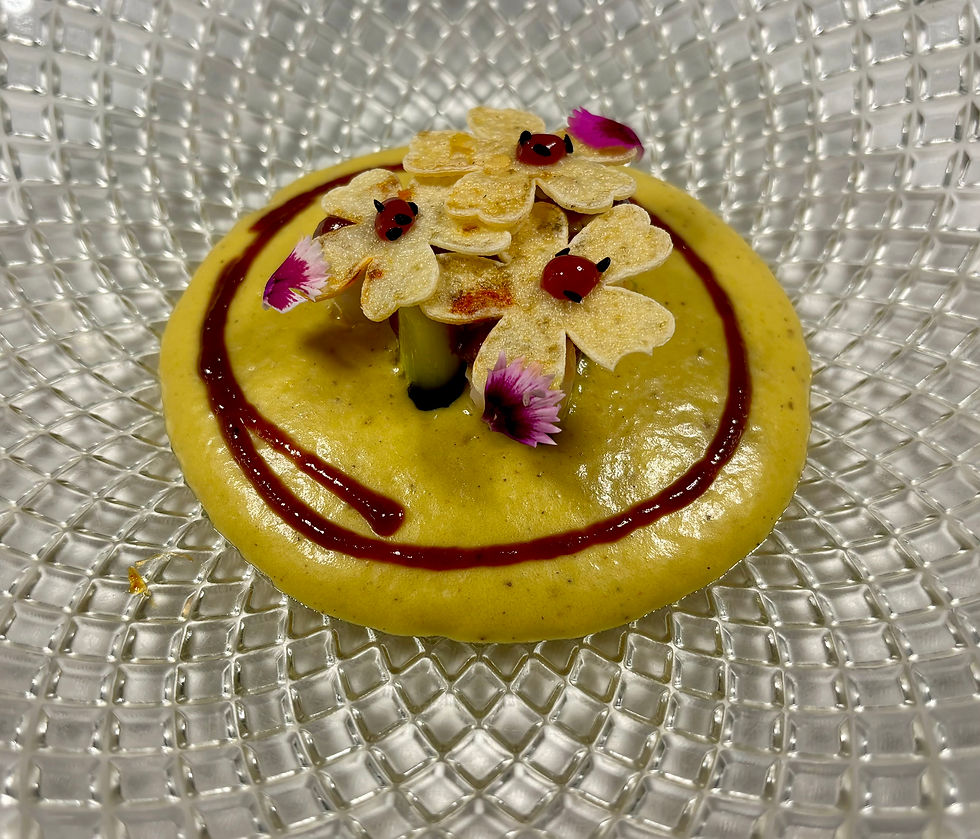
One of the most memorable presentations of the evening arrived next.
Prawns and asparagus were served alongside zeera aloo espuma and tomato rasam.

Rasam is a beloved South Indian soup typically made from tomatoes, spices, and tamarind. At Tresind, this humble comfort food was transformed into a modernist spectacle using a glass coffee siphon.
The broth brewed tableside through a process that felt equal parts science experiment and culinary performance. Watching the rasam come together before my eyes was fascinating and fortunately the flavors matched the presentation.

The next dish was a scallop Wellington served with parmesan moilee and black truffle.
The buttery pastry shattered delicately beneath the fork, revealing perfectly cooked scallops within. The addition of black truffle added luxury while the moilee provided a silky richness that tied the dish together.
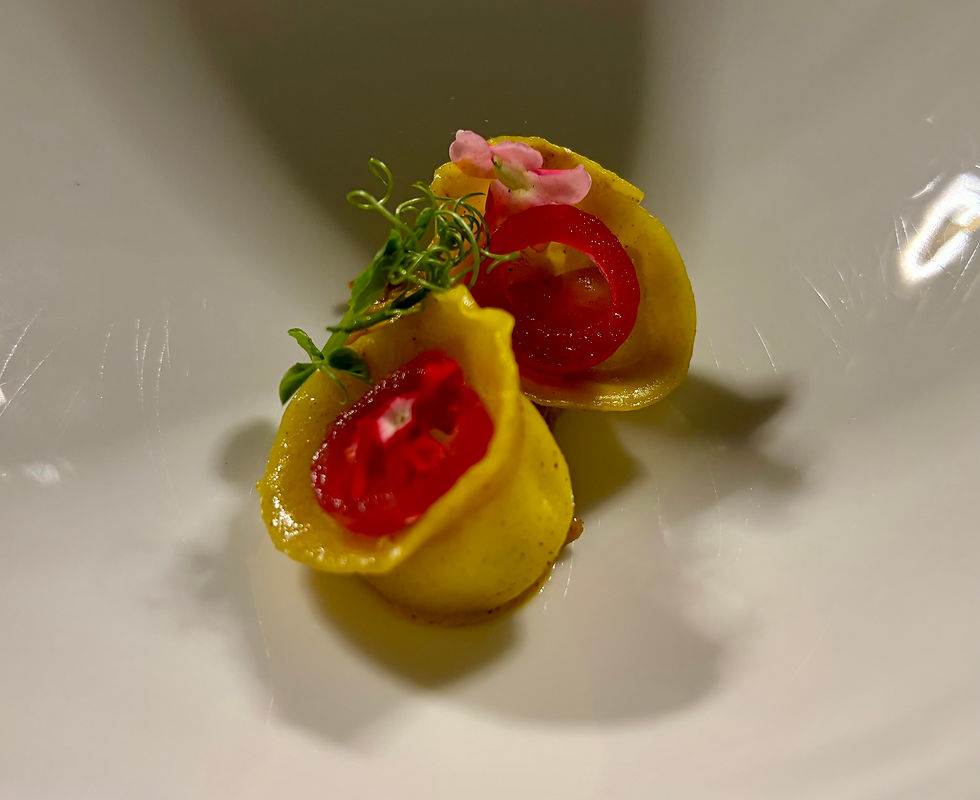
Then came tortellini served with blue cheese and bone marrow curry.
The bell shaped tortellini arrived first.
Moments later, the server poured the bone marrow curry, enveloping the pasta in a sauce that was simultaneously rich, savory, and deeply comforting. It was one of those dishes that immediately demands your full attention.

The meal then pivoted in a surprising direction. A khandvi ice cream arrived accompanied by pickled papaya and chili.
Khandvi is traditionally a savory Gujarati snack made from gram flour and yogurt. Transforming those flavors into a frozen dish sounded unusual on paper. On the plate, however, it worked brilliantly. The acidity of the pickled papaya and subtle heat from the chili created a fascinating interplay of flavors.

The next savory course featured crab cafreal and ros omelette served with sourdough pav.

The crab was vibrant and aromatic, while the ros omelette contributed richness and depth. Paired with the bread, the dish felt simultaneously refined and relaxed.

Then came my favorite course of the evening. A dish called Kichdi of India.
At first glance, it did not appear particularly impressive.
In fact, it immediately reminded me of the Netflix series Ugly Delicious, created by award-winning chef David Chang alongside Oscar-winning filmmaker Morgan Neville, Eddie Schmidt, Peter Meehan, and Christopher Chen. The premise of the show is simple: some of the world's most delicious foods are not necessarily the most visually appealing.
One episode explores Indian cuisine with Padma Lakshmi and Aziz Ansari, highlighting how dishes that may appear humble often deliver extraordinary flavor.
That was exactly my initial reaction to the kichdi.

Then the presentation began.
The server arrived carrying numerous small bowls arranged atop a map of India. Each ingredient occupied the region from which it originated.
One by one, the ingredients were added to a heated base of kichdi while the story of each component unfolded.
As you will see in the accompanying video, the process becomes a celebration of India's culinary diversity. Ingredients from across the country are combined into a single dish that symbolically represents the nation itself.

The final bowl of kichdi was extraordinary. It featured the rice topped with each ingredient arranged artistically across the surface before being mixed together. Visually, historically and conceptually, it was one of the most impressive dishes I have ever encountered.

Dessert maintained the momentum.
The first sweet course was mulayari payasam accompanied by black apple ice cream and dark chocolate. Rich, complex, and beautifully balanced, it provided a sophisticated beginning to the final act of the meal.

Next came jalebi, one of India's most iconic sweets. Crisp and syrupy, it delivered exactly the kind of nostalgic comfort one hopes for.

An imarti followed, paired with kaju katli, espuma, and malai. The various textures and temperatures created a dessert that felt both rooted in tradition and unmistakably modern.

The final bite was wonderfully simple. A scoop of coffee ice cream served in a chilled stone bowl. It was a restrained ending after so many elaborate presentations, and it worked perfectly.
By the conclusion of the meal, it was clear why Tresind has earned such a devoted following around the world. The restaurant succeeds because it never loses sight of the flavors that make Indian cuisine so beloved. The innovation, the techniques, and the theatrical presentations all serve to enhance the food rather than distract from it.

Among the thousands of meals I have enjoyed around the world, this one unquestionably belongs in my Greatest Hits collection. What made the evening even more memorable was that I was able to share it with two of my favorite people in the world.
Great food has a way of bringing people together. When the food is this extraordinary, the memories become even sweeter.
For another great Indian dining experience, see my review on Musaafer in Houston, Texas.


Comments