Pepe in Grani Review: Why Franco Pepe Serves the Best Pizza in the World (Caiazzo, Italy)
- The Anonymous Hungry Hippopotamus
- Jun 9
- 6 min read
Updated: 3 days ago
This was my logic: Pizza is delicious. Since pizza is Italian, the best place to eat delicious pizza would be in Italy. Pizza, at least as we recognize it today, was invented in Naples, Italy. Therefore, I will find the best pizza in the world in Naples.
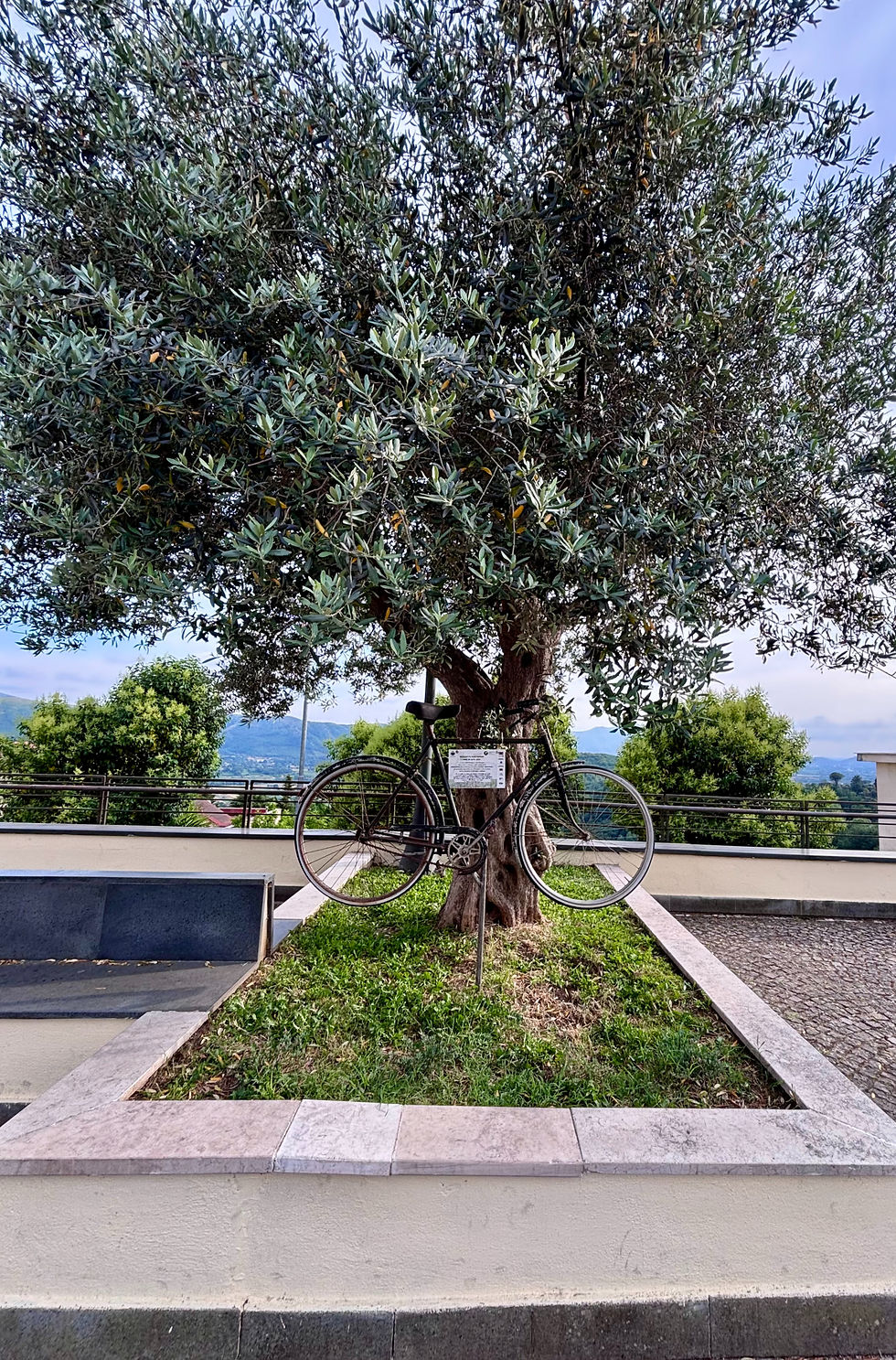
The last step is where I went wrong, but not by much. Pizza was indeed invented in Naples, which is part of the Campania region of Southern Italy. Within Campania, and not terribly far from Naples, I found what may very well be the best pizza in the world, at a restaurant called Pepe in Grani. This restaurant is part of my Greatest Hits series because among the thousands of meals I have eaten around the world, this remains an unforgettable experience.
Getting There: The Drive to Caiazzo

Pepe in Grani is located in the small, Medieval, hilltop town of Caiazzo, in the province of Caserta.

Put another way, Caiazzo sits about 30 miles north of Naples and roughly 50 miles north of Sorrento.

In this very small town, the main attraction is Pepe in Grani.

Therefore, if you are making the trip, dining at the restaurant should be the primary objective.

If the distance and lack of other sightseeing incentives causes hesitation, I understand. I too was on the fence about making the journey. I am incredibly glad I did and would happily make the trip again.

To make the trip more enjoyable and stress free, I booked a car ahead of time with Raffaele Travel Experience. Not only was the driver punctual and professional, he shared information about the region as we drove past open fields ...

... and olive orchards.

The scenic drive was relaxing and provided a welcome contrast to the energy and congestion of Naples. Before long, we had arrived in Caiazzo.

As you wind through the narrow medieval streets of the town, you will pass stone alleyways, staircases, and quiet corners that feel unchanged for centuries.

Before you actually see the restaurant, you will likely notice something else first: a line of eager diners waiting patiently outside. In a town this small, there is little doubt where everyone is headed.
The Restaurant
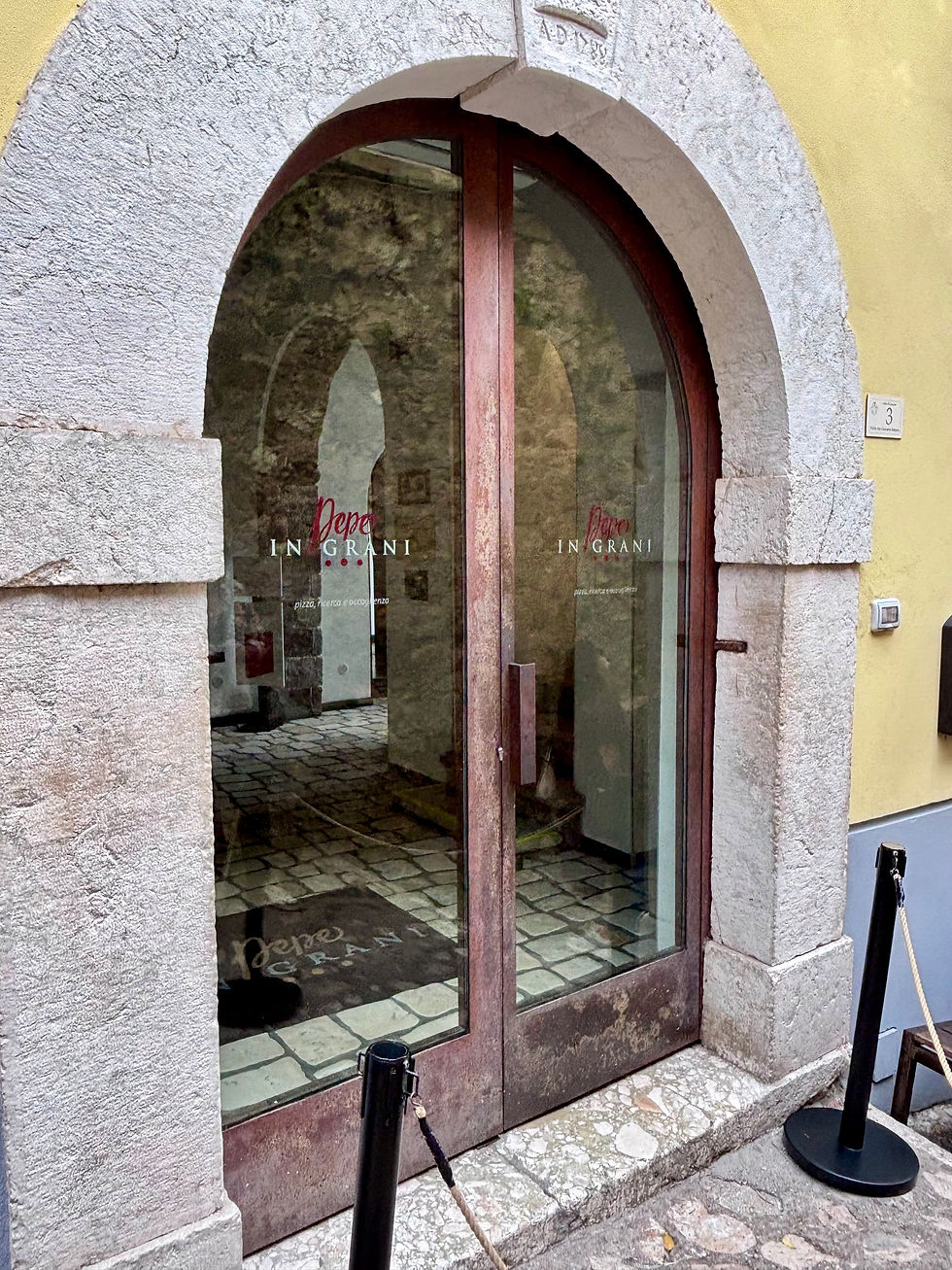
Pepe in Grani has earned a reputation as one of the world's great pizza destinations. Ranked among the top 50 best restaurants in the world, featured on Netflix's Chef's Table: Pizza, and the subject of a pilgrimage that brings food lovers from across the globe to a town of fewer than 6,000 people in the Campanian hills, the restaurant's standing in serious food culture is unambiguous.
The building itself is a medieval stone structure in the heart of Caiazzo, its walls as old as the town. Inside, the space feels both intimate and purposeful. It is rustic without being precious, simple without being spare. Everything is arranged in service of what happens at the oven. The dining room is a frame; the pizza is the subject.
Franco Pepe: The Maestro

At the center of it all is owner and master pizzaiolo Franco Pepe. While many chefs rely on precise measurements and modern equipment, Pepe remains deeply connected to tradition.

One of the most memorable scenes from Chef's Table shows him mixing and evaluating dough largely by feel, using his hands as instruments developed through decades of experience. He speaks about dough as a living thing, constantly changing with the weather, humidity, and ingredients. Watching him work makes it clear that pizza here is not simply food. It is craftsmanship.
The Garden and the Patio

Pepe in Grani sources its ingredients locally.

Some from as close as their beautiful garden that lies just on the other side of their outdoor patio.

Surrounded by rosemary shrubs, orange trees, ...

... flowers and lemon trees, the patio is where I would recommend dining if you can secure a table.

As the evening light filtered through the branches, I enjoyed a strawberry spritz while gazing out across the garden. It was a wonderful way to begin what would become one of the most memorable meals of my life.
The Pizza
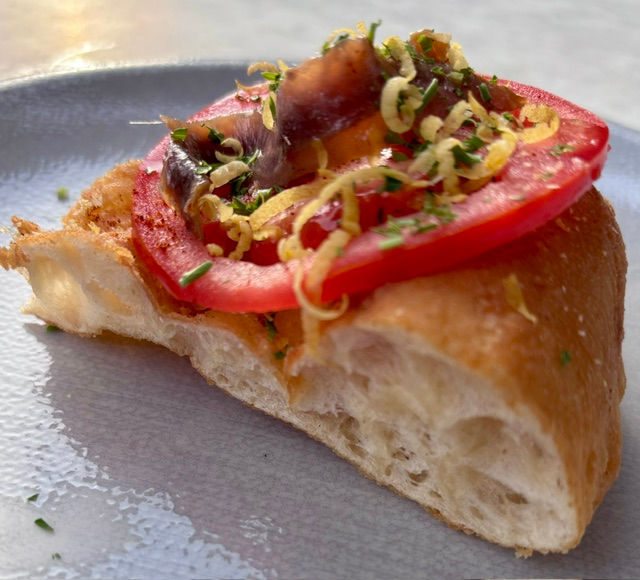
The first course arrived in the form of fried dough topped with Ramato tomatoes, Cetara anchovies, parsley, dehydrated garlic, lemon zest, and chili pepper.

The contrast between the warm, airy dough and the bright acidity of the tomatoes was immediately captivating. The anchovies added salinity without overpowering the dish, while the lemon zest and chili pepper provided flashes of freshness and heat.

Next came a cone filled with 12-month Grana Padano DOP fondue, rocket pesto, and dehydrated Caiazzo black olives.

The cone arrived looking architectural — precise and self-contained, the kind of thing you admire before you eat it.

Then, a few bites in, the interior revealed itself: a hidden reservoir of 12-month Grana Padano fondue that had been waiting for exactly this moment. It did not ooze so much as collapse, slowly and completely, coating everything below it in something rich and intensely savory. The rocket pesto cut through it cleanly. The dehydrated olives added a concentrated earthiness that stopped it from becoming too much. It was one of those dishes that is clever in concept and then, remarkably, even better in execution.

Then came the pizzas.

The first was the Margherita Sbagliata. Made with Campania DOP buffalo mozzarella, purée of riccio tomatoes, basil reduction, and extra virgin olive oil, it looked familiar yet completely different from the traditional Margherita.
The name translates roughly to "mistaken" or "wrong" Margherita. As Franco Pepe explains, the pizza intentionally deconstructs the classic preparation by rearranging the ingredients and presentation while preserving the essential flavors. It is both a tribute to tradition and a challenge to expectations. Each bite delivered the flavors of a classic Margherita in a new and exciting way.

Next came the Scarpetta. This pizza featured Campania DOP buffalo mozzarella, 12-month Grana Padano fondue, a quenelle of uncooked cold tomato compote, freeze-dried basil pesto, and two perfect flakes of 24-month Grana Padano DOP cheese. In Italy, "fare la scarpetta" refers to using bread to soak up every last drop of sauce left on the plate. This pizza captures that idea perfectly. The fresh tomato compote tasted remarkably vibrant, almost as though it had just been picked from the vine moments earlier.

The next course consisted of two more slices of pizza, the Fungitella and Peperone Scomposta.

The Fungitella featured eggplant from the slopes of Vesuvius, basil, black olives from Caiazzo, cow's milk stracciata, Mediterranean herbs, and olive oil. These components combined to create a pizza with extraordinary depth. The eggplant carried a subtle sweetness, while the olives contributed a pleasant earthiness that anchored the dish.

The Peperone Scomposta was another standout. Fior di latte, smoked scamorza cheese, sweet-and-sour peppers, toasted bread seasoned with anchovy cream, capers, parsley, and olive oil came together in a composition that was simultaneously rustic and refined. The smoky cheese and sweet peppers played beautifully against the salty anchovy notes.

My final savory pizza slice was the SUD Estate. Built on a flatbread base, it featured confit tomatoes, tuna, celery infused with bergamot oil, powdered Caiazzo black olives, cow's milk stracciata, black pepper, and extra virgin olive oil.

Every component felt distinctly Mediterranean. The bright citrus notes from the bergamot oil tied everything together so that the flavors lingered long after each bite.
The Dessert
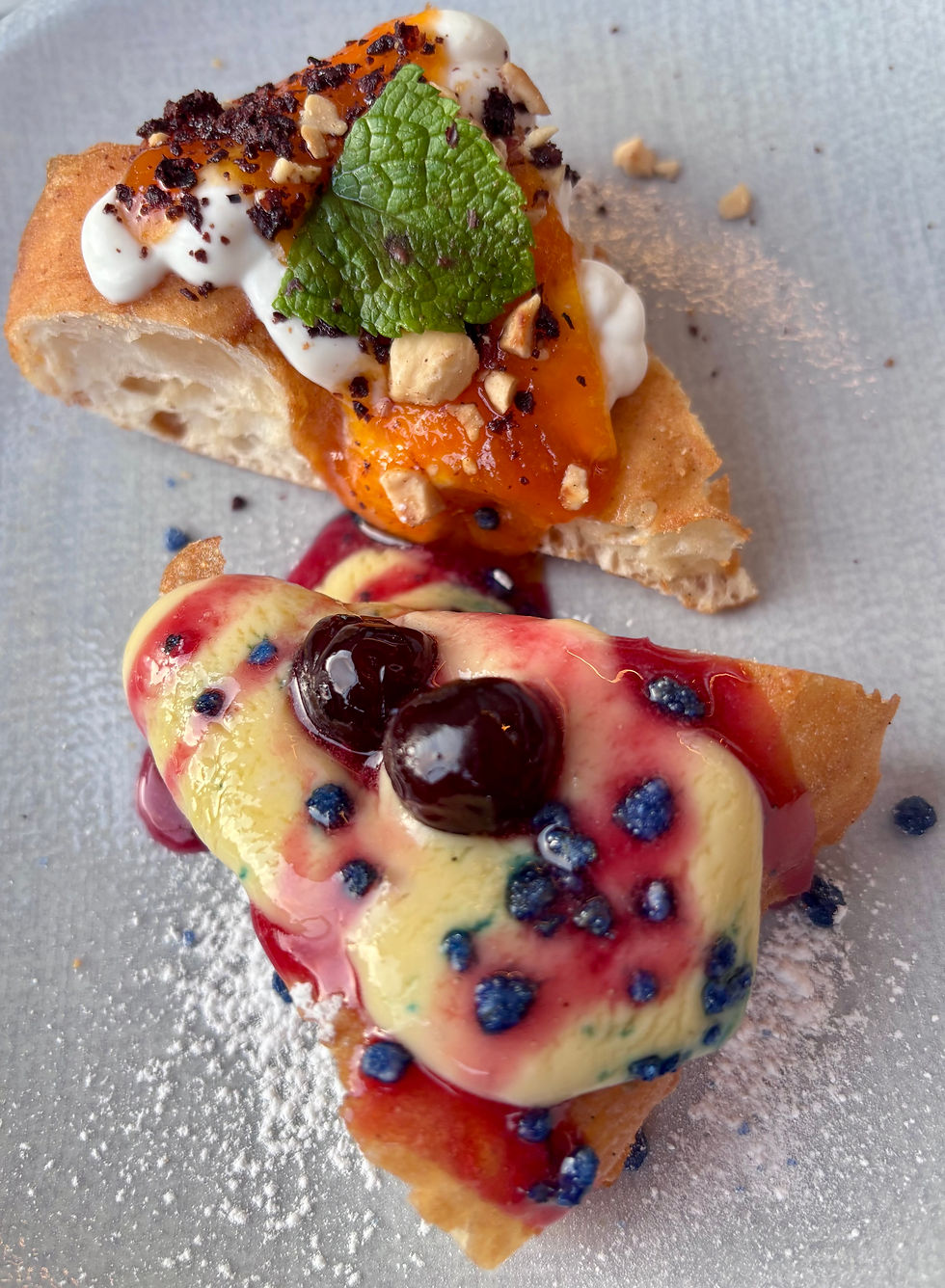
Dessert arrived carrying with it the same momentum as the savory courses. The first dessert pizza was a fried slice topped with DOP buffalo ricotta, flavored with lemon peel, Vesuvio apricot jam, roasted hazelnuts, dehydrated Caiazzo olives, and fresh mint. The ricotta was rich yet delicate, while the apricot jam contributed a concentrated sweetness that balanced the citrus notes beautifully.
The second dessert pizza drew inspiration from the classic Neapolitan sfogliatella. Filled with custard, semolina, milk, ricotta cheese, candied blueberries, vanilla, and cinnamon before being dusted with powdered sugar, it captured the essence of one of Campania's most beloved pastries while transforming it into something entirely new.

The meal concluded with Straccetti Miele e Rosmarino: fried strips of pizza dough topped with sugar, cinnamon, honey and orange zest. The fried dough was simultaneously sweet, aromatic, and comforting.

The vanilla-flavored buffalo ricotta dipping sauce infused with rosemary added an unexpected herbal note that kept the dish from becoming overly rich and provided a fitting final flourish.
Conclusion

By the end of the evening, it was obvious that Pepe in Grani is about far more than pizza. Franco Pepe has taken one of the world's most familiar foods and elevated it into a form of culinary artistry while remaining deeply rooted in the traditions of Campania.

The journey to Caiazzo may require a bit of planning, but some meals are worth traveling for. This is unquestionably one of them. Pepe in Grani is not simply a restaurant to visit. It is a destination that deserves a place on every food lover's bucket list. I sat on the patio as the last of the evening light moved through the lemon trees, holding a piece of fried dough dusted with cinnamon and honey, and thought about how far I had come for a meal that, in the end, made the distance feel like the most obvious thing in the world. Some restaurants justify the journey. This one justifies building the journey around it.
Practical Information
Pepe in Grani is located in Caiazzo, approximately 30 miles north of Naples. Reservations are essential and are best made well in advance through their website at pepeingrani.it. Request the outdoor patio when making your reservation. Evening seating allows the best light through the garden.


Comments