Best Things to Do in Key West: Hemingway House, Southernmost Point and Historic Landmarks
- The Anonymous Hungry Hippopotamus
- Apr 23
- 5 min read

You'll find Key West at the very end of the Florida Keys. Key West island blends history with a laid-back spirit.

It's a place where roosters wander freely, pastel houses glow in the sun, and the ocean is never far from view.
Southernmost Point Buoy
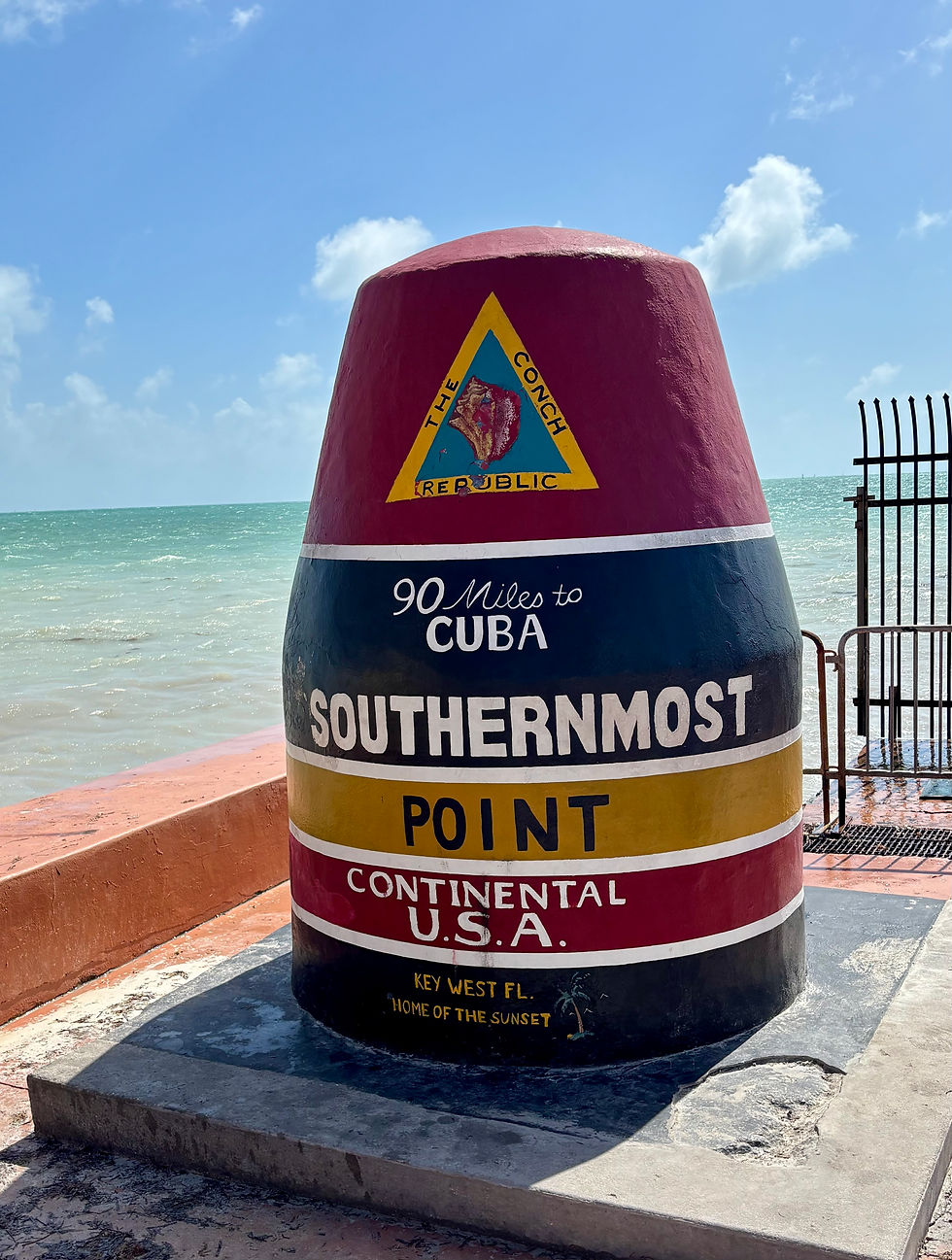
Southernmost Point Buoy
Key West is actually closer to Cuba than it is to Miami. Marking this fact, as well as the southernmost location in the continental United States, you'll find this buoy, painted in bold colors. It is one of the most photographed spots in Florida, symbolizing a literal endpoint to the land. (To learn about the southernmost point in the entire U.S., see my post on Hawaii.)

Albert "Bishop" Key Statue
Adjacent to the buoy is the statue of Albert "Bishop" Key, a preacher and entrepreneur who greeted visitors and sold conch shells at the Southernmost Point corner for many years. Bishop Key, who passed in 2003, was a beloved, local figure known as Key West's "Ambassador of Goodwill." The bronze statue depicting Bishop Key waving and blowing a conch shell was dedicated in 2015.

Conch Shells
You’ll notice conch shells everywhere in Key West —on signs, in décor, and even in the nickname for locals, who proudly call themselves “Conchs” (pronounced konks). The shells reflect the island’s maritime heritage and its deep ties to the sea. Conch itself is also a staple of local cuisine, appearing in fritters, chowders, salads and my favorite, cracked conch.
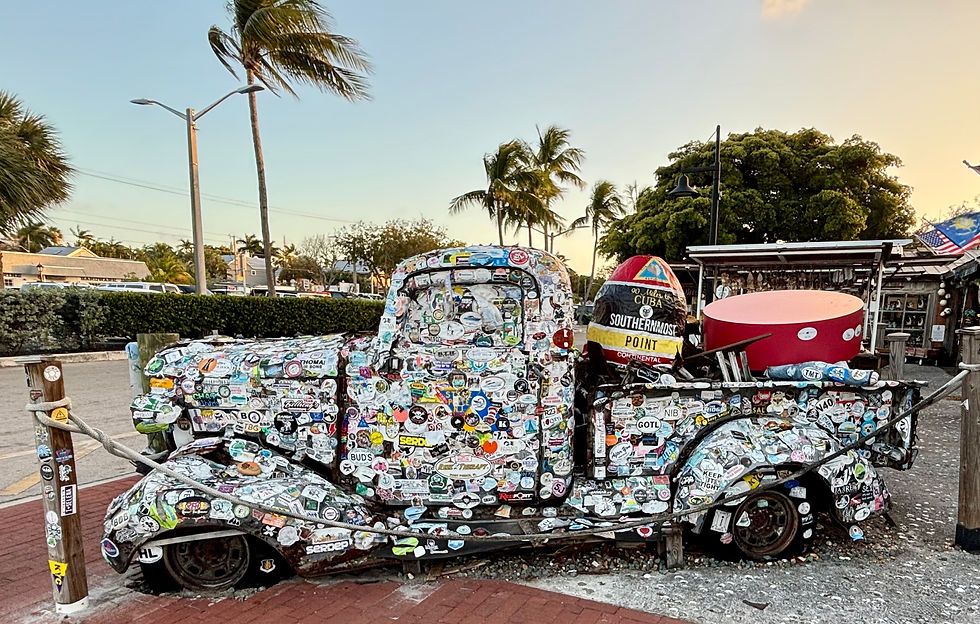
Also close to the buoy and the statue, you'll find this classic, vintage truck that serves as a massive canvas for tourists and locals to add souvenir stickers from their travels. Though it has been scraped and repainted several times, it's eventually covered in decals again.
Key West Lighthouse

Key West Lighthouse
Rising above the low skyline is the Key West Lighthouse, a striking, white tower that has guided sailors since the 19th century. If you climb to the top, you'll get sweeping views of the island and surrounding ocean, as well as a sense of just how small Key West is.
Key West Court House and City Hall

Monroe County Courthouse
Nearby, you'll find the Monroe County Courthouse. It stands as a reminder of the island’s civic history, ...

Old City Hall
... while the charming Old City Hall reflects its architectural past. Both buildings anchor the historic district and hint at Key West’s evolution from a bustling 19th-century port city to the relaxed destination it is today.
Key West Museum of Art and History
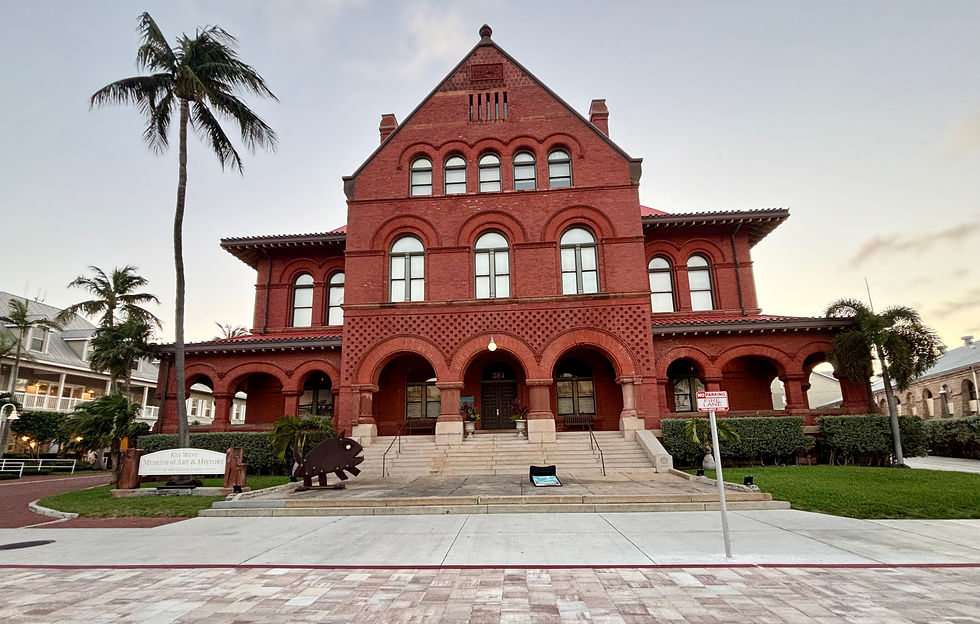
Key West Museum of Art and History
For a deeper dive into that history, the Key West Museum of Art and History at the Custom House is a must-visit. Housed in a beautifully restored red-brick building, the museum tells the story of the island through art, artifacts, and exhibits—from shipwreck salvaging and cigar manufacturing to the creative community that has long been drawn here.

The museum is located right next to the Key West Marina. If you time your visit to end in the evening, you can wander the docks and take in the lovely sunset view.
Ernest Hemingway House
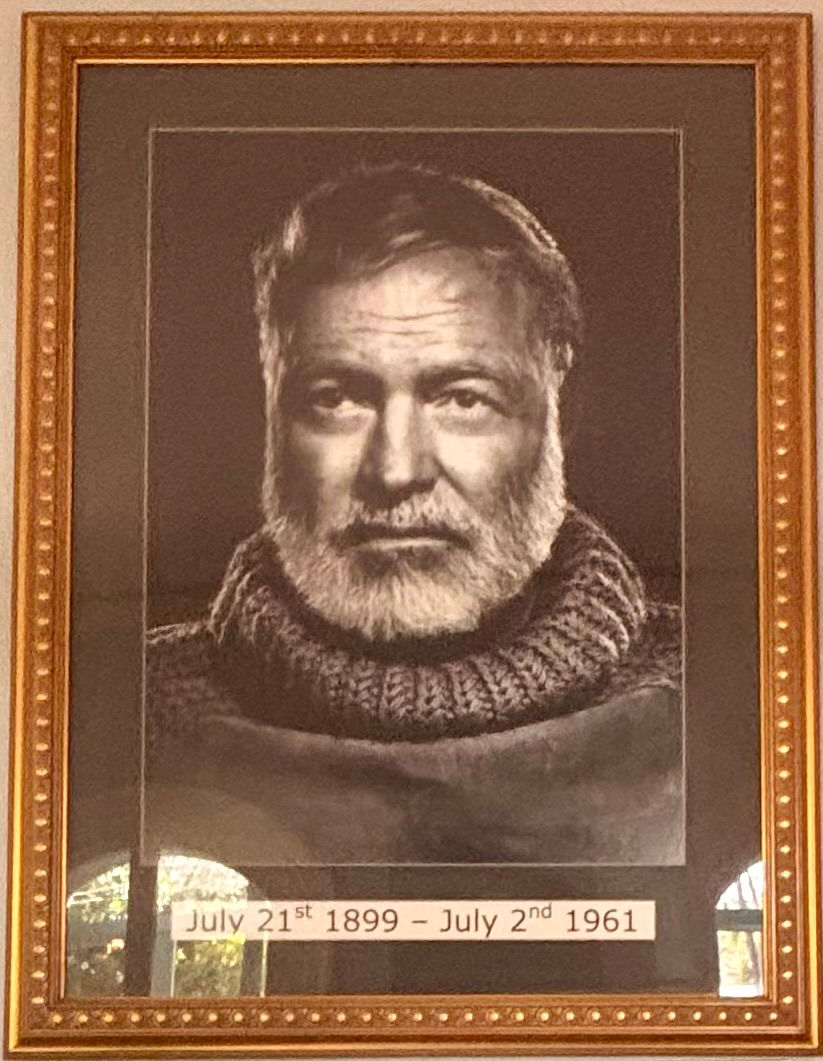
Ernest Hemingway
Of all the places I visited in Key West however, my favorite was the Ernest Hemingway House, purchased by the uncle of Hemingway's wife Pauline in 1931 and given to the couple as a gift. The house is one of the most fascinating and personal landmarks in Key West. It's a place where literature, history, and the daily life of one of my favorite authors coalesce.

Hemingway's Typewriter
Walking through its rooms felt less like visiting a museum and more like stepping into the preserved world of one of America’s most iconic writers. While there, I found Hemingway’s typewriter with a letter to his friend about his beloved boat, Pilar secured between the paper bail and the platen. It was easy to imagine Hemingway there, crafting the direct, clean sentences that defined his writing.

Ernest Hemingway lived in Key West during the 1930s, a period that would become one of the most productive and defining chapters of his career. Known for his sparse, powerful prose and adventurous life, Hemingway wrote some of his most important works during and after this time, including For Whom the Bell Tolls, Death in the Afternoon and To Have and Have Not, which was inspired directly by Key West and its people.
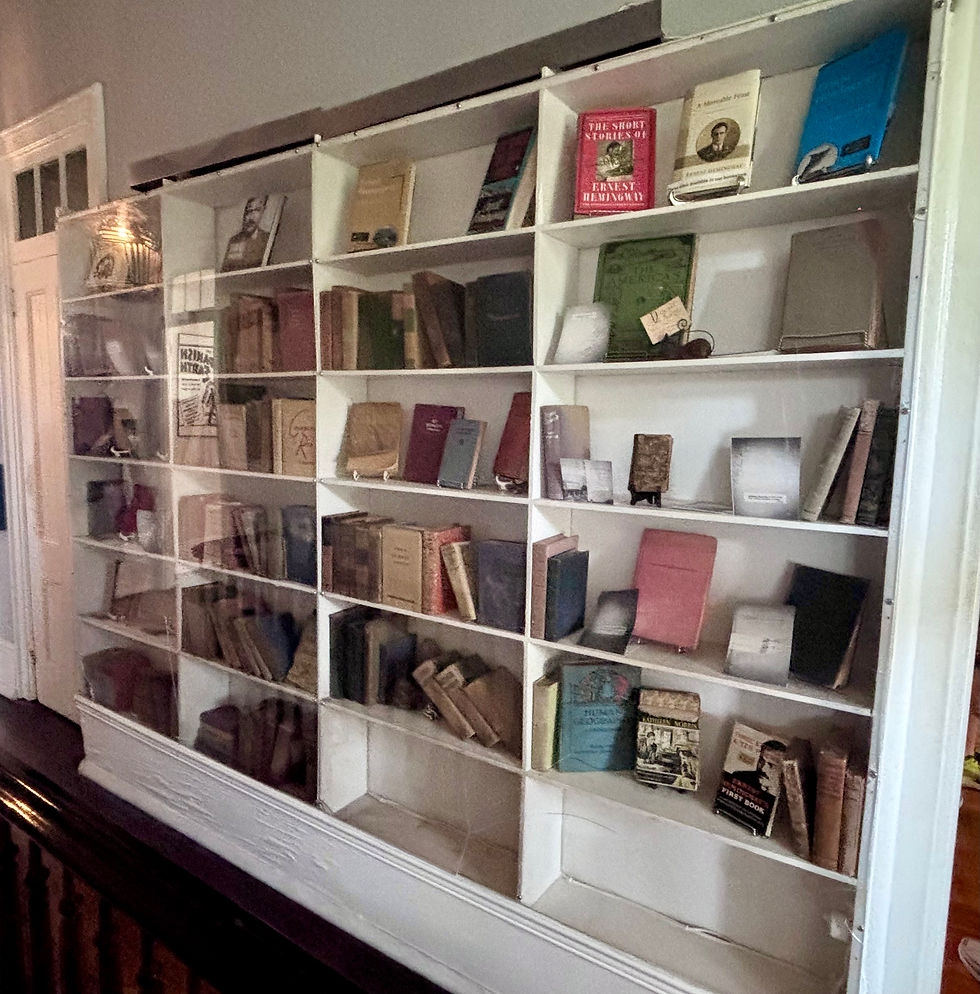
Hemingway would later go on to win the Nobel Prize in Literature in 1954, cementing his legacy as one of the greatest writers of the 20th century. The house itself reflects both his success and his personality.

The rooms are large and airy, (yes, even the bathroom) built in a Spanish Colonial style, with high ceilings ...
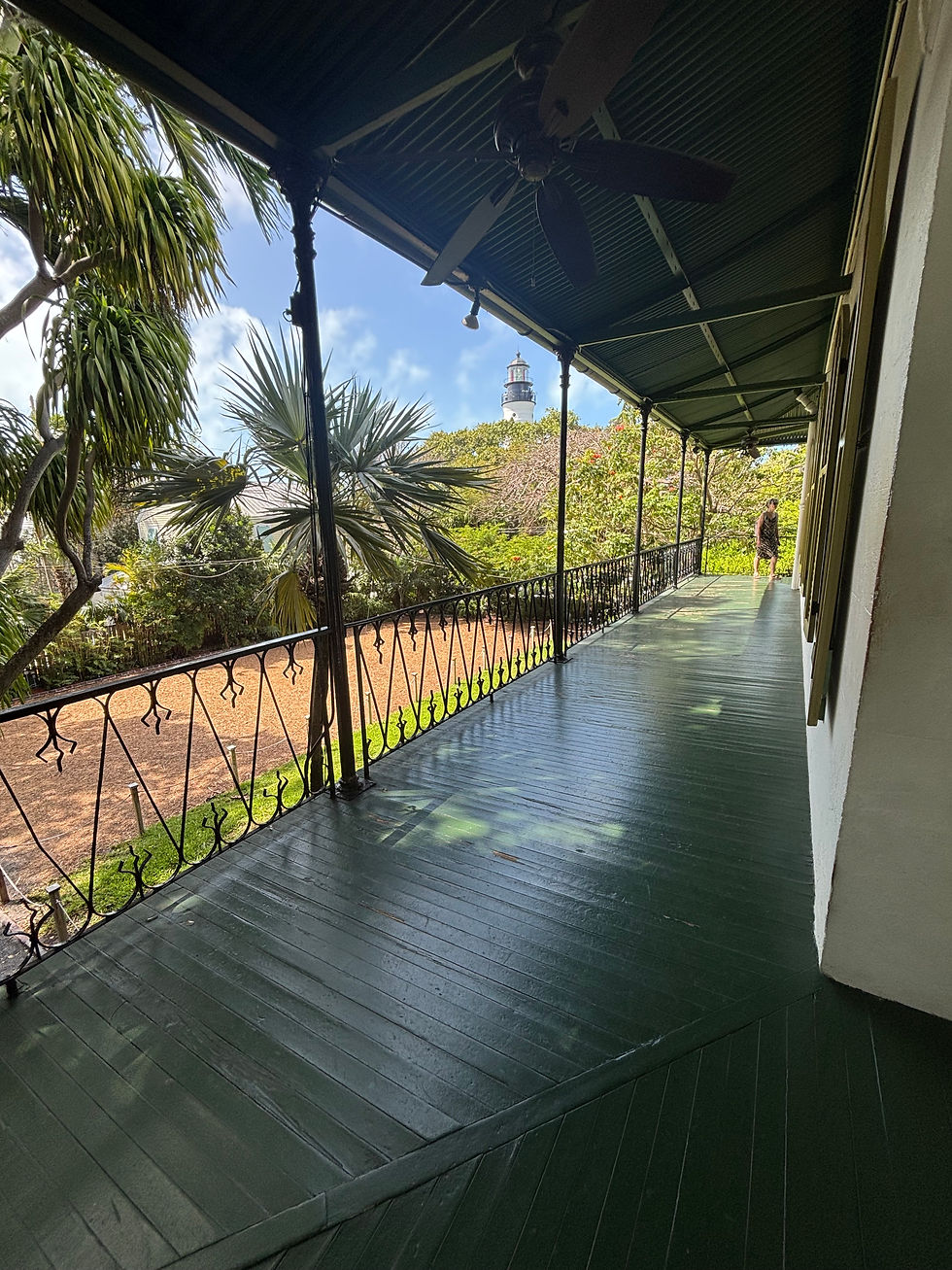
... and wide verandas designed to catch the island breeze.

The rooms are simple but elegant, filled with European furnishings that reflect his time abroad, yet grounded in the laid-back rhythm of Key West life.

One of the most famous features of the property is the pool. At the time it was built, it was incredibly extravagant, reportedly costing $20,000 during the Great Depression.

Legend has it that Hemingway was less than thrilled with the expense, though the pool remains today as one of the most striking elements of the home. It symbolizes both his success and the tension between his practical nature and his larger-than-life lifestyle.

Just as memorable are the gardens. Lush, tropical, and shaded by palms, they create a sense of privacy and calm that must have been conducive for writing. The grounds are home to the famous six-toed cats, descendants of Hemingway’s original pet, who still roam freely and have become part of the house’s identity.

Tucked quietly into the lush grounds is a fountain designed in the shape of a warship. It was designed by Asa Tift, the original owner of the house and a prominent figure in Key West during the mid-19th century. Tift was a shipbuilder, wreck salvager, and one of the wealthiest men on the island at the time.

After my visit to the Ernest Hemingway House, I took a long walk, during golden hour, reflecting on why I love this author so much and how fortunate I feel to have traced his footsteps first in Madrid and now in Key West. What makes him especially compelling to me is that he wrote about issues of courage, love, loss and resilience in a direct way, while never undermining their complexity.

The clarity in his writing makes it timeless and the fact that he lived his life fully, boldly, and without hesitation inspires me.
I hope this post inspires you to take a trip to Key West and discover what makes the island most special to you. There's more to come about my trip to the Keys including Key West's best restaurants and the best Key lime pie in the region.


Comments