Best Casual Restaurants in Lisbon: Where Locals Eat - Pastéis de Belém, Time Out Market and Portuguese Favorites
- The Anonymous Hungry Hippopotamus
- Jul 23, 2023
- 6 min read
Updated: 2 days ago
Lisbon's culinary identity is rooted in tradition, yet constantly evolving. Fresh seafood arrives daily from the Atlantic. Centuries-old pastry shops continue producing beloved recipes. Historic taverns share streets with innovative chefs reimagining Portuguese classics. Whether your budget allows for a quick snack or a leisurely meal, Lisbon offers an astonishing range of delicious possibilities.
This post focuses on the more casual side of Lisbon's dining scene. These are the cafés, markets, restaurants, and neighborhood favorites where I enjoyed some of the most memorable meals of my trip. Together they provide an excellent introduction to the flavors that define Portugal's capital.
Pastéis de Belém

Long before pastel de nata became a global phenomenon, travelers were making pilgrimages to the Belém district of Lisbon for a single pastry.
Founded in 1837, Pastéis de Belém is one of the most famous bakeries in Portugal and, according to many, the birthplace of the original pastel de nata. The recipe is closely connected to the nearby Jerónimos Monastery, where monks are believed to have created the custard tart centuries ago. While countless bakeries now produce their own versions, the exact recipe used at Pastéis de Belém remains a closely guarded secret.
The bakery itself feels like an institution. Lines often begin forming early in the morning and can stretch down the block, yet visitors continue arriving from around the world for the opportunity to taste one of Portugal's most iconic desserts.

Of course, pastel de nata is not the only temptation on display.
The counters are filled with éclairs overflowing with cream, doughnuts bursting with chocolate filling, and an assortment of traditional Portuguese pastries. Yet despite the abundance of options, nearly everyone arrives with the same goal.

Pastéis de Belém serves its famous tarts at an astonishing pace. On particularly busy days, the bakery has produced and sold more than 40,000 pastries.

If you have never tasted a pastel de nata, imagine a dessert that somehow manages to be both delicate and indulgent. The shell is flaky and crisp, shattering into buttery layers with each bite. The center is silky, lightly caramelized, and rich without being heavy.
I have enjoyed pastel de nata at room temperature before and found them excellent. Eating one fresh from the oven, however, is an entirely different experience. The contrast between the warm custard and the crisp pastry shell makes it easy to understand why this humble tart has become Portugal's most famous culinary ambassador.
One of the surprises for many visitors is that there is actually no cream in the filling. The custard is traditionally made with milk, eggs, sugar, and spices. The signature texture comes not from cream, but from baking the tarts at extremely high temperatures for a very short period of time, allowing the exterior to become beautifully crisp while the interior remains smooth and luscious.
Locals often sprinkle the tops with cinnamon before eating them. After trying it myself, I can confirm they are absolutely right.
Time Out Market

If Pastéis de Belém represents Lisbon's culinary heritage, Time Out Market showcases its modern food culture.
Opened in 2014, Time Out Market Lisbon became the flagship location for what would eventually become an international concept with locations in cities such as New York, Boston, Montreal, Chicago, and Dubai. Yet the original remains one of the best introductions to Lisbon's food scene.
Located inside the historic Mercado da Ribeira, the market gathers many of the city's best chefs, restaurants, artisans, and food vendors under a single roof. More than forty food stalls surround a massive communal dining area, creating an energetic atmosphere that feels equal parts marketplace, food hall, and culinary showcase.
For travelers with limited time in Lisbon, it may be the single most efficient way to sample a broad range of Portuguese cuisine.

Dry Cured Ham
One of my first stops was Manteigaria Silva, a celebrated Portuguese delicatessen known for its cured meats.
The company sells more than two tons of cured ham each month, and a visit quickly reveals why. The selection is extensive, featuring numerous varieties of Portuguese and Iberian hams with differing textures, aging periods, and flavor profiles. For anyone interested in Portugal's charcuterie traditions, it is an excellent place to begin.

Bacalhau
No culinary exploration of Portugal would be complete without bacalhau.
The sight of whole dried cod hanging in market stalls can be somewhat startling to first-time visitors. One friend described it as "spooky," which I thought was a fairly accurate assessment.
Yet bacalhau occupies a place in Portuguese culture that is difficult to overstate. Salted and dried codfish is often referred to as Portugal's national dish, despite the fact that the fish itself is traditionally sourced from the cold waters of the North Atlantic.

Bacalhau and Sardine Snacks
The Portuguese famously claim there are 365 ways to prepare bacalhau, one for every day of the year. Whether or not that number is accurate, the variety is remarkable. One preparation I sampled paired the cod with chickpeas, creating a dish that was both hearty and deeply satisfying.

Pad Thai
One of the strengths of Time Out Market is its diversity.
While Portuguese cuisine remains the star attraction, visitors will also find Thai food, Italian specialties, Japanese dishes, sandwiches, burgers, pastries, and numerous other options. It is the ideal destination for groups with differing tastes, allowing everyone to find something appealing while still sharing the same table.

There are plenty of bars serving up wine, beer and cocktails as well. Since we were in There are also several bars serving wine, beer, and cocktails. Since I was in Portugal, however, ending the meal with a port tasting felt like the appropriate choice.
Corrupio

The Portuguese word "corrupio" refers to constant movement or spinning motion, an appropriate name for this lively restaurant.
With its open kitchen, vibrant atmosphere, and attractive bar, Corrupio feels contemporary while remaining firmly rooted in Portuguese culinary traditions. Chef Daniel Ferreira focuses on classic ingredients and flavors, presenting them with a modern touch.

Natural Oysters from Ria Formosa, with Chopped Shallot Sauce, Vinegar, Apple and Chives
The meal began with oysters from Ria Formosa, one of Portugal's most celebrated coastal lagoons. Served with shallots, vinegar, apple, and chives, the oysters were bright, clean, and refreshing.

Octopus Salad with Mint and Sweet Potato Chips
Next came an octopus salad accented with mint and sweet potato chips. Portugal has a long-standing love affair with octopus, and this dish demonstrated why. The seafood was tender, while the mint provided freshness and the chips contributed a welcome crunch.

Fish with Lemony Rice and Fresh Herbs
My favorite dish of the meal was deceptively simple.
The fish was served atop creamy rice infused with lemon and fresh herbs. Dill and cilantro added brightness, while the rice delivered comfort and richness. The result felt simultaneously light and substantial, elegant and approachable.
It was one of those dishes that immediately inspires thoughts of recreating it at home, though I suspect matching the original will be difficult.
Comur

Before visiting Portugal, I rarely considered canned seafood a luxury product.
Comur changed that perception completely.
Founded in 1942, Comur has become one of Portugal's most recognizable purveyors of premium tinned fish. Walking into one of their shops feels like stepping into a whimsical carnival, with colorful packaging and displays that celebrate a culinary tradition many outsiders overlook.
The selection is extraordinary.
Anchovies, eel, sea bass, trout, octopus, tuna, mussels, sardines, mackerel, and cod are available in countless preparations. Some are packed simply in olive oil, while others feature garlic, chili, curry, tomato, and various other flavorings.
Portugal has elevated canned seafood into an art form, and Comur stands among its finest ambassadors.
Empadas

Empada de Galinha
Not every memorable food experience requires a restaurant reservation.
Throughout Portugal, cafés and bakeries sell empadas, savory hand pies filled with meats, vegetables, or cheeses. They are inexpensive, portable, and deeply satisfying.
I opted for an empada de galinha, or chicken empada.
The closest comparison for American readers would be a chicken pot pie, though the Portuguese version contains more filling, less sauce, and a sturdier crust. It was rich, comforting, and ideal for a quick lunch while exploring the city.
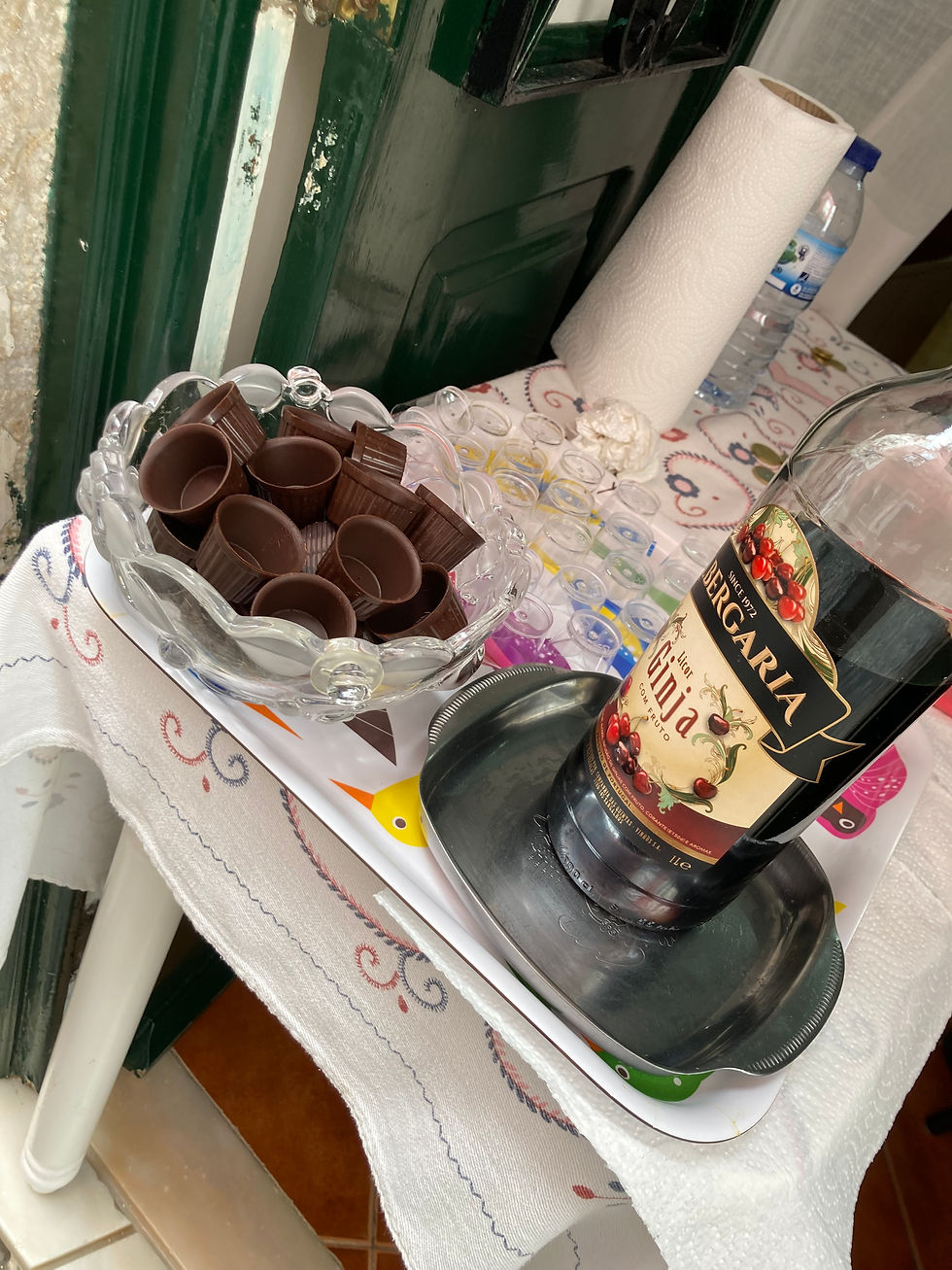
Ginja Liqueur
No culinary tour of Lisbon would be complete without a taste of ginjinha. Made from sour cherries infused in alcohol and sweetened with sugar, this beloved liqueur has become one of Lisbon's signature drinks. Small bars dedicated almost exclusively to serving ginjinha can be found throughout the city, often with patrons standing outside on cobblestone streets enjoying a quick glass.
Many establishments serve the liqueur in edible chocolate cups. The ritual is simple: drink the ginjinha, then eat the chocolate. Sweet, slightly tart, and unmistakably Portuguese, it provided the perfect toast to my final days in Lisbon.
As I stood on those historic streets with a glass in hand, reflecting on weeks of travel through Portugal, I realized that the country's cuisine mirrors the nation itself. It is deeply rooted in tradition yet remarkably welcoming, humble in presentation yet rich in character.
From warm custard tarts and salted cod to oysters, octopus, and sour cherry liqueur, Lisbon offered a culinary journey every bit as memorable as its monuments, museums, and viewpoints.
Next up is my final post about Portugal, where I will share some of the extraordinary fine dining experiences that brought this remarkable trip to a fitting conclusion.


Comments